


Solar Energy, Battery and Uninterruptible Power for Greenhouses and Livestock Facilities

In greenhouses and livestock facilities, electricity is necessary for the production itself, not for comfort. When the fans stop in a closed house, the temperature and humidity can quickly rise to dangerous levels. When the greenhouse's irrigation and climate control are disrupted, there is a loss of crops. If milking and milk cooling are interrupted in the barn, milk quality and animal comfort are affected. Since these facilities are often located in rural areas with weak grids, outages are also frequent.
Solar energy alone is often not a solution to this problem; because grid-connected panel systems do not continue to operate spontaneously during an outage. In this article, we discuss how to determine critical loads in greenhouses and livestock facilities, what roles solar, battery, UPS, and generator can play, and how to size the system with numerical examples.
Article; It was prepared for greenhouse and farm owners, facility managers, technical managers and purchasing units. The aim is to answer the question "Is it enough to install panels?" with a concrete load list and calculation logic.
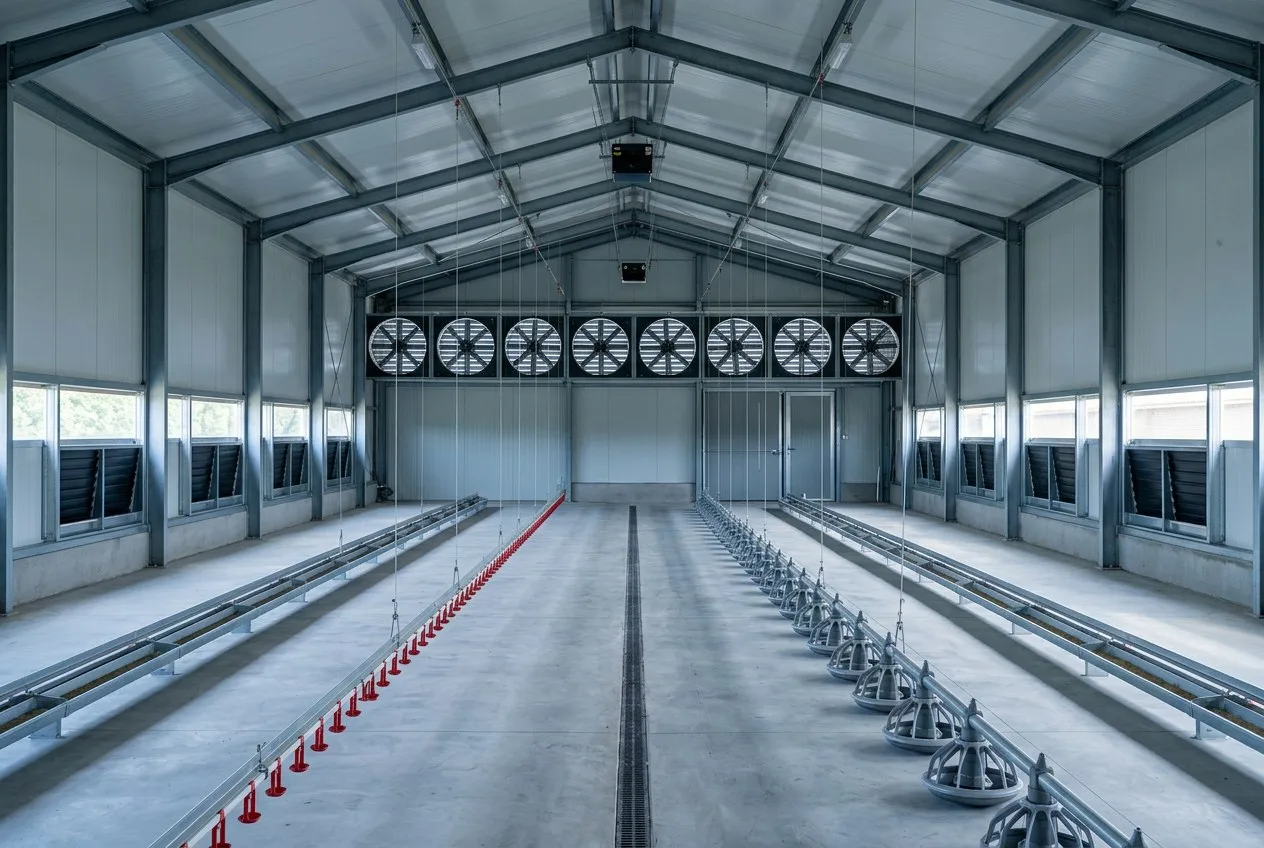
Why is uninterrupted power in greenhouses and livestock facilities a separate issue?
When the power goes out in an office, data is lost; in a poultry house or greenhouse, living beings are at risk. According to Auburn University's poultry ventilation bulletins A power outage in a fully enclosed and controlled environment coop can lead to serious animal losses. The same resource group, If the mains is cut off in hot weather and the backup generator is not activated emphasizes that the result can be severe.
The electrical loads of these facilities are also different:
- Motor weighted load: Loads such as fans, pumps, compressors and vacuum pumps draw several times the rated current at the time of take-off.
- Time-sensitive risk: Downtime is not evaluated in minutes, but in relation to the temperature of the air and animal density.
- Harsh Environment: Dust, moisture, ammonia and temperature fluctuations shorten the life of electronic devices and batteries.
- Distance: Service and spare parts access is more difficult than in the city center.
Therefore, the solution is not to "establish the largest system", but to determine in advance which load will be kept alive, for how long and with what resources.
Identify critical loads first: Which device requires which protection?
Critical loadis a load that directly endangers animal health, product or facility safety when slaughtered. Instead of backing up all loads, creating three classes significantly reduces costs. The concept of critical load in general framework critical load and UPS usage areas We explained in our article; Here we adapt it to agricultural facilities.
| Load class | Examples of greenhouses | Examples of livestock | Typical protection |
|---|---|---|---|
| First class: safety of life and product | Climate controller, circulation fans, ventilation window motors | Ventilation fans, drinking water pump, incubator, alarm device | Automatic generator + battery / hybrid system |
| Second class: production continuity | Drip irrigation and fertilizing pump, shading curtain motor | Automation of milking unit, milk cooling, feeding and manure scraping | Planned backup (battery or generator depending on the duration) |
| Third year: can be postponed | Lighting, workers' room, workshop | General lighting, washing equipment | Not backed up, disabled on interruption |
The conclusion drawn by this table is simple: separating the critical load board and the deferrable load board often reduces the size of the redundant system by half.
Is solar energy the solution to outages alone?
An on-grid system installed on the roof shuts down for safety reasons when the grid is gone. Inverters do this behavior to protect personnel working on the grid. So even if the panel is in the sun, your fans may be stationary. To see the differences in detail On-grid, off-grid and hybrid systems You can check our article.
The basic options for the facility are:
| Conclusion | What does it do in the outage? | Strengths | Point to note |
|---|---|---|---|
| On-grid SPP | Closes, does not supply load | Reduces the daytime electricity bill | Not an outage solution |
| Hybrid inverter + battery | Feeds the backup line with panel and battery | Charged by the sun, the transition is fast | The motor should be sized according to the start-up current |
| UPS | Feeds sensitive loads such as controls and alarms | Seamless switching, clean output voltage | Not economical for large engine loads |
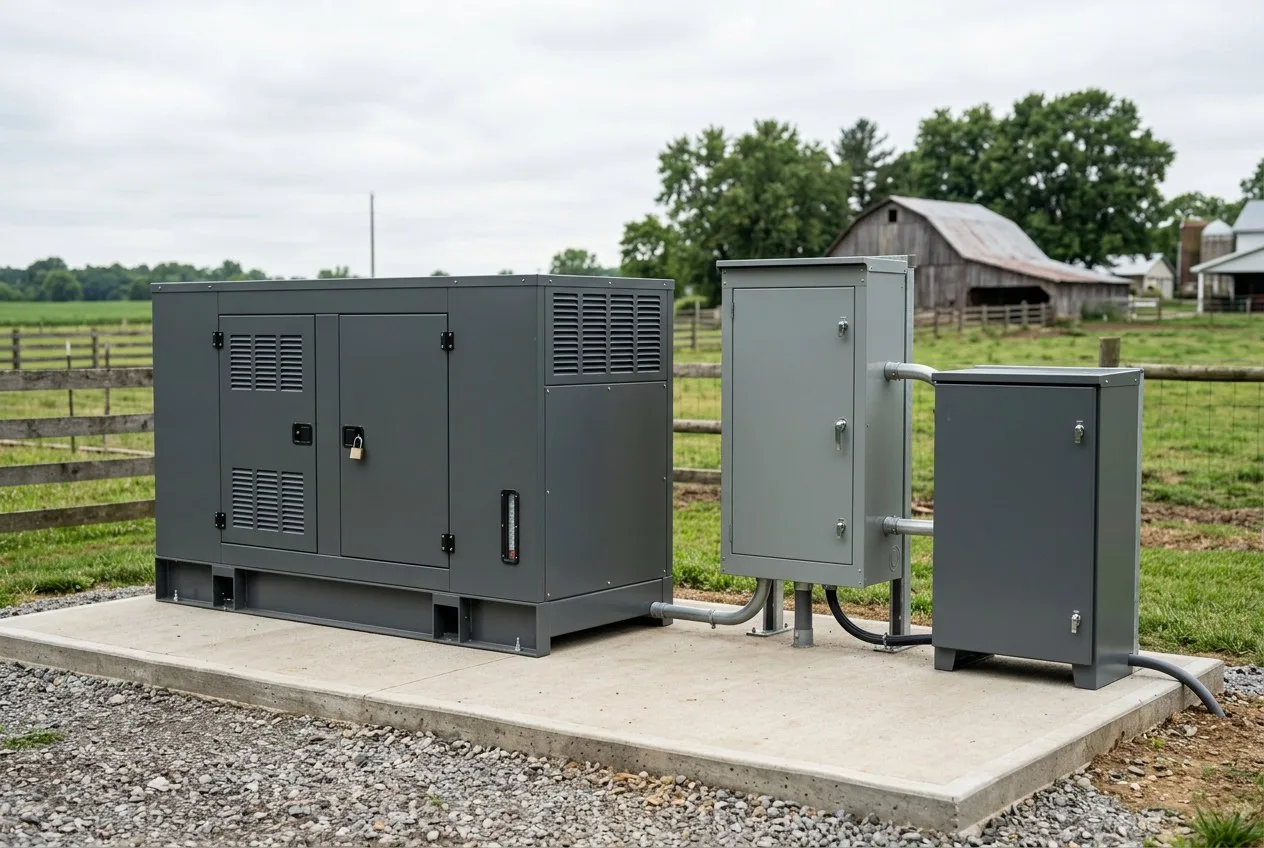
| Generator + transfer switch | Provides power on fuel for a long time | High-power, long-term backup | Requires commissioning delay and regular testing |
| Off-grid system | Works off-grid | For sites without a network | Panel and battery capacity will be large depending on the season |
The working logic of the hybrid inverter during the outage Hybrid inverter In the article, UPS-like transition behavior EPS and transit time You can find it in the article. Working safely in a network outage depends on feeding the loads connected to the backup line from a separate panel.
Solar energy in greenhouses: What loads can be supplied by the panel?
Greenhouses are a suitable use for solar energy; because electricity consumption is largely concentrated during daylight hours and sunny periods. NREL's greenhouse energy study aims to that solar PV systems can be used in greenhouse heating, ventilation and microclimate control discusses. If it is a peer-reviewed review, that PV integration can feed greenhouse processes such as lighting, heating, cooling, ventilation, irrigation and fertilization specifies.
There is also a point here: the panel cuts off the light in the greenhouse. According to the studies cited in the same review While opaque PV panels covering 20-40% of the roof area can reduce the indoor air temperature by about 3-5 °C The issue of plant light should also be taken into account. Whether the panel is placed on the greenhouse roof or in a nearby structure should be determined by the light needs of the crop being grown.
For panel placement, shading and angle issues Panel angle and orientation by Ghosting problem You can look at his articles.
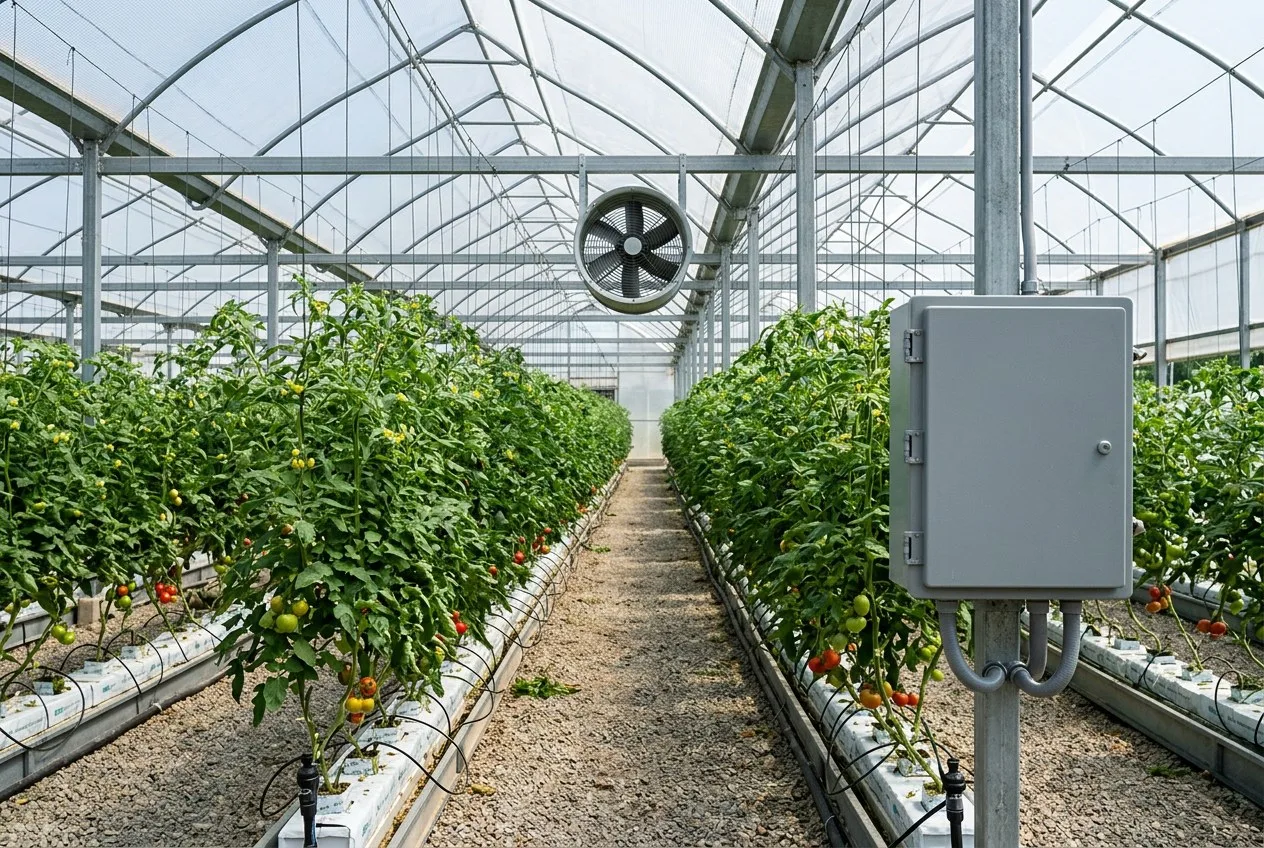
Example calculation: Daily energy of a small greenhouse
The following values are assumptions; they should be put in place with device labels and measurement in the actual facility.
| Load | Power | Daily work | Daily energy |
|---|---|---|---|
| Climate control device and sensors | 100 W | 24 hours | 2.4 kWh |
| 2 circulation fans | 2 × 250 W = 500 W | 10 hours | 5.0 kWh |
| Drip irrigation / fertigation pump | 750 W | 1.5 hours | 1.1 kWh |
| Total | approx. 8.5 kWh/day |
Panel power estimation: As an assumption, let's take an average daily production of 4 kWh/kWp and a usage efficiency of 75% after system losses. Required panel power: 8.5 ÷ (4 × 0.75) ≈ 2.8 kWp. So it is the starting point for a range of initial magnitudes of about 3 kWp. Production varies depending on location, season and slope; for the winter months also Solar power generation in winter We recommend you to read the article. For the sizing method How many solar panels do you need The article also helps.
Heating and cooling warning: Consumption and instantaneous power grow rapidly if an electric heater, heat pump, or large cooling equipment are added. Backing up these loads with a battery is often not convenient; how to plan heating is a separate engineering matter.
Outage risk and backup power in poultry and livestock facilities
The first address of the risk of interruption in livestock is ventilation. In the bulletins of Auburn University, it is stated that the basic backup device for tunnel ventilated poultry houses that it is a backup generator against grid outage is clearly stated. The same source states that the generator alone should not be considered sufficient; that a battery-powered alarm should alert the grower when the grid goes tells.
There are three key layers to this approach:
- Alarm and monitoring: The mains loss, high and low temperature alarm must come from an independent device; the alarm device must have its own backup supply. A small UPS or alarm unit with battery is suitable for this task.
- Controller: The controller should be tested for restart behavior during backup power transition. On Auburn sources that the old controllers can lock all the equipment to the on position when the power goes out warning; this means a sudden load explosion when the backup source is activated.
- Main power backup: Generator or a large enough battery system that powers loads such as fans and pumps.
Mechanical safety measures are also in place. In the poultry houses with curtains (naturally ventilated), there are systems that allow the curtain to open automatically when the power is cut off; Auburn bulletins, if the generator does not work that the only possible backup may be the shutter lowering mechanism specify. Mechanical solutions like this are added next to the power backup, not in its place.
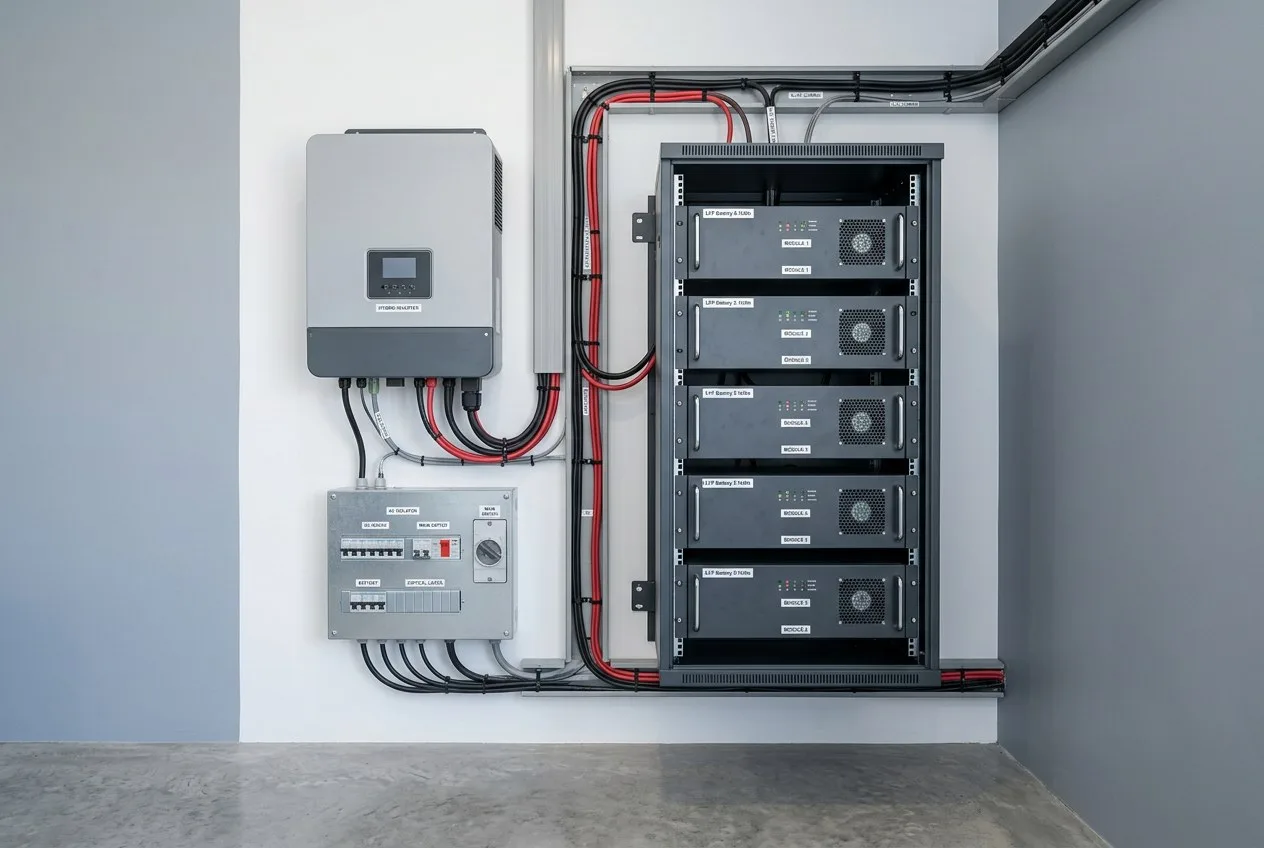
Combined use of generator and battery
It can take between a few seconds and minutes for the generator to kick in. Auburn sources are used in closed poultry houses Automatically activating seconds after the power is cut off and transferring the power to the poultry house specifies that it is necessary. The battery closes this transition gap and buys time for critical devices if the generator fails. System scenarios Solar energy, battery and generator working together We covered it in detail in our article; For the difference between generator and UPS Differences between a UPS and a generator You can also look at the article.
Motor loads and inrush current: Why is it so important?
Motors such as fans, pumps, compressors and vacuum pumps draw several times the continuous current when starting to operate. In the same bulletin, it was stated that a broiler farm of four coops draws approximately 72-75 kW in normal operation, and the demand on the generator when starting off again after an outage where the normal operating value can be approximately doubled is explained. For this reason, it is recommended to be cautious in choosing a generator at the source.
The same logic applies to battery inverter systems. If the motors all travel at the same time, the inverter's instantaneous power limit can be exceeded. Practical measures:
- Using a controller or time relay that activates the fans in stages.
- Evaluate the use of soft starter or frequency drive with the engineer.
- When choosing an inverter, look not only at continuous power, but also at short-term overload capacity.
For inrush current problem of loads such as air conditioners, motors and laser printers Inrush problem You can take a look at the article.
Example calculation: Battery for fan backup in a small house
Assumptions: There are 3 fans to be kept in reserve in the facility; each draws 550 W. Target backup time is 2 hours. Inverter efficiency is 90%, usable battery depth (DoD) is 80%. These values vary according to manufacturer data sheets.
- Total power: 3 × 550 W = 1,650 W
- 2 hours of energy: 1.65 kW × 2 h = 3.3 kWh
- Inverter loss included: 3.3 ÷ 0.90 ≈ 3.67 kWh
- Battery capacity taking into account usable depth: 3.67 ÷ 0.80 ≈ 4.6 kWh
- Approximate selection: A battery storage capacity of 5 kWh (e.g. approx. 48 Ah in a 100 V system)
Continuous power for the inverter must be at least 1,650 W; due to fan lifts, a device with a class of 3 kW and sufficient overload capacity is evaluated in practice. For the relationship between battery capacity and discharge rate Battery Time Calculation, for the solar-specific method Solar Battery Capacity You can look at the article.
In a large tunnel ventilated house, the load is much higher than 3 fans. In this case, the battery is used only for the alarm, controller, and passage space; it becomes the main backup generator.
Barn, milking and milk cooling: what does UPS protect and what doesn't?
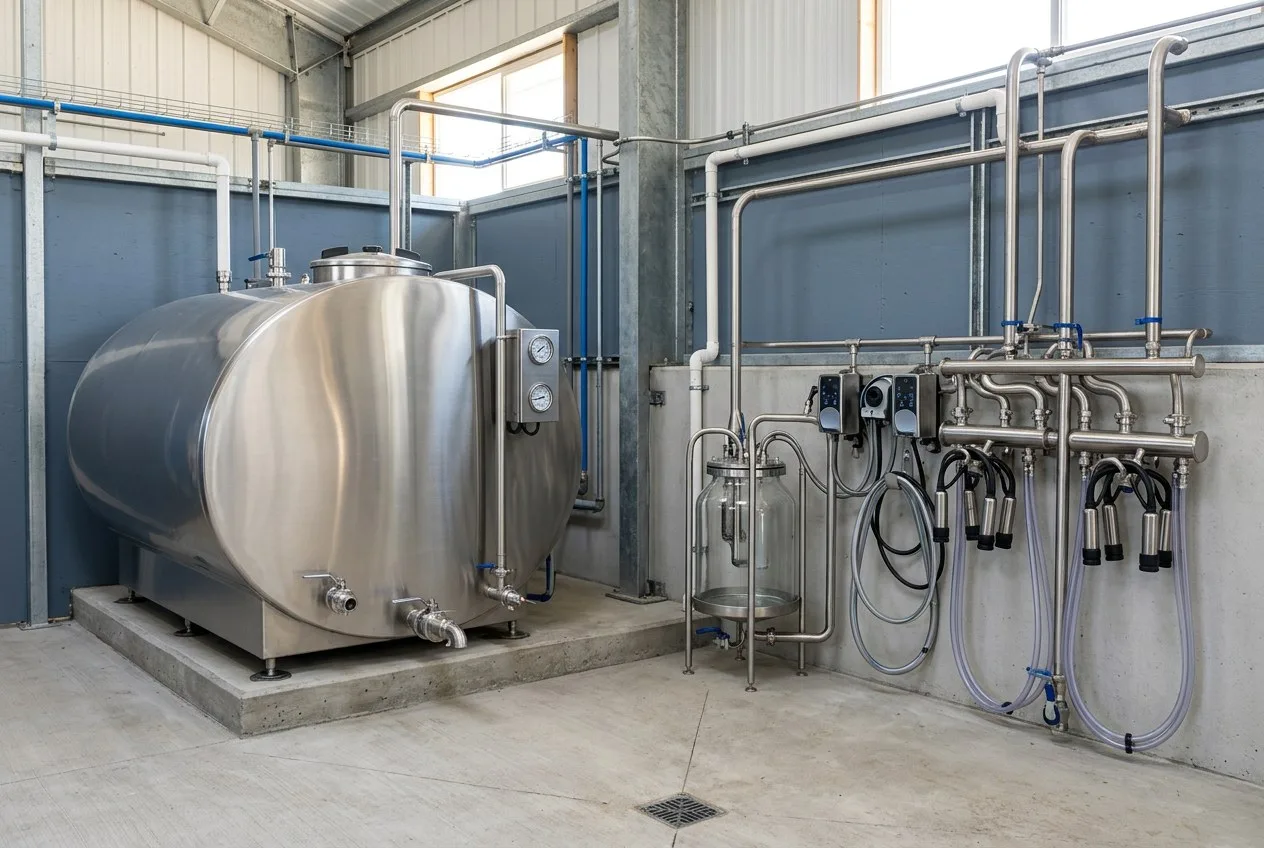
The compressor in the milk cooling tank and the vacuum pump in the milking unit are the motor load. A standard UPS is not designed to support these devices. A similar logic cold chain monitoring and UPS We explained in our article: UPS does not operate the compressor; it protects monitoring, recording and alarm devices.
| Equipment | Can it be protected with UPS? | Recommended approach |
|---|---|---|
| Temperature recorder and alarm | Yes | Small UPS or battery-powered alarm unit |
| Milking automation / computer | Yes | Single-phase online UPS, records protection |
| Vacuum pump | Usually no | Generator or sufficiently large battery inverter |
| Milk cooling compressor | Usually no | Generator, with transfer switch |
| Drinking water pump | Depends on power | Battery powered system for small pumps, generator for large ones |
Remote monitoring is also important for monitoring these equipment: if no one notices the outage, the value of the backup system decreases. From our perspective UPS remote monitoring and alarm management article guides in this regard.
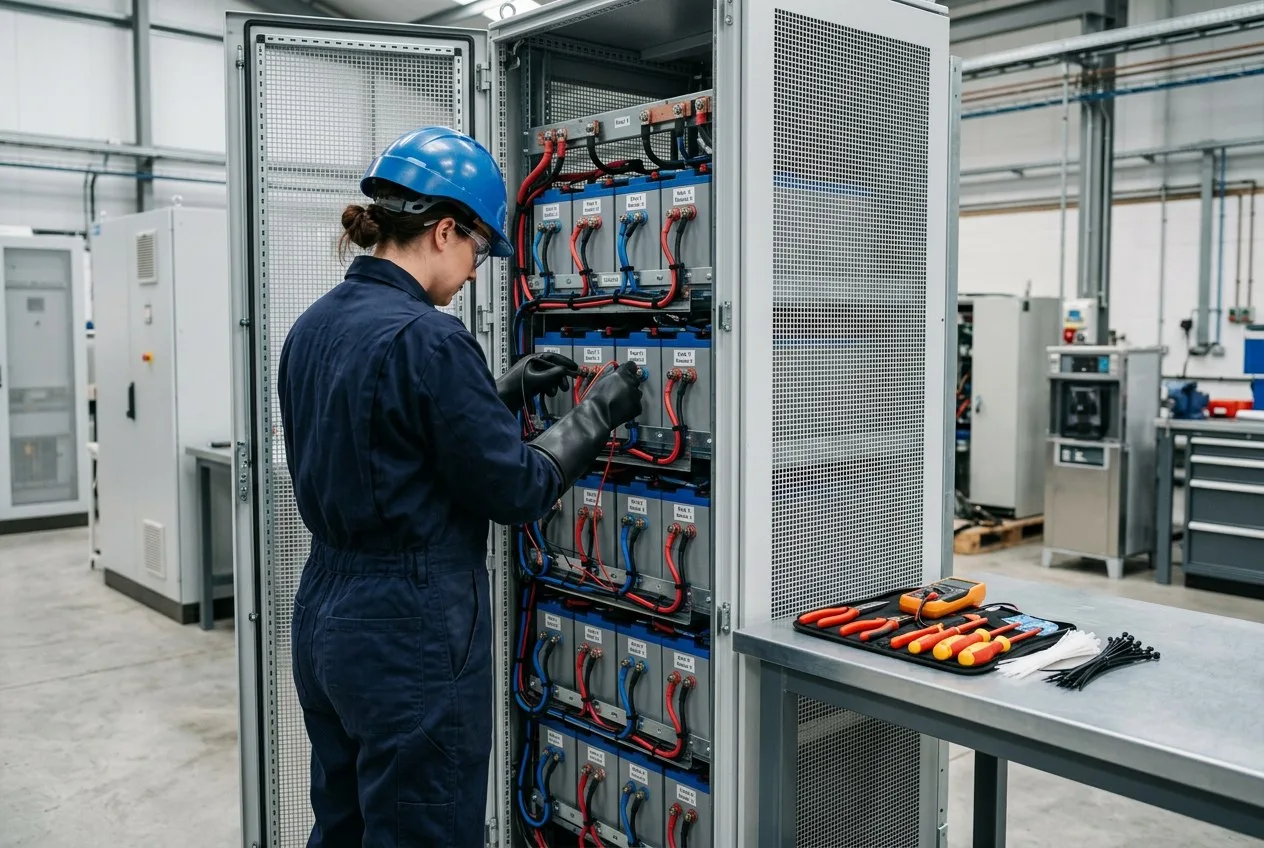
Battery selection: Which technology is suitable for the harsh agricultural environment?
The choice of battery is determined by the ambient conditions, the frequency of discharge and the possibility of maintenance. For the general framework choice of gel, AGM, OPzV and lithium You can read the article; Here we look at points specific to agricultural facilities.
| By | Lead-acid (VRLA/AGM/gel) | Lithium (LiFePO4) |
|---|---|---|
| Ambient temperature | Life is significantly shortened at high temperature | More temperature tolerant, but BMS has temperature limits |
| Daily cycle | Life decreases in deep and frequent discharge | More suitable for frequent cycling |
| Usable capacity | Limited DoD recommended for life | Higher DoD is generally available |
| Initial investment | Usually lower | Usually higher |
| Security management | Gas and ventilation attention | BMS, fire safety and proper placement |
Typical cycle life and yield values differ from manufacturer to manufacturer; refer to the manufacturer's data sheet for the exact value. Lithium technology LiFePO4 battery In his article, he describes the protection electronics BMS In his article; The effect of the depth of discharge on life DoD and cycle life You can find it in the article.
A lead-acid battery may also be reasonable in a system that is used only for backup purposes and discharged several times a year. In a solar-powered system that charges and discharges every day, cycle life and usable capacity highlight lithium. The usage profile of the facility decides which one is suitable.
Installation location and environment: Ammonia, dust, moisture and temperature
The air of the animal compartment is a harsh environment for electronics. Ammonia and moisture lead to corrosion at the connection points; dust clogs the cooling ducts. Rules of thumb:
- Separate compartment: The inverter and battery pack should be located outside the animal section, in a dry and closed room.
- Ventilation: The battery room should be ventilated in accordance with the technology used; for details Battery Room Ventilation and Safety should be looked at.
- Temperature: Places under the roof or inside the container that receive direct sunlight and heat should be avoided.
- Protection class: For devices that will be outside, the appropriate IP class and rain and dust protection should be sought.
- Fire Safety: Flammable materials such as straw, feed and sawdust should be avoided; for lithium lithium battery fire safety and Thermal runaway articles should be read.
- Rodent and insect: Cable ducts and panel entrances should be kept closed.
All of these works carry a high risk of DC voltage, arcing and short circuits. Connection, panel and battery work must be carried out by qualified electrical personnel; why it matters Occupational safety in UPS and battery work It is explained in the article.
Legislation: Relationship of SPP with backup power in farms and greenhouses
The regulation on unlicensed electricity generation is the basic framework for agricultural enterprises that want to establish a grid-connected generation facility. In the regulation of EMRA published in the Official Gazette It is essential for people who produce unlicensed production to meet their own needs. is specified. We do not give a numerical limit in this article, as installed power limits, provisions regarding agricultural irrigation subscriptions, land use and application steps have changed over time. The Regulation was recently amended by the Official Gazette dated April 2, 2026; for the current situation, refer to the official pages of EMRA, the Ministry of Energy and Natural Resources, and the distribution company you are affiliated with.
The practical question that concerns the plant owner here is: A grid-connected SPP does not solve the problem of outages. Backup operation also requires a battery and a hybrid inverter or generator. For legislation and the application process Unlicensed Electricity Generation and Rooftop SPP by Offsetting You can review the articles. Bempower does not provide SPP installation or application services; It offers support on the UPS, battery and inverter side.
Where there is no grid: When is an off-grid system required?
In places where the power line does not reach or the connection cost is high (remote greenhouse, pasture farm, small feed warehouse), an off-grid system is considered. Here, the panel and battery capacity is determined by the worst season and the number of consecutive cloudy days; this increases the capacity. For large loads such as ventilation, heating and cooling, the off-grid solution alone is often difficult and expensive. A more reasonable approach is to use the solar system for small and discrete loads (water pump, lighting, control, camera) and leave the main load to the generator.
The following articles are helpful in this title: Off-grid setup, Solar Pump Systems for Agricultural Irrigation and Solar power supply for remote security cameras.
Common mistakes
- The assumption that "there is a panel on the roof, it works in an outage": The grid-connected inverter shuts down on an outage; without a hybrid structure or separate backup source, the fans stop.
- Calculating only the average power: If the motor starting currents are not taken into account, the inverter will give an overload error.
- Attempting to back up the entire plant: If the critical load panel is not allocated, the system grows unnecessarily.
- Putting the battery and inverter in the animal section: Ammonia and dust seriously reduce life.
- Untested backup: If the generator is running but the critical line is not being supplied, the test is unsuccessful. Agro-Matic's alarm guide clearly emphasizes this: If the generator is running and not supplying the planned ventilation circuit, the test is not considered successful.
- Lack of backup of the alarm itself: If the device that will report the network loss is also connected to the network, the warning may not be received.
- Forgetting battery maintenance: If the float voltage, connection tightness and ambient temperature are not monitored, the battery will be insufficient at the critical moment.
Periodic control and maintenance: Is the system ready?
The value of the backup system comes from its operation in times of need. Auburn releases that instead of relying on the generator to do an automatic weekly trial, Conducting a real interruption test separately reminds that it is necessary. The table below is a general framework; frequencies should be adjusted according to the equipment manufacturer's instructions.
| Control | What to look for? | Potential problem and routing |
|---|---|---|
| Outage simulation | Have critical loads been supplied, has an alarm been received, is the transition time acceptable? | If the load is not being supplied, the panel and transfer structure are reviewed |
| Battery voltage and connections | Cell/block voltage difference, terminal corrosion, heating | For imbalance Unbalanced stress and corrosion Article |
| Battery health test | Actual capacity and internal resistance tendency | See Capacity and health test on battery bank |
| Inverter / UPS warm-up and filter | Dust, fan operation, error logging | Dust accumulation requires periodic cleaning |
| Panel surface | Bird droppings, dust, shadow | See Panel Cleaning and Maintenance |
| Grounding and surge arrester | Lightning and mains pulse protection in the open area | See Grounding and lightning protection |
If production is low If the solar energy system produces less checklist in the article, and to monitor the status of the system, Solar Energy Monitoring Systems article helps. For the general maintenance framework Periodic Maintenance Checklist for Solar Energy Systems, for special care of the battery Battery Maintenance and Extending Its Life text can be used.
Decision flow: Where to start?
- Make a cargo inventory: List the power, runtime, and take-off current of each device.
- Separate critical lines: Separate the first and second class loads.
- Determine the acceptable downtime: Talk to a veterinarian or agricultural engineer based on animal species, age, season and density.
- Choose the combination of sources: Battery for small load and short time, generator for big load and long time, solar power for saving daytime.
- Set the alarm independently: Add backup feed alert system for mains loss, high temperature and generator status.
- Write a test plan: Determine who will test, when, and with which record.
To see the selection criteria at the enterprise scale rooftop SPP and UPS in enterprises and SPP with storage You can look at his articles. For economic evaluation Turnaround time calculation The article presents a method. A compilation on the greenhouse side, That the reported payback periods for greenhouses with PV range from 4 to 9 years transfers; this interval is specific to the works and may not apply to your facility.
How does Bempower support in this process?
Bempower; It provides sales, installation, periodic maintenance and technical service on the UPS, battery pack and inverter side. For on-site exploration of alarm devices, control panels and battery planning for critical loads in your greenhouse and livestock facilities, testing and maintenance of existing battery groups or testing backup power systems with outage scenarios From our contact page you can contact us. We do not have solar panel installation and SPP application services; we recommend that you work with authorized companies on the panel side.
- Emergency Power for Poultry Production — Auburn University, Poultry Housing Tips, 2025. https://ssl.acesag.auburn.edu/poultryventilation/documents/Nwsltr-8.pdf
- Is Your Standby Generator Set to Go? Alarms Ready? Breakers — Auburn University, Poultry Housing Tips, 2025. https://ssl.acesag.auburn.edu/dept/poultryventilation/documents/Nwsltr-18-Backups.pdf
- Managing Broiler House Backup Systems to Avoid Disaster — Auburn University, Poultry Housing Tips, 2025. https://ssl.acesag.auburn.edu/dept/poultryventilation/documents/Nwsltr-1.pdf
- Avoiding Electrical Catastrophe — Auburn University, Poultry Housing Tips, 2025. https://ssl.acesag.auburn.edu/poultryventilation/documents/Nwsltr-71AvoidingElectricalCatastrophe.pdf
- Regulation on Unlicensed Electricity Generation in the Electricity Market (Official Gazette, 12 May 2019) — Official Gazette / EMRA, 2019. https://www.resmigazete.gov.tr/eskiler/2019/05/20190512.pdf
- Broiler Alarm Management Guide for Poultry Houses — Agro-Matic, 2026. https://www.agro-matic.com/post/broiler-alarm-management-guide-for-poultry-houses
Resources
