


Which Documents and Standards Should You Check When Buying Solar Panels, Inverters and Batteries?

When buying solar energy equipment, you will come across phrases in the quotation such as "CE certified," "IEC certified," or "Tier 1." Each of these proves something different; some demonstrate safety, some durability, and some only reflect the manufacturer's own declaration. To someone who doesn't know how to read the documents, they all look the same, yet the difference between them can relate to a failure or fire risk that only emerges years later.
In this guide, we explain what the most frequently cited international standards for solar panels, inverters and batteries cover, what they do not cover, and which documents you can request from the seller before purchasing. It is written for homeowners, business owners, technical managers and purchasing departments. The goal is not to turn you into a standards expert, but to help you ask the right questions when comparing quotations.
We do not go into topics that change over time, such as prices, incentives, connection rules and regulations; for these, you should consult the current official pages of the relevant authorities. The focus here is on the technical documents of the product itself.
Standard, Test Report, Certificate and Declaration: Four Different Things
Before starting to check documents, it is necessary to distinguish between the terms, because sellers often use these words interchangeably.
| Term | What does it mean? | What to ask when buying |
|---|---|---|
| Standard | A document published by organizations such as the IEC that defines test methods and requirements. A standard itself does not approve a product. | Which version of which standard was the product tested against? |
| Test report | The technical record of the laboratory testing of a specific model number. | Is the model in the report exactly the same as the model you are buying? Is the laboratory accredited? |
| Certificate | An approval document based on a test report, with a defined scope and validity date. | Can the scope, date and issuing body be verified? |
| Declaration of conformity / CE mark | The manufacturer's declaration, under its own responsibility, that the product complies with the relevant legislation. | Are the standards and test reports on which the declaration is based listed? |
A practical rule: the mention of a standard's name in a quotation does not mean the product has passed that standard. What shows that it has passed is a test report or certificate tied to the exact model number.
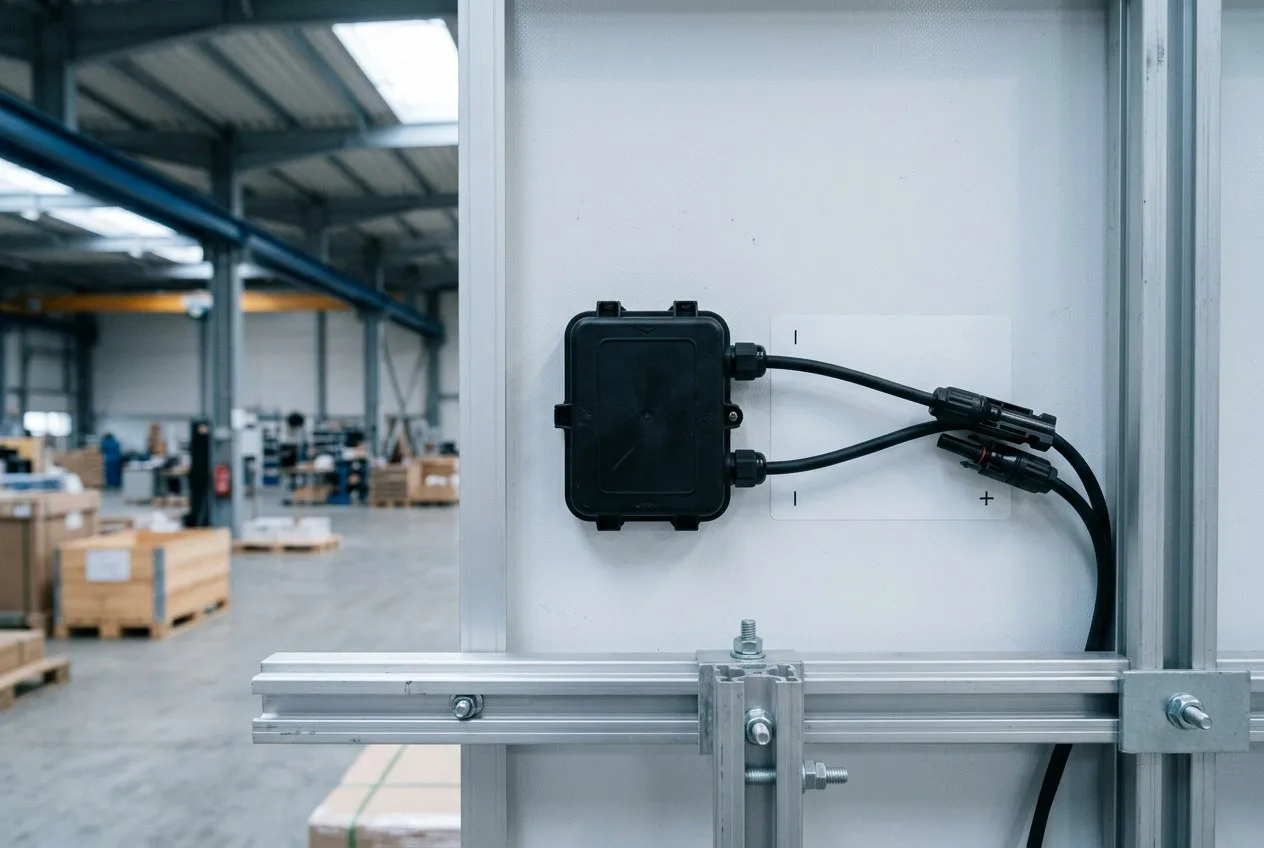
Which standards should you check for a solar panel?
Panel quality is evaluated along two axes: whether the design withstands outdoor conditions, and whether the product is safe for people. These two axes are covered by two separate families of standards.
IEC 61215: Design qualification
The IEC 61215 series defines the design qualification and type approval of panels that will operate outdoors for a long time. The series consists of Parts 1 and 2; test methods are given in 61215-2, while general requirements are in 61215-1 . There are sub-parts (1-1 to 1-4) for technologies such as crystalline silicon and thin film. Put simply: does the panel maintain its performance after stresses such as temperature cycling, humidity and mechanical load?
IEC 61730: Safety qualification
IEC 61730, on the other hand, focuses on safety. Part 1 describes the construction requirements addressing the risk of injury from electric shock, fire and mechanical stress. Part 2 explains how these requirements are tested. In other words, 61215 answers the question "Will it last?" and 61730 answers "Is it safe?"
For a reliable panel, in addition to IEC 61730-1, 61730-2 and the 61215 series, IEC 62804, which covers PID (potential induced degradation) testing, is also generally sought . PID is a phenomenon that can cause power loss in a panel over time under high system voltage. Standards are updated over time; the edition year (e.g. the 2021 or 2023 editions) must be visible in the document.
What to look for in a panel document
- Does the document state the panel's exact model number and place of manufacture (factory)? The same brand may manufacture at different factories.
- Is there a document for both 61215 and 61730, or only one of them?
- Is the document within its validity date, and is the standard version current?
- Keep in mind that there are separate standards for auxiliary parts such as the junction box, connectors and cables; a component certificate can be requested for these as well.
One point needs to be emphasized separately: A module passing the safety qualification does not show that the wiring, mounting and isolating equipment in the field have been installed safely. The panel document proves the product, not the installation. For the technical differences between panel types, you can read our article on types of solar panels .
Which documents are requested for an inverter?
The inverter converts DC power to AC and is the most electronics-heavy part of the system. In hybrid models, battery charging and grid management are also handled by this device. For this reason, the document list is broader than for panels.
IEC 62109-1 and 62109-2: Safety
IEC 62109 is the safety standard for power converters used in photovoltaic systems. The standard defines minimum requirements for design and manufacture to protect against electric shock, energy, fire, mechanical and other hazards. Part 1 gives the general rules that apply to all photovoltaic power converters; Part 2 covers the safety requirements specific to inverters that convert direct current to alternating current. In practice, an inverter is evaluated against both parts together.
This standard also has an important safety feature: protection functions such as continuous monitoring of array insulation resistance and the device stopping safely and raising an alarm when an earth fault is detected are evaluated within this framework. The first edition of the standard, dated 2010, is still the common reference; the revision is expected to be published in late 2026 or early 2027 and updates topics such as arc fault and earth fault protections. That is why the question "according to which version?" is meaningful in a quotation.
What IEC 62109 does not prove
This standard is a product safety standard. Efficiency is measured per IEC 61683 and MPPT efficiency per IEC 62891, and neither is a safety test. Moreover, having an IEC 62109-compliant inverter together with an IEC 62619-compliant battery does not make a safe storage system; 62109 compliance indicates safety, not compatibility. For hybrid inverter and battery pairing, the compatibility list published by the manufacturer and communication protocol information should be requested separately. For how hybrid devices work, you can take a look at our article on what a hybrid inverter is .
Additional documents for grid-connected inverters
For inverters operating in parallel with the grid, the grid protection functions (such as over/under voltage and frequency, and anti-islanding protection) must meet the expectations of the distribution company. Which document, test report or settings file is valid varies by regulation and distribution company and is updated over time. For current information on this, see the official pages of EPDK, the Ministry of Energy and Natural Resources and the relevant distribution company. For details of the process, you can read our article on unlicensed electricity generation and rooftop solar power plants .
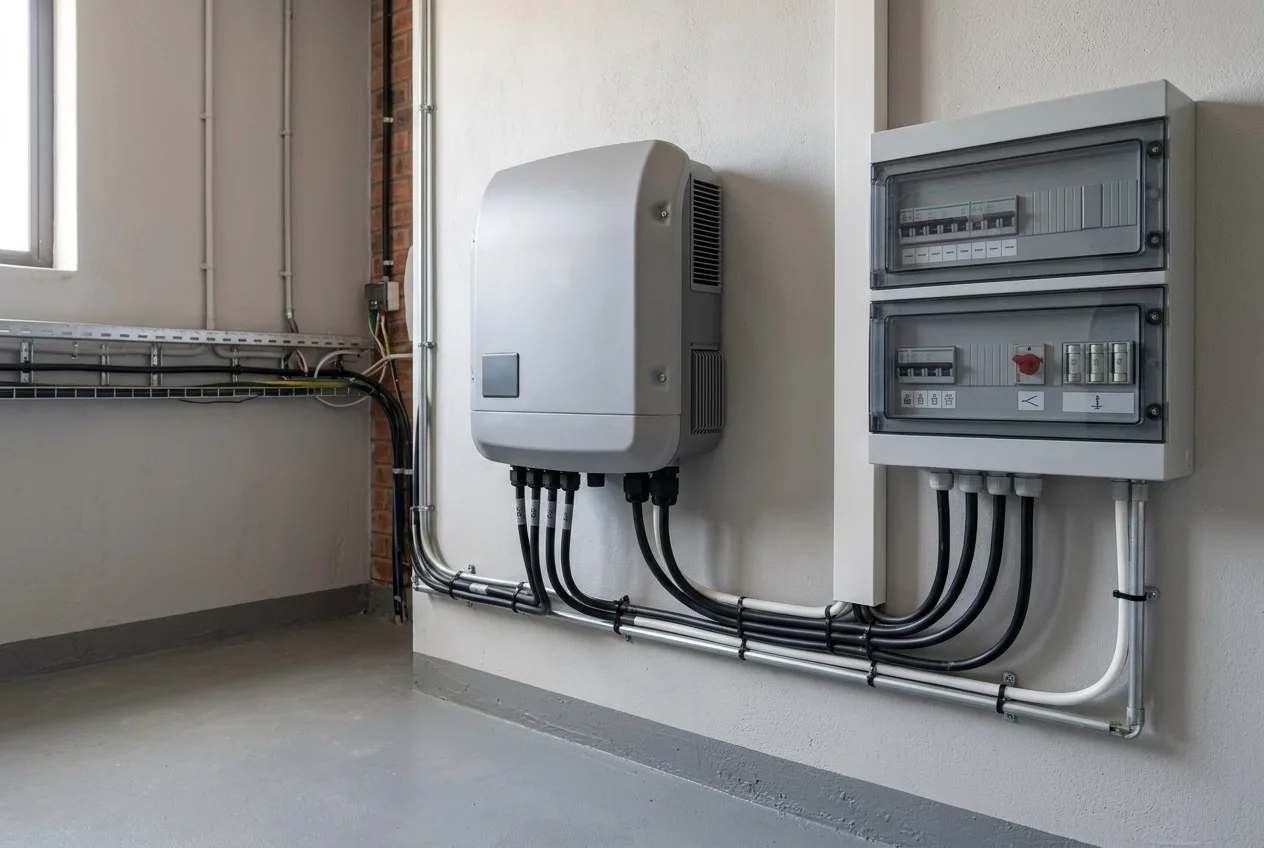
Which standards matter for batteries?
On the battery side there is no single "universal" document; different standards stand out depending on the technology (lead-acid or lithium) and the use (off-grid, grid-connected, UPS).
Lithium batteries: IEC 62619
For stationary lithium batteries, the most frequently requested standard is IEC 62619. It specifies requirements and tests for the safe operation of secondary lithium cells and batteries in industrial applications, including stationary use. Applications within its scope include telecom, UPS, electrical energy storage systems, switchgear and emergency power. IEC 62133-2, used for portable device batteries, is intended for smaller cells; 62619 focuses on larger, industrial lithium-ion batteries.
The 2022 edition of the standard has expanded the scope to topics such as battery management system (BMS) safety, electromagnetic compatibility, software and system protection. The tests include overcharge, short circuit, mechanical stress, temperature endurance, fire and vibration tests. Two limitations should be known: The standard addresses only the first life of cells and batteries; it does not consider reuse or repurposing. For this reason, for second-hand or repurposed batteries this document alone is not considered a guarantee; for this, see the checks in our article on solar energy systems with second-hand batteries . There are also additional storage-specific standards such as IEC 63056; 63056 addresses lithium cells and batteries for electrical energy storage systems, while 62619 addresses industrial applications in general.
Off-grid photovoltaic applications: IEC 61427-1
IEC 61427-1 covers the requirements and performance verification methods for secondary batteries used in photovoltaic energy systems, for off-grid applications. It applies to every type of secondary battery , i.e. it provides a common framework for lead-acid and lithium. It includes performance tests such as the capacity test, general cycle endurance test, charge retention test and cycling test under extreme conditions . However, it contains no information on battery sizing, charging method or system design. When choosing a battery, treat this document as proof of performance, not as proof of safety.
Lead-acid (AGM, gel, OPzV) batteries
The safety risks of lead-acid batteries differ from those of lithium; what really matters is performance data such as cycle life, depth-of-discharge tolerance and float life. Check at which depth of discharge, temperature and discharge rate these values are given in the manufacturer's datasheet. For the differences between the technologies, the article on choosing batteries for solar energy is helpful.
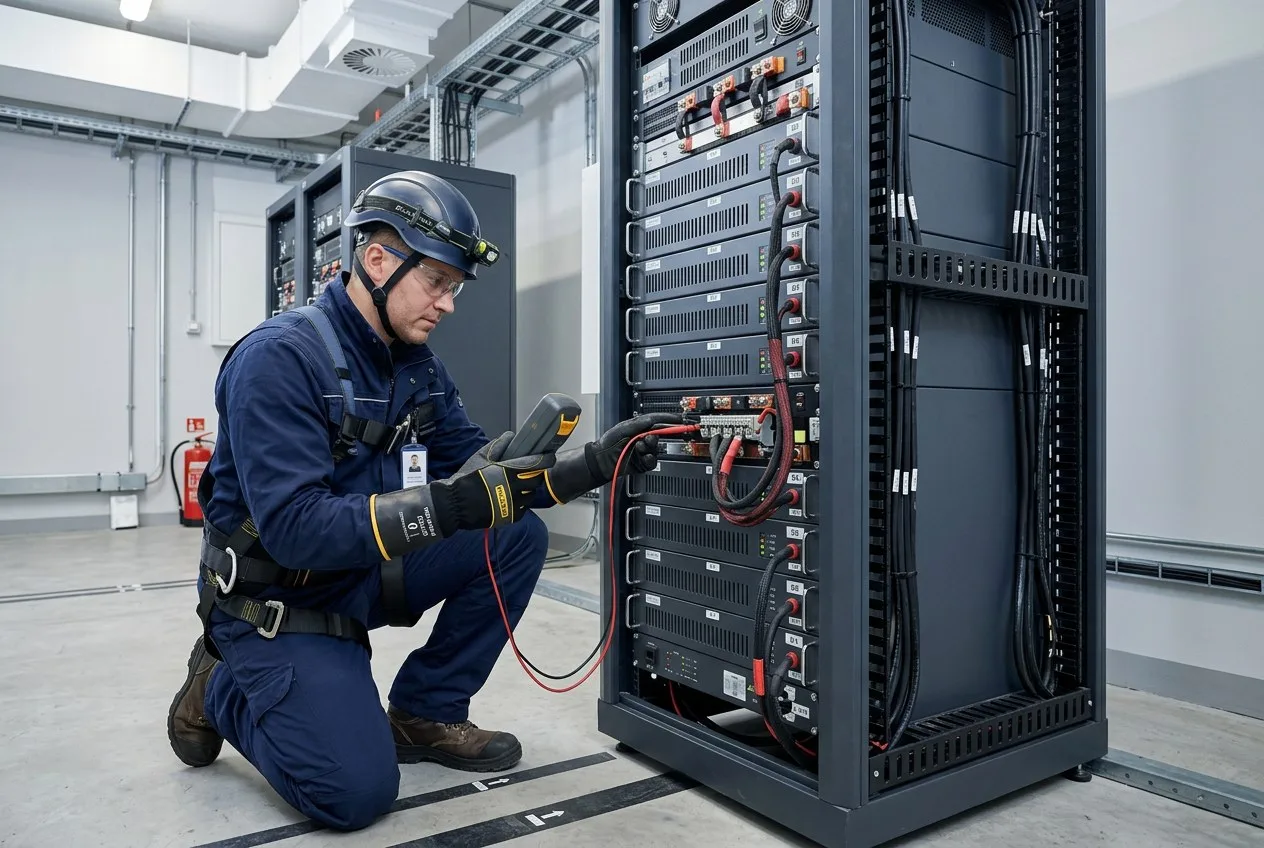
Quick comparison: Which document for which component?
| Component | Relevant standard | What does it show? | What does it not show? |
|---|---|---|---|
| Panel | IEC 61215 | Design qualification and resistance to outdoor conditions | Installation safety, guaranteed lifetime |
| Panel | IEC 61730 | Electrical, fire and mechanical safety | Performance and energy yield |
| Inverter | IEC 62109-1 / -2 | Product safety of the power converter | Efficiency, battery compatibility, grid codes |
| Inverter | IEC 61683, IEC 62891 | Efficiency and MPPT efficiency measurement method | Safety |
| Lithium battery | IEC 62619 | Safety tests for industrial lithium batteries | Second-life use, compatibility with the inverter |
| Battery (PV, off-grid) | IEC 61427-1 | Performance tests for photovoltaic use | System sizing and charging method |
As the table shows, no single document says "everything is fine" on its own. Documents complement each other; the remaining gaps are filled by installation quality, the compatibility list and commissioning measurements.
What are the CE mark and other marks for?
The CE mark indicates that the manufacturer declares the product's conformity with the relevant EU regulations. Frameworks such as low voltage, electromagnetic compatibility and battery regulations come into play. What matters is which harmonized standards this declaration is based on. A reliable manufacturer states the list of standards and their versions clearly in the declaration of conformity; if the declaration consists only of a generic sentence, request additional documents.
Third-party certification marks (e.g. marks from independent laboratories) show that the product has been tested by an organization other than the manufacturer and are generally considered stronger assurance. Even so, the standard and model for which the mark was issued should be checked in the relevant organization's database or through written confirmation. In Turkey, market surveillance, import and product safety regulations may change over time; for current requirements, refer to the official pages of institutions such as the Ministry of Trade and the Ministry of Industry and Technology.
Documents to request from the seller before purchase
The list below gathers the documents you should request in writing at the quotation stage. Not all of them are mandatory for every project; however, the list makes it easier to notice a missing document.
| Document | Panel | Inverter | Battery |
|---|---|---|---|
| Product datasheet (current) | Available | Available | Available |
| Safety standard test report / certificate | IEC 61730 | IEC 62109-1/-2 | IEC 62619 (lithium) |
| Performance / endurance report | IEC 61215 | Efficiency report | IEC 61427-1 or manufacturer cycle data |
| CE declaration of conformity | Available | Available | Available |
| Warranty certificate | Product and performance warranty | Duration and scope | Duration, cycles and remaining capacity requirement |
| Compatibility information | String voltage, current limits | Approved battery list, communication | Approved inverter list |
| Turkish user manual and service information | Available | Available | Available |
| Transport and storage document (lithium) | - | - | Transport classification information |
After receiving the documents, run three consistency checks: model number, standard version and validity date. If any one of these three does not match, ask the seller for a written explanation.

Example of reading a document: step by step
Suppose you are reviewing a lithium storage quote. The quote says "10 kWh LiFePO4 battery, IEC certified." Proceed as follows:
- Ask about the standard: To the question "Which IEC standard?" the answer was "IEC 62619." This is a safety standard suitable for stationary industrial use; a good starting point.
- Check the version: Does the document say 2017 or 2022? The current edition also covers BMS and software safety.
- Check the model match: The report says "ABC-10," while the product in the quote is "ABC-10-PRO." These two products may not be the same. Ask in writing about the difference.
- Read the datasheet: Nominal capacity appears as 10 kWh. Usable energy, however, depends on the depth of discharge permitted by the manufacturer.
Calculation example (assumptions: usable depth of discharge 90%, inverter conversion efficiency 95%; actual values must be taken from the product datasheet):
- Usable battery energy: 10 kWh × 0.90 = 9 kWh
- Energy reaching the load: 9 kWh × 0.95 ≈ 8.5 kWh
- Estimated runtime at a continuous 1 kW load: 8.5 kWh ÷ 1 kW ≈ 8.5 hours
The document does not do this calculation for you; however, it shows which test conditions the datasheet values are based on. Because capacity varies with discharge rate and temperature, reading the label values correctly is important. For this, see the article how to read a battery label and for capacity calculation, see the article battery capacity calculation
Documents do not guarantee compatibility: System-level checks
That all products are certified does not mean they will work correctly when combined. Common incompatibilities are as follows.
PV array and inverter input limits
The open-circuit voltage (Voc) of a PV array rises in cold weather. Assumption: in a string of 12 series-connected panels, each panel has a Voc of 50 V; at 25 °C the total is 600 V. If an increase of about 10-12% is assumed on a cold day due to the temperature coefficient, it becomes 660-670 V. If the inverter's maximum DC input voltage is 600 V, the device may be damaged. For actual coefficients, refer to the panel datasheet. This check is done with the same logic for charge controllers; details are explained in the article charge controller selection
Battery–inverter communication
If the communication between the lithium battery's BMS and the inverter (such as CAN, RS485) is not compatible, the system cannot read battery data and may charge/discharge outside safe limits. Therefore, check the inverter manufacturer's approved battery list. You can find what the BMS protects in the article what is a BMS
Protection and grounding
Product standards do not cover on-site fuse, switch, surge arrester and grounding design. This part requires separate calculations and separate qualified personnel; for details, see the article DC fuse, switch and surge arrester protection
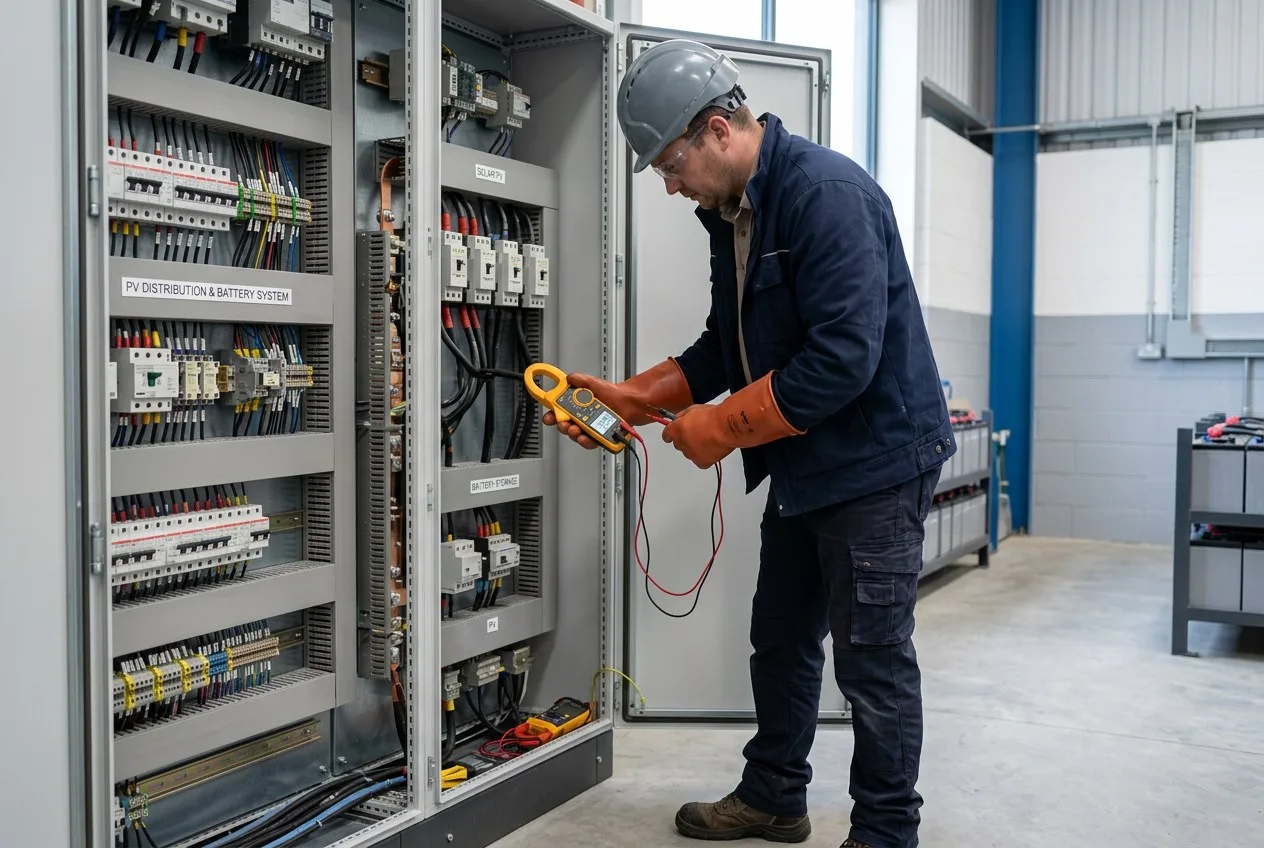
Common mistakes and warning signs
| Situation | Why is it a problem? | What should be done? |
|---|---|---|
| "We have all the documents" but no document is shown | The claim cannot be verified. | Request the model-specific report and certificate in writing. |
| The document was issued for a different model | Small design differences can change safety. | Have the model match confirmed in writing. |
| The standard version is too old | It may not cover current requirements. | Ask for the version year; request testing to the current version. |
| Only CE, no report | Self-declaration; no independent verification. | Request a third-party test report. |
| No BMS information provided for the lithium battery | Protection limits are unknown. | Ask about the BMS protection functions and communication protocol. |
| Warranty terms are unclear | Without a capacity/cycle condition, it is not covered by the warranty. | Get the warranty terms (cycles, temperature, remaining capacity) in writing. |
| The price is far below the market | The risk of undocumented products or products with forged documents increases. | Verify the documents and the product label together. |
Additional safety considerations for storage systems
In lithium storage, placement matters as much as documentation: proper ventilation, distance from heat sources, separation from flammable materials, and connections made by authorized personnel are all part of safety. Even a battery that complies with the standards can pose a risk if it is installed incorrectly. We covered this topic in our article on fire safety in lithium battery storage . Because high DC voltage, arcing, and short-circuit current are dangerous, battery and inverter connections are not a "do it yourself" job; they must be made only by authorized electrical personnel.
Measurements and checks carried out during commissioning should also be recorded. For the logic behind post-installation checks, the article on the UPS side, UPS initial commissioning and acceptance tests , and for the battery-side tests, the article on commissioning after battery replacement can serve as a guide.
How to write the documentation requirement in public and corporate procurement
When preparing a technical specification for businesses and institutions, the documentation requirement must be clear and verifiable. For example, the statement "the products shall comply with IEC standards" is ambiguous. Instead, you should specify which standard, which part, which edition, and which type of document (accredited laboratory report, third-party certificate) is required. The following items can also be added:
- Submission of a model-specific test report and certificate with the bids,
- Checking on delivery that the product labels match the documents,
- The warranty and service commitment being fulfillable in Türkiye,
- Making the commissioning measurement report a condition of delivery.
If solar energy and a UPS are planned together for facilities that supply critical loads, the article on rooftop solar power plants (GES) and UPS for businesses outlines the framework.
Standards keep changing: how do you keep track of the latest versions?
Standards are renewed. Panel standards such as IEC 61215 and IEC 61730 have been released in new editions over time. This means that a document that was valid a few years ago may not be based on the latest edition today. This does not invalidate the document; however, knowing which edition the product was tested against is necessary for comparing bids fairly. For current edition information, check the IEC's official webstore page or your national standards body.
The documents are in order, so what next?
Checking documents is the first step of the purchasing process. The next steps are sizing the system correctly and having it installed by authorized personnel, recording measurements after installation, and establishing a regular inspection plan. We explain the general logic of the system in the article on how a solar energy system works , and the differences between system types in the article on on-grid, off-grid, and hybrid systems

Support for batteries, UPS, and inverters
Bempower provides survey, installation, periodic maintenance, and technical service for UPS systems, battery banks, and inverters, and offers on-site support in Istanbul and the surrounding provinces. To discuss the suitability of your existing battery or inverter system and your testing and maintenance needs, you can reach us via our contact page .
- Solar PV modules: IEC 61730 safety and IEC 61215 performance — Spilma, 2026. https://www.spilma.com/en/guides/solar-pv-iec-61730-iec-61215
- EN IEC 61215-1:2021 - PV Modules Design Qualification and Test Requirements — iTeh Standards (CLC), 2021. https://standards.iteh.ai/catalog/standards/clc/a015dc3a-1030-4ce6-b7a6-dda04a78716e/en-iec-61215-1-2021
- Standards for PV Modules and Components -- Recent Developments and Challenges — National Laboratory of the Rockies (NREL), 2025. https://research-hub.nlr.gov/en/publications/standards-for-pv-modules-and-components-recent-developments-and-c/
- IEC Solar Standards Explained: PV Modules, Array Design, and Commissioning — SIP1000V Tools, 2026. https://sip1000vtools.com/blogs/resource-center/iec-solar-standards-explained
- IEC 62109: Definition, Scope & Solar Inverter Safety Standard — Qbits Energy, 2026. https://qbitsenergy.com/glossary/iec-62109/
- IEC 62109-1 — current edition & what it covers — learnBESS, 2026. https://www.learnbess.com/standards/iec-62109-1
- IEC 62619:2022 — IEC Webstore, 2022. https://webstore.iec.ch/en/publication/64073
- IEC publishes standard on battery safety and performance — IEC, 2022. https://www.iec.ch/blog/iec-publishes-standard-battery-safety-and-performance
Sources
