


How Do Solar Power, Batteries and Generators Work Together? Hybrid Energy Scenarios

The solar panel alone is not enough on winter days, long cloudy weather and night hours. The battery makes up for this gap, but its capacity is limited. The generator, on the other hand, steps in where the sun and battery are not enough, both feeding the load and filling the battery. In order for the three components to work properly in the same system, the division of labor, connection architecture and settings must be set up correctly from the beginning.
This guide; It was written to home users, business owners and technical officers who consider solar, battery and generator together for a vineyard house, villa, small business or a facility experiencing long outages. We explain the logic of energy flow, AC and DC connected architectures, generator sizing with a numerical example, automatic start/stop settings, the problem of the generator operating at low load and safety issues.
The letter is not an installation instruction. The generator connection, transfer switch and high-current battery side must be carried out by authorized electrical personnel. The aim is to ensure that you can ask the right questions and evaluate the offers.
How do solar, battery and generator divide labor in the same system?
The role of the three sources is different in the hybrid energy system. Solar Panel It produces cheap and quiet energy during the day, but its production depends on the weather and the season. Battery shifts energy in time; stores excess during the day and uses it in the evening and at night. Generator as long as it burns fuel, it gives stable power; however, it brings noise, fuel, maintenance, and emissions. That's why the best setup is the one that positions the generator as a "last resort" and "charging aid" rather than the main source.
This approach also finds its counterpart in the literature. The microgrid study of the US National Renewable Energy Laboratory (NREL) found that the hybrid structure using solar, battery and generator together was examined in the regions examined according to the structure based only on diesel generators A more resilient and cost-effective solution shows that it is. The same institution uses hybrid systems consisting of solar, battery and diesel in off-grid facilities such as forward operating bases He also states that he implements it. The scale is different, but the logic is the same: to reduce the operating time of the generator and bring the renewable resource forward.
If you want to see the basic components of the system in detail Our article describing the panel, inverter, charge control and battery structure of the solar energy system You can look at it. Here, we accept that basis and focus on how the generator is included in the system.
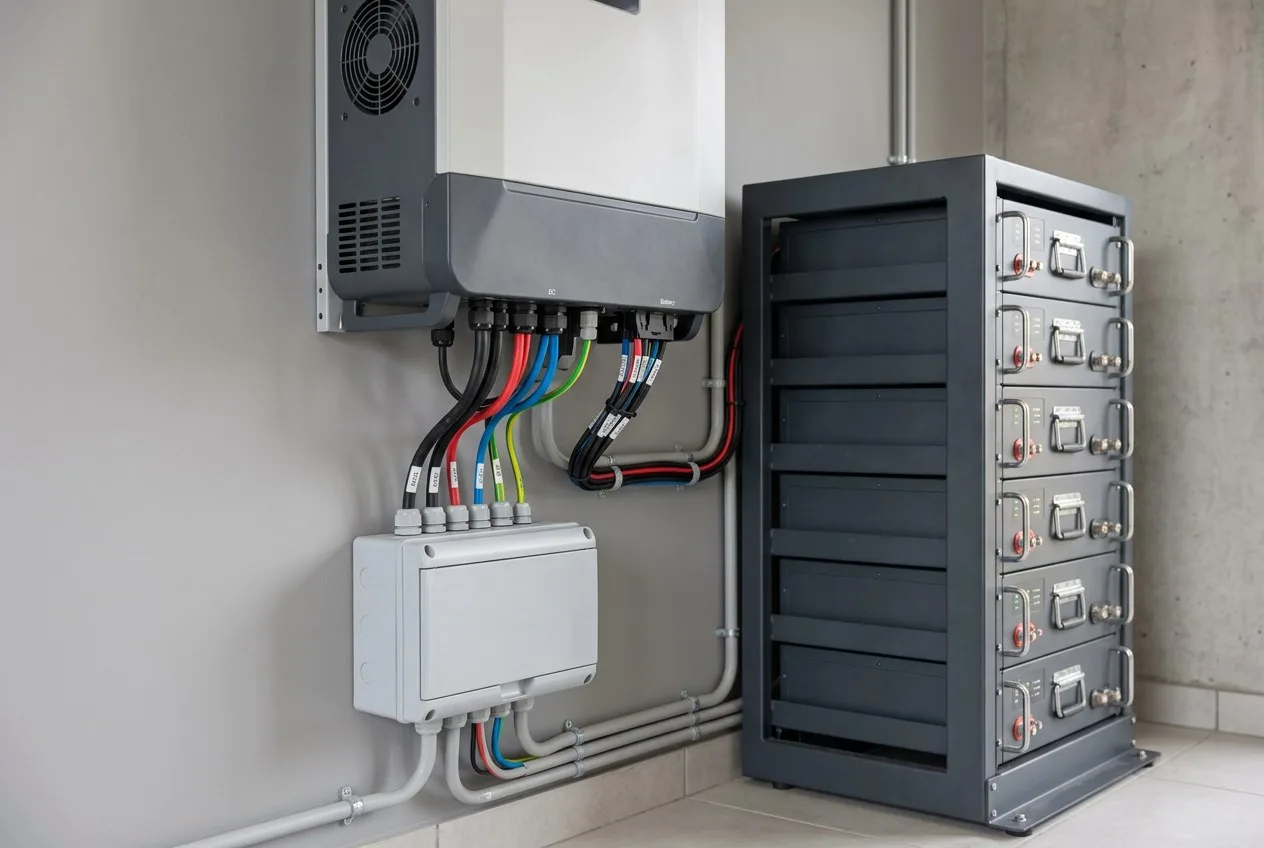
Energy flow and order of priority: Which source comes into play and when?
A hybrid inverter, or inverter/charger, works like an "energy manager". At any moment, it answers the question: who will feed the load, where will the excess energy go, where will the missing energy come from? The typical order of priority is as follows; the actual behavior varies depending on the device settings.
| Status | Who feeds the load? | What does a battery do? | Generator |
|---|---|---|---|
| Sunny daytime, battery not empty | Panel first | Excess energy fills the battery | Off |
| Evening and night | Battery (via inverter) | Discharges | Off |
| Cloudy day, low production | Panel + battery | Discharges slowly | Off, charge level monitored |
| The battery went down to the lower threshold | Generator (via device) | Charges from generator | Works |
| Sudden high load (pump, heater) | Generator + inverter support | Participates in support if necessary | It works, its power must be sufficient |
The critical point here is whether the device sees generator power as an "additional source" or as a "main supply" when the generator is running. In most devices, the generator input acts like a utility input: the load passes directly through the generator, and power is drawn from the same input to fill the battery. If the total current that the device can draw from the input can be adjusted, it is limited by the generator power. Some manufacturers offer a "boost" function where the inverter assists from the battery when the load exceeds this limit; this helps prevent overloading small generators.
The basis of the grid, solar and battery relationship On-grid, off-grid and hybrid system comparison You can find it. The generator can be added to all three structures, but its role is different: in an off-grid system, it replaces the grid, and in a grid hybrid system, it only activates when the grid is cut off.
Connection architectures: Where does the generator connect to the system?
There are three basic ways to connect the generator to the system. Selection; It is made according to the available equipment, generator type and budget.
1. AC input terminal of hybrid inverter
It is the most common and controlled method. The AC output of the generator is connected to the inverter's input to the generator or mains. The device controls the voltage and frequency, accepts the input if appropriate, feeds the loads from this source, and charges the battery. The manufacturer's manuals state that the default input range of an inverter/charger is approximately 180-270 VAC and 45-65 Hz It is seen that it is given as; These intervals vary according to the device, the data sheet should be consulted. When the generator is not active, this input is detected as "no mains" and the device switches to the battery.
One small detail is important: when the generator stops, the output voltage drops slowly for a while, and the device may appear to still accept the input at this time. A manufacturer's manual may recommend raising the undervoltage threshold or to disconnect the inverter from the generator with a serial contactor at the generator stop signal. recommends. Such settings are installation and device specific, must be made by authorized technical personnel.
2. DC-coupled architecture
In this structure, the energy sources are connected to a common DC busbar. A report from NREL found that in hybrid systems installed via a common DC busbar, No synchronization is required as in AC busbar structure. and that the battery can regulate the bus voltage directly or with a DC/DC converter. In this architecture, the generator is usually connected to the DC bus or battery with a separate AC/DC charging unit. It can be efficient, but requires additional equipment and separate protection; the charging profile must be adjusted according to the battery type.
3. Separate feeding by ATS (automatic transfer switch)
In this method, the generator does not enter the hybrid system; the ATS makes the transition between the grid and the generator, and the output of the ATS goes to the grid input of the inverter or to a backup panel. It is common in large facilities and places with separate generator rooms. The ATS must be electrically locked so that the generator and the grid do not supply at the same time.
| Architecture | Advantage | Point to note | Proper use |
|---|---|---|---|
| Inverter AC input | Simple installation, load and charge management in one device | Generator quality and power, input current limit | House, vineyard house, small business |
| DC coupled charging | No synchronization required, flexible control over charging | Additional equipment, separate protection, battery charging profile | Off-grid, DC-heavy systems |
| Separate feed with ATS | Compatible with large generators, easy to add to existing installations | Interlocking, neutral and grounding arrangement, load list | Enterprise, facility, multi-user building |
The most problematic issue during pairing is the voltage and frequency stability of the generator. Generator-induced frequency fluctuations and synchronization problems generator powered UPS in our article We have discussed it in detail; the same logic applies to hybrid inverter inputs.
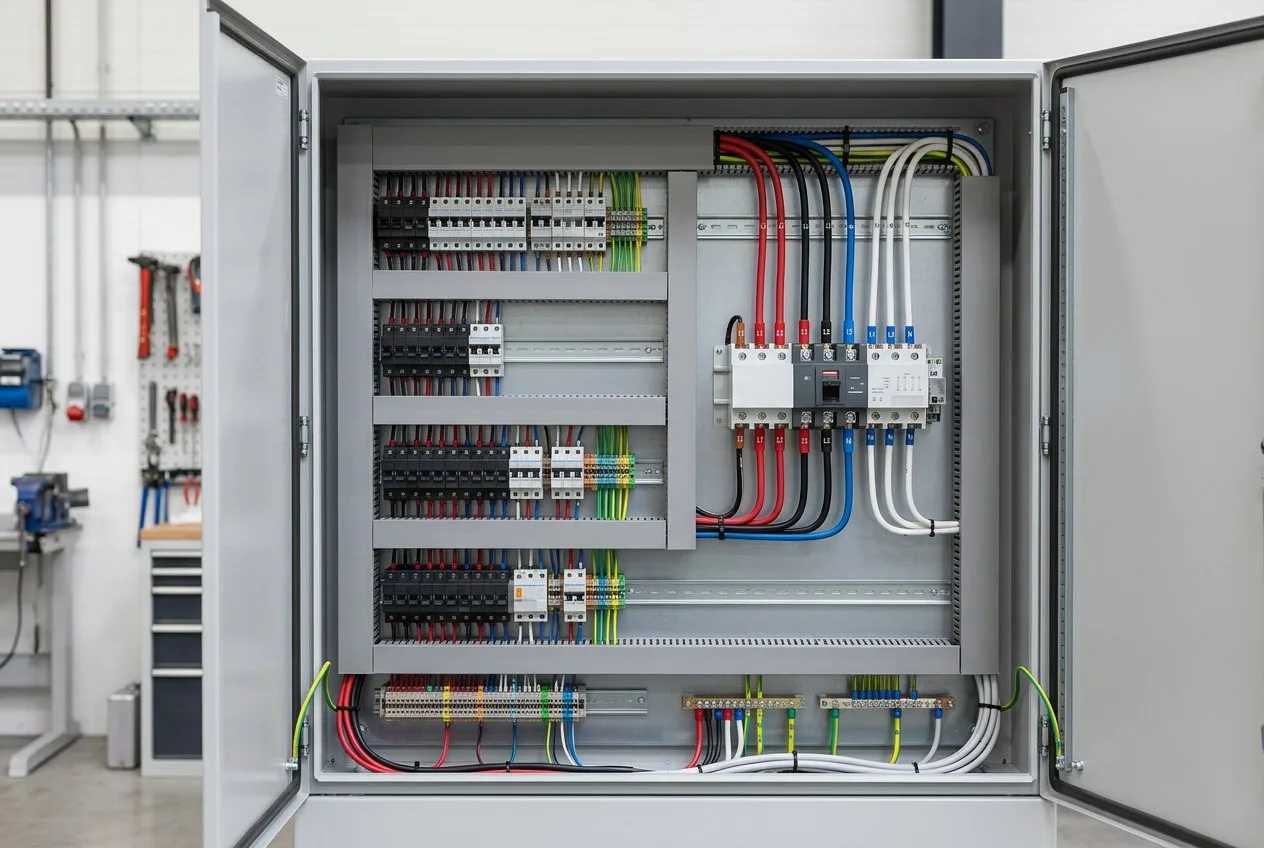
Scenario 1: Off-grid vineyard house and hobby garden
In places where there is no grid or the cost of connection is high, solar and battery are the main sources. The generator, on the other hand, is a supplement that works almost never in summer and occasionally in winter. In this scenario, the main question is how many hours a year the generator will work. In order for this period to be short, the battery and panel power should be chosen realistically; the generator size should not be kept excessively high.
Let's do an example calculation. Assumptions:
- Daily consumption: 10 kWh (refrigerator, lighting, water pump, small appliances).
- Battery: 48 V system, approx. 10 kWh of nominal energy (51.2 V × 200 Ah), usable part approx. 80 percent, i.e. approx. 8 kWh.
- Energy from the panel to the load and battery charge on a winter day: approx. 6 kWh (assumption; varies a lot depending on location, angle and weather).
- Charger and conversion efficiency: approx. 93 percent.
Account:
- Daily deficit: 10 − 6 = 4 kWh. Add the 10 percent share for losses, and it is about 4.5 kWh.
- If we are going to get this energy from the generator, the energy that the charger will draw from the AC input is: 4.5 ÷ 0.93 ≈ 4.8 kWh.
- DC charging power if the charging current is 50 A: 48 V × 50 A = 2.4 kW; The power drawn from the AC input is approx. 2.6 kW.
- Required generator time: 4.8 kWh ÷ 2.6 kW ≈ 1.9 hours/day.
In other words, on consecutive days without sun with low panel production, the generator can be turned on for about two hours a day and turned off. Otherwise, the 8 kWh usable battery will be depleted within a day or two. How to derive battery capacity from consumption battery from daily consumption Ah calculation in our guide You can find it. For other aspects of off-grid installation To the off-grid installation guide You can take a look.
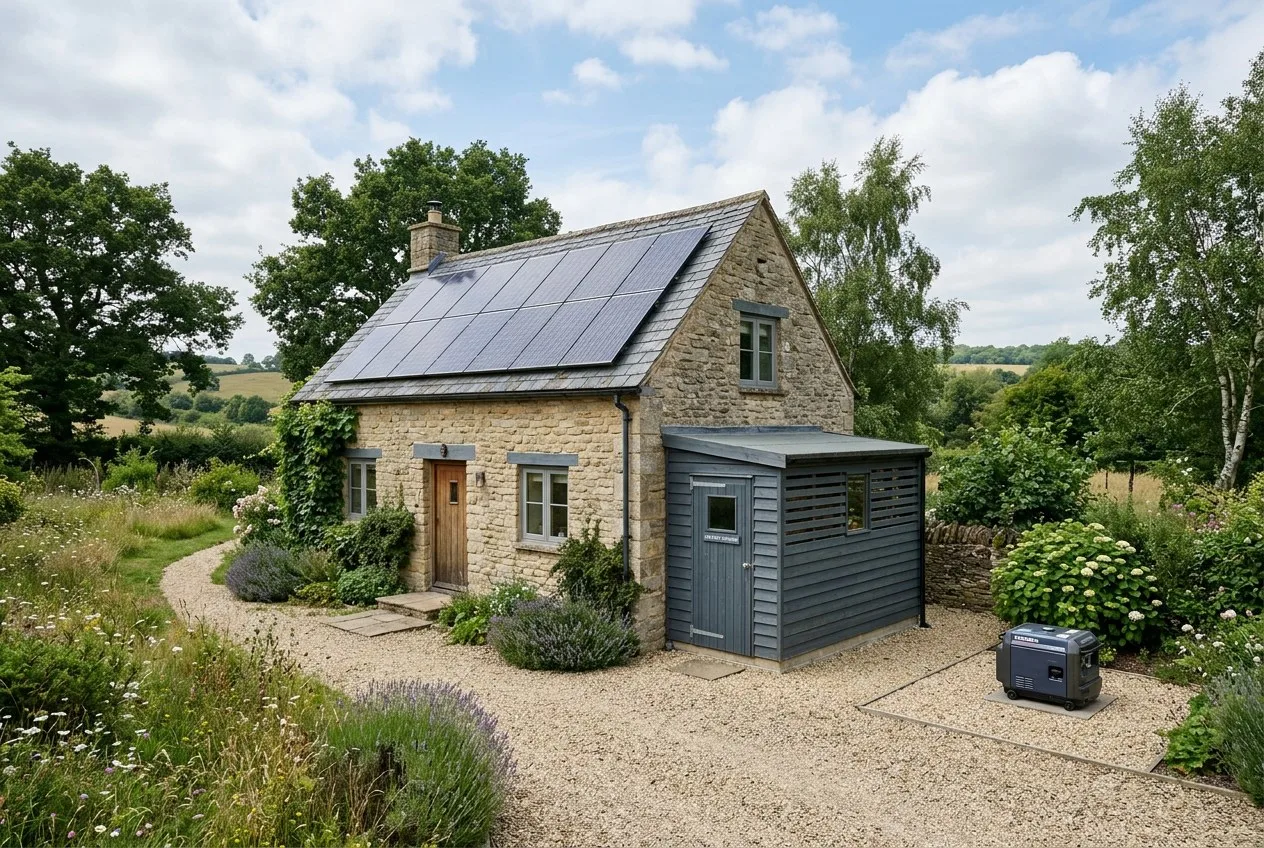
Scenario 2: A residential or business with a grid but frequent and long outages
There is a grid, but outages can last for hours. In this case, the hybrid inverter and battery cover short and medium-term outages, while the generator completes the load and charge in the long outage. Three features of the setup stand out here:
- Critical load separation: Instead of all installations, only the necessary circuits (refrigerator, lighting, internet, door automation, camera) are connected to the backup outlet. Thus, the battery and generator size decreases.
- Network priority: The generator is disabled when there is a network. If the network and generator are to be connected as an input at the same time, locking is a must.
- Transit time: Although the backup output transition of hybrid inverters is short, it may not be as continuous as a conventional UPS. For loads such as computers and servers How the hybrid inverter works in a power outage and be sure to evaluate the transition time.
In this scenario, the smaller the generator, the better; whereas the main goal is for the generator to operate at a reasonable load. The following section calculates this balance.
Generator sizing: Load and battery charge are calculated together
A common mistake is to look only at the power of the load when choosing a generator. The inverter/charger draws both the load and the charge from the generator together. Trying to fill the battery with 50 A when the load is 2.5 kW in a field, the device places a demand of about 5 kW on the generator.
We use the same example in the calculation below (48 V, 50 A charge, 93 percent efficiency):
- AC power for charging: (48 V × 50 A) ÷ 0.93 ≈ 2.6 kW.
- Switching load (direct supply load by the generator): 2.5 kW.
- Total demand: 2.6 + 2.5 = 5.1 kW.
- Available power allowance: A manufacturer's manual is based on Approximately 80 percent of the generator capacity as a starting point for the input current limit recommends. 5.1 ÷ 0.8 ≈ 6.4 kW continuous power required.
- kVA equivalent: If the power factor is taken as 0.8, 6.4 ÷ 0.8 = around 8 kVA. The continuous (nominal) power on the plate should be taken as a basis, not confused with peak power; for details power factor to our article Look.
Note that chargers can create a low power factor and distorted current waveform at the input. A technical note from the same manufacturer states that generator suppliers must use the generator to meet this effect. that you can propose to choose up to 2 times as big states. This is an old note and differs according to the device technology; but it is still necessary to look at the minimum values recommended by the device manufacturer for the generator.
If you want to use a smaller generator, you can limit the charging current. In return, the generator runs longer:
| Option | Charging current | AC power for charging | Total demand (with 2.5 kW load) | Recommended generator (approx.) | Runtime for 4.8 kWh per day |
|---|---|---|---|---|---|
| A: Fast charging | 50 A | ≈ 2.6 kW | ≈ 5.1 kW | ≈ 6.4 kW | ≈ 1.9 hours |
| B: Limited charging | 25 A | ≈ 1.3 kW | ≈ 3.8 kW | ≈ 4.8 kW | ≈ 3.7 hours |
Which option is suitable depends on the balance of fuel, noise and generator cost. Note that in this calculation, we take the load and the charge at the same time; if the load is variable, the generator power should be checked according to the load moments. The first starting current of motorized devices (pump, compressor, air conditioner) is added to this calculation.
If small, portable or "inverter-type" generators are used, it is useful to use the dynamic current limiting feature of the device. The same manufacturer uses this feature a function designed to reduce load effects on low-power, portable inverter generators introduces it as.
Automatic start/stop and battery charging strategy
Operating the generator by hand reduces comfort and battery life. Many hybrid inverters and battery monitoring devices can give the generator an automatic start/stop signal. In a manufacturer's document, it is stated that the built-in battery monitor at a certain discharge percentage, a certain battery voltage or a certain load level can start, at the specified voltage or load level It is explained that it can stop. Settings vary depending on the device and battery type.
In practice, the following logic works:
- Initiation threshold: Start the battery before fully discharging it, for example when the lower part of the usable capacity is approaching. In a lead-acid battery, deep discharge shortens life; Depth of discharge and cycle life in our article We explained this relationship.
- Stop threshold: For a lithium battery, it's usually around 80-90 percent, and for a lead-acid battery, it's more fuel-efficient to stop it before it enters the final stage of charging, which slows down. The last 20 percent charge of a lead-acid battery travels slowly, and the generator runs at a low load during that time. A good strategy is to leave this part in the sun.
- Quiet hours: Time intervals that restrict generator operation at night can be defined. However, if the battery is discharged at night, the system may shut down; therefore, sufficient room should be left for the battery.
- Warm-up and cool-down: A post-operation waiting time must be defined for the generator to warm up and give stable voltage; if the device accepts the input too early, the voltage fluctuates.
If the generator is to be started with dry contact (relay), care should be taken to ensure that the generator's own control panel carries protections such as oil pressure and temperature. It is not correct to connect the relay directly to the starter motor. These connections should be made by authorized personnel.
Charging voltages are set differently according to the battery type. Bulk, absorption and float stages Battery charging settings in our article You can find; These stages are even more important in generator charging because the generator consumes fuel every minute it works.
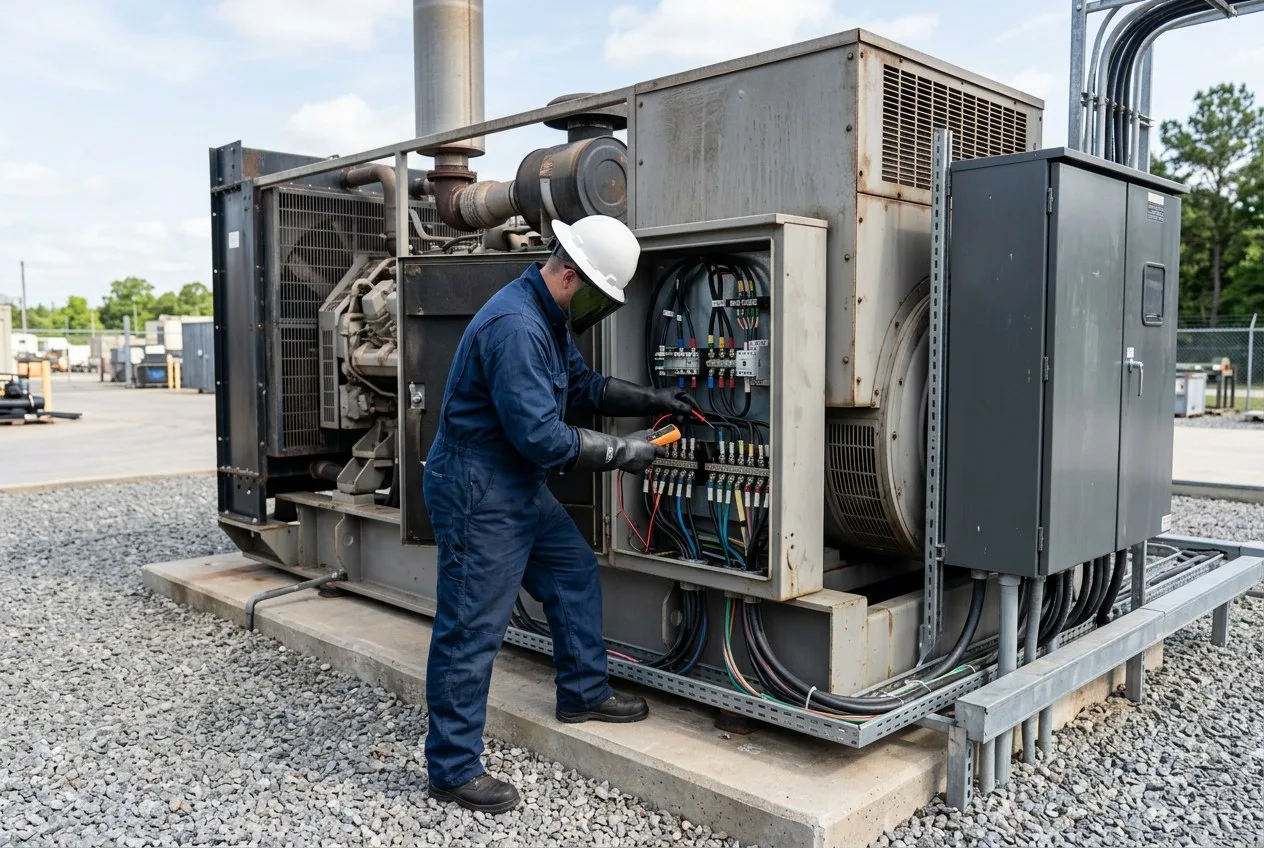
Generator operation at low load: Wet stacking and fuel waste
A frequently overlooked problem of the hybrid system is that the generator is selected larger than necessary and operates with too low a load. If the diesel engine does not receive enough load, the combustion temperature decreases and unburned fuel and oil residue are carried into the exhaust. This situation is called "wet stacking". An industry article states that working at low load that it causes unburned residue accumulation in the exhaust system and the most basic solution is to run the engine at a higher load. A common practice in backup power plants is to In monthly tests, it is to run the generator for at least 30 minutes at at least 30 percent of its capacity .
The hybrid system also creates opportunities in this respect. Thanks to the battery charger, the generator can operate at a load close to its approximate rated power; load and charge together carry the generator to the efficient zone. In return, it must be stopped when charging is complete. In other words, the correct setting is beneficial for both the battery and the motor.
- Do not select the generator to permanently operate below 30 percent of its rated power.
- Adjust the charging current according to the generator power; both overload and underload are not desired.
- Gasoline, natural gas, and diesel generators have different low-load behavior; refer to the manufacturer's maintenance manual.
- Schedule generator maintenance (oil, filter, fuel, starter battery) according to the operating hours.
Scenario 3: UPS, generator and solar together in the enterprise
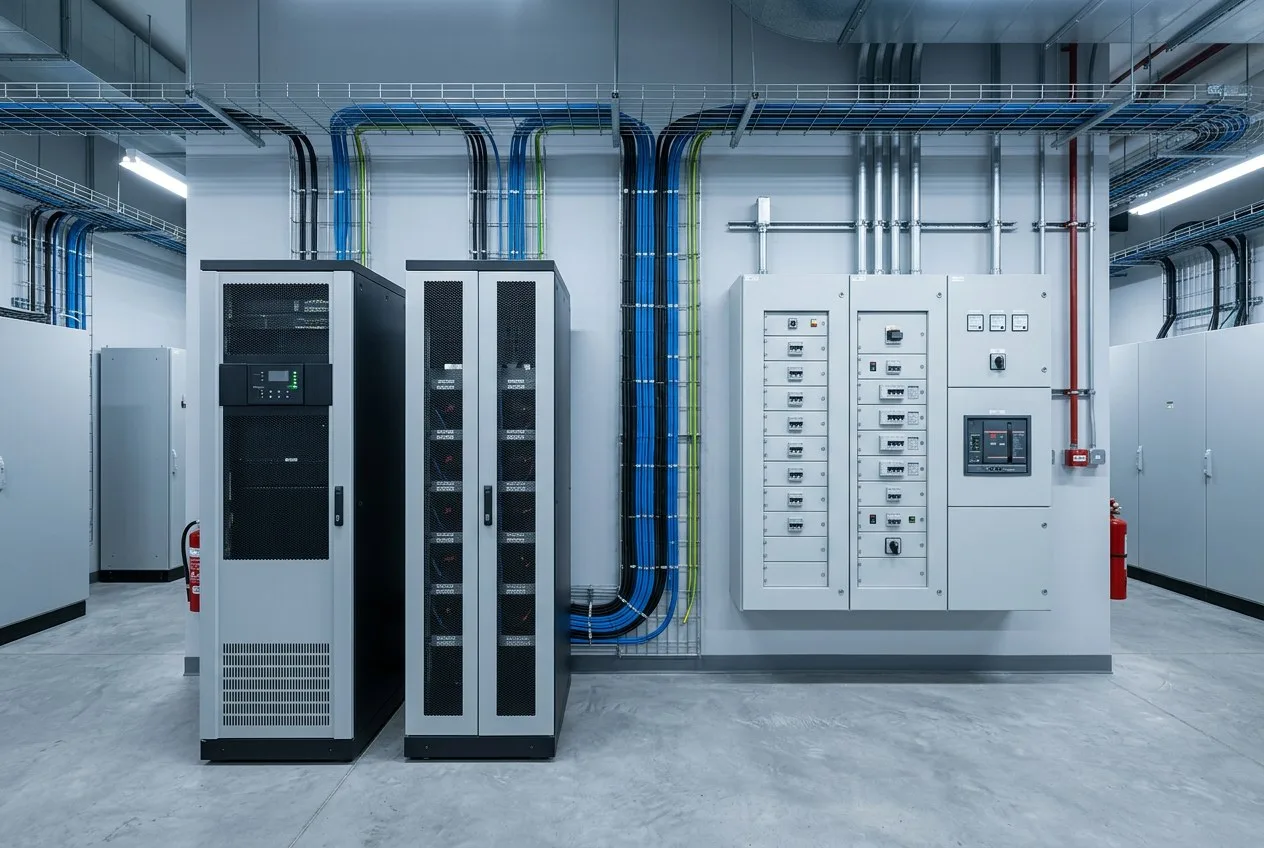
Critical loads (servers, cases, cameras, network devices, some production control systems) cannot tolerate even a short interruption in enterprises. For this reason, a hybrid system with solar and battery alone should not be considered sufficient; a layered structure should be established according to the load types.
- Innermost layer, UPS: It supplies critical loads without interruption and provides battery time until the generator is activated.
- Middle layer, generator: Feeds the plant or selected panels during long outages; disconnects from the grid with ATS.
- Outer layer, sun: Reduces daytime consumption; with storage, it supports peak loads and short outages.
The difference between UPS and generator and their use together Differences between UPS and generator in our article We explained. The point to be emphasized here is the correct selection of the power factor and frequency tolerance at the generator input of the UPS. For businesses, the effect of the solar system on the UPS and how critical loads are fed during an outage In our rooftop SPP and UPS article We also discussed it.
A solar inverter connected to the grid without storage shuts down for safety reasons when the grid is cut off. Therefore, the expectation that "there is a panel on the roof, it produces when the generator works" is often not realized. For production to work with the generator, it must be verified from the manufacturer's certificate that the device supports this function. Adverse power to the generator (excess flow to the generator if the panel production is more than the load) is dangerous for the generator because the generator does not absorb the energy. If there is a solar inverter connected to the AC side, the generation should be limited according to the load and battery status or disabled while the generator is running.
Safety: Feedback, carbon monoxide, high current and battery
When the generator and battery system are combined, the risks are multiplied. The following headings apply to both home and business.
Backfeed
Connecting the generator to the home installation with a plug-socket or an inappropriate cable can cause energy to flow back into the grid. Electrical safety organization ESFI Transfer switches are the only way to safely supply the home's electrical system states that it is; feedback endangers both the home, neighbors and personnel performing repairs. A US national laboratory's fact sheet is also with a transfer switch that prevents feedback, and an authorized electrical contractor to design and install the circuits He says it is necessary. The same logic applies in Turkey; the rules of the authorized electricity personnel and the relevant distribution company should be taken as basis for the application.
Carbon monoxide and fire
The fuel generator produces carbon monoxide (CO), which is toxic and odorless. ESFI is the that you can kill in a short time and emphasizes that there should be a CO alarm around each bed area and on every floor. The generator should not be operated indoors, in a garage, basement or close to windows and doors. The engine should be turned off and cold during fuel storage and replenishment.
Battery side
Although the battery bank is low-voltage, the short-circuit current is very high; there is a risk of arcing and fire. For lead-acid batteries, hydrogen may come out during charging, while for lithium batteries, BMS, temperature, and layout rules are important. Charging with a generator puts a constant load on the current and temperature; the charging current must remain within the range allowed by the battery manufacturer. Fire safety in lithium storage is a separate issue; Occupational safety in UPS and battery works You can also take a look. Intervention in the battery bank, wiring and commissioning are the work of authorized personnel.
Common mistakes and signs of malfunction
| Symptom / error | Possible cause | What should be done? |
|---|---|---|
| When the generator is activated, the inverter refuses to enter | Out of voltage/frequency range, distorted waveform, generator not warmed up enough | Have input ranges and generator output measured by authorized personnel; check delay time |
| The generator is struggling, the speed is falling | Charging current and load exceed generator power | Lower the input current limit and charging current; resize the generator |
| The generator runs too long, the fuel consumption is high | Low charging current, charging the last 20 percent of the lead-acid battery from the generator | Review the stop threshold; leave the last part to the sun |
| The generator is running at too low load | The generator is too large, the charging current is too low | Correct load/charge balance; follow manufacturer maintenance recommendations |
| The battery runs out at night and the system shuts down | Starting threshold too low, quiet hour restriction | Raise the start-up threshold or reduce the nighttime load |
| Inverter reacts late when generator shuts down | Short acceptance of falling generator voltage | Evaluate the lower voltage threshold and the disconnection solution depending on the stop signal with the technical service |
| Battery heats up, gives frequent errors | High current in generator charging, insufficient cable, poor connection | Reduce the charging current; have connections and temperature checked by qualified personnel |
You can also review our guide to hybrid inverter error codes to distinguish battery, panel and grid warnings in device error codes; evaluate records and measurements together instead of changing settings by guessing alone.
Decision list for solar + battery + generator setup
Answering the following questions before getting a quote or choosing equipment prevents both unnecessary investment and incomplete installation.
- What are the critical loads? How many Ws, how many hours, which ones have to be uninterrupted?
- Is there a network? What is the frequency and duration of outages? What is the generator's operating hour target if it is off-grid?
- Winter conditions: How many days will the panel + battery last on the days of the lowest production? For winter production Solar energy in winter Look.
- Generator Type: Diesel, gasoline, gas, inverter type? Is the output quality and rated power suitable for the device?
- Connection method: AC input, DC charging or ATS; who will design the locking and grounding?
- Automation: Is there a start/stop signal, charging thresholds, quiet hours, remote monitoring?
- Security: Generator location, CO alarm, battery placement, ventilation, protection elements.
- Maintenance: Is there a periodic maintenance plan for the generator (oil, fuel), battery, UPS and inverter?
If the UPS, battery and inverter side of the system is important to you, Bempower; It provides exploration, installation, periodic maintenance and technical service for all brands of UPS, battery packs and inverters and works on-site in Istanbul and surrounding provinces. If you want to evaluate your current installation together and determine the right backup layers for your critical loads From our contact page You can contact us.
- MultiPlus Generator FAQ — Victron Energy, 2026. https://www.victronenergy.com/live/multiplus_faq
- MultiPlus-II Configuration — Victron Energy, 2026. https://www.victronenergy.com/media/pg/MultiPlus-II_230V/en/configuration.html
- MultiPlus-II inverter/charger 48V 3k, 5k — Victron Energy, 2026. https://www.victronenergy.com/upload/documents/MultiPlus-II_3k_5k_230V_AU_ESS/157822-MultiPlus-II_230V_Australia-pdf-en.pdf
- Manage Load to Avoid Diesel Wet Stacking — Avtron Power Solutions, 2024. https://avtronpower.com/resources/articles/manage-load-to-avoid-diesel-wet-stacking/
- Generators for Back-Up Power During Outages — Pacific Northwest National Laboratory (PNNL) - Building America Solution Center, 2021. https://basc.pnnl.gov/information/generators-back-power-during-outages
Resources
