What is UPS Maintenance? Why Should It Be Done Regularly?

A UPS seems to be doing nothing for days or even months. It only takes on its main task when the power goes out. That's why a problem with a UPS is often noticed at the worst moment, just when it's needed. UPS maintenanceis the whole of the regular checks to avoid this surprise.
What is UPS Maintenance?
UPS maintenance; It is the on-site inspection, measurement, cleaning of the device, batteries and the environment in which they operate at regular intervals and reporting the results. The aim is not to repair the fault, is to notice the malfunction before it occurs. Therefore, periodic UPS maintenance Preventive maintenance It is also called.
Why Should UPS Maintenance Be Done Regularly?
When UPSs are running, some parts inside them wear out silently:
- Batteries it loses capacity over time; this loss is often not noticeable from the outside.
- Fans slows down or stops as it wears out; the device heats up.
- Capacitors As they age, they become unable to perform their duties and cause malfunctions.
- Powder It accumulates on the cards and cooling paths, increasing heating.
- Links loosens with heating and vibration; loose connection becomes hot and a point of failure.
None of these changes alone will immediately stop the UPS; but when combined, they can cause the UPS to be unable to carry the load at the time of an outage. Regular maintenance quantifies these risks and makes them visible.
What is done in UPS maintenance?
While the extent of maintenance may vary based on the device's power and construction, here are the key steps:
| Step | What is checked? |
|---|---|
| Visual inspection | Physical damage, heat and burn marks, ventilation vents, fan filters, alarm and event logs |
| Environment | Ambient temperature, humidity, dust and ventilation status |
| Electrical measurements | Input and output voltage, frequency, load ratio, neutral-ground voltage |
| Battery measurements | Voltage and internal resistance per battery, swelling, leakage, terminal tightness |
| Thermal control | Thermal imaging of hot spots on connections, cards and battery terminals |
| Function tests | Fans, bypass switching, switching to battery in case of mains failure |
| Cleaning | Safe removal of dust inside the device |
| Report | Recording measurement values, findings and recommendations |
Loose connections and minor problems found during checks are often fixed on site. Situations that require part or battery replacement are reported with the report.
Parts That Need to Change Over Time
In UPSs, some parts should be considered as consumables. Batteries are one of them. In addition, for fans and capacitors, manufacturers usually recommend preventive replacement after certain periods of use; this period varies depending on the model and operating conditions and is usually between a few years and ten years. Maintenance records ensure that these replacements are made in a timely manner without waiting for an unplanned failure.
How Often Should UPS Maintenance Be Performed?
The frequency of maintenance is determined by how critical the load the UPS is supplying and the operating environment. A general framework:
- At least once a year: Small offices with a single UPS and non-critical loads
- Every six months: Businesses where business continuity is important
- Quarterly or more often: Systems that do not tolerate interruption such as data centers, hospitals, manufacturing facilities
In hot, dusty or frequent outage environments, the maintenance interval should be shortened. Our maintenance plans include one (Bronze), two (Silver), four (Gold) and eight (Platinum) visits per year; details Care Plans You can compare it on our page.
What Happens If Care Is Neglected?
- When the power is cut off, the UPS cannot carry the load and the systems shut down suddenly
- Data loss, production downtime, and business interruption
- A small problem escalating into an expensive repair
- Batteries and parts replaced much earlier than expected
- Overheating connections or batteries pose a safety risk
The cost of maintenance is often very small compared to the cost to the business of an unplanned shutdown.
Simple Controls That The User Can Do
It is not a substitute for periodic maintenance, but you can do the following checks yourself between two maintenances:
- Look for an alarm on the UPS screen or software.
- Make sure the room where the UPS is located is cool and airy.
- Do not block the front of the ventilation vents, do not place objects on top of the appliance.
- If you notice any unusual noises, smells, or heating, seek technical support.
- Do not connect unsuitable loads, such as laser printers or heaters, to the UPS.
Do not open the covers of the UPS. Even when the device is switched off, there can be dangerous voltage inside due to the batteries. When to change the batteries When to replace a UPS battery We also explained it in our article.
Our main guide, which covers maintenance as well as diagnostics, repair and battery service: UPS and battery technical service.
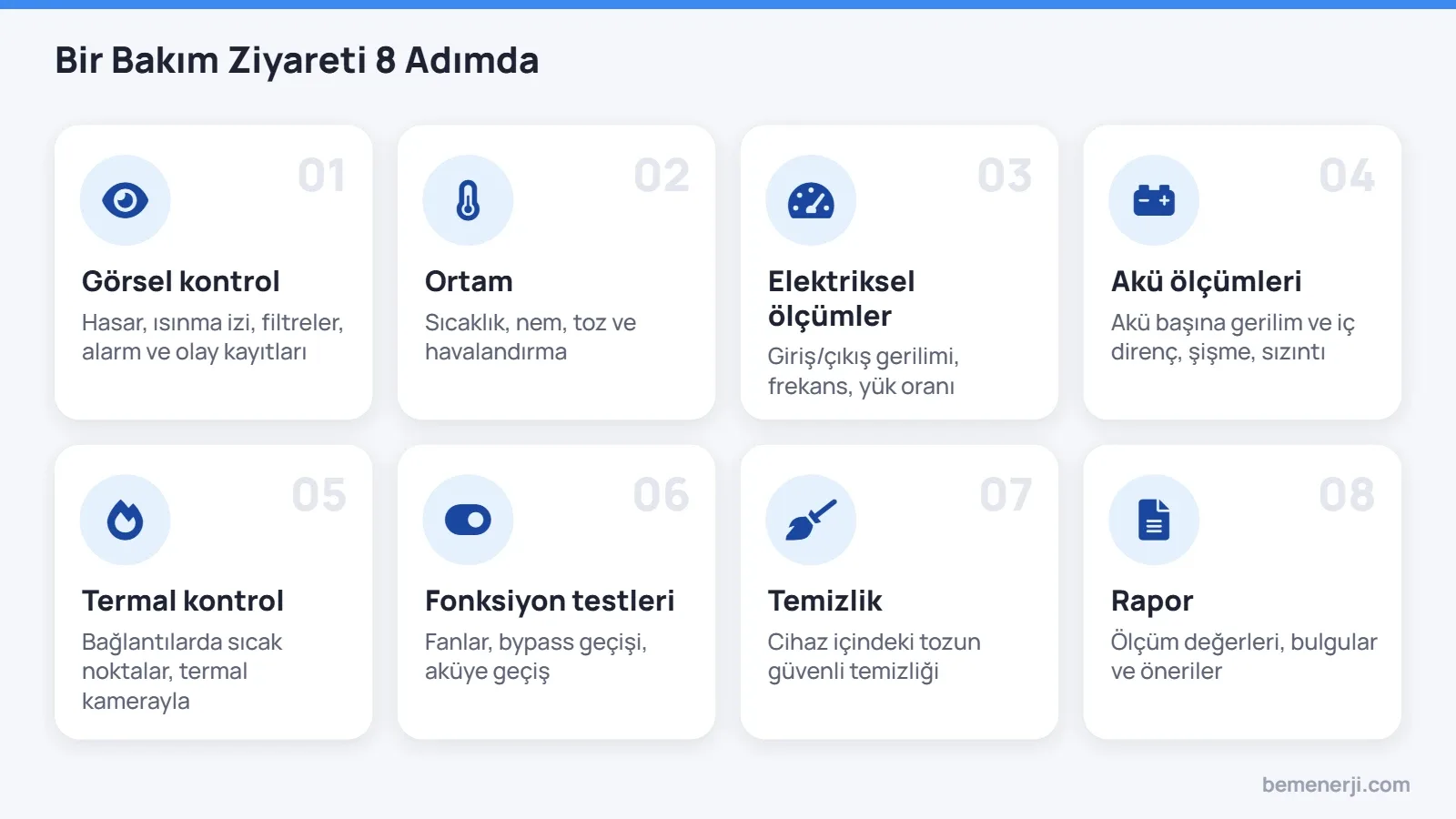
A Care Visit in 8 Steps
The steps followed in periodic maintenance at a glance:

At the end of the visit, the measured values and findings are written in the report. When the reports are compared from visit to visit, it is foreseen when the batteries and parts need to be replaced.
Frequently Asked Questions
01Does UPS shut down during maintenance?
02How long does UPS maintenance take?
03Does a UPS during the warranty period need maintenance?
04Is it mandatory to contract maintenance?
05What is included in the maintenance report?
Let's Plan Your UPS Maintenance
We perform periodic on-site maintenance for UPS and battery packs of all brands and models. What we do in maintenance Periodic Battery and UPS Maintenance On our page, you can choose the plan options Care Plans page. UPS brand and model Send us, let's determine the right plan for you together.