


UPS for Fuel Stations: Pump Automation, Payment and Tank Monitoring

A power outage at a gas station does not only mean that the lights go out. The pump control unit, cash register, card readers, tank level console and network devices stop at the same time. Unfinished sales transactions, lost records and systems that do not restart slow down the operation after the outage is over. Even if the outage is short, the station may not be able to sell for a while.
This guide has been prepared for the station owner, business manager, technical officer and purchasing unit. We discuss what UPS should and should not protect at the station, explosive atmosphere restrictions, power and time calculation, selection criteria and maintenance plan. It should be noted from the beginning that the works related to electricity, ex zone and fuel systems should be carried out within the framework of authorized personnel and relevant legislation, and that this article is for general information purposes.
First, we map the load at the station, then use the calculation example to find the UPS power and battery time. Then we examine working with the generator, common errors and the maintenance schedule.
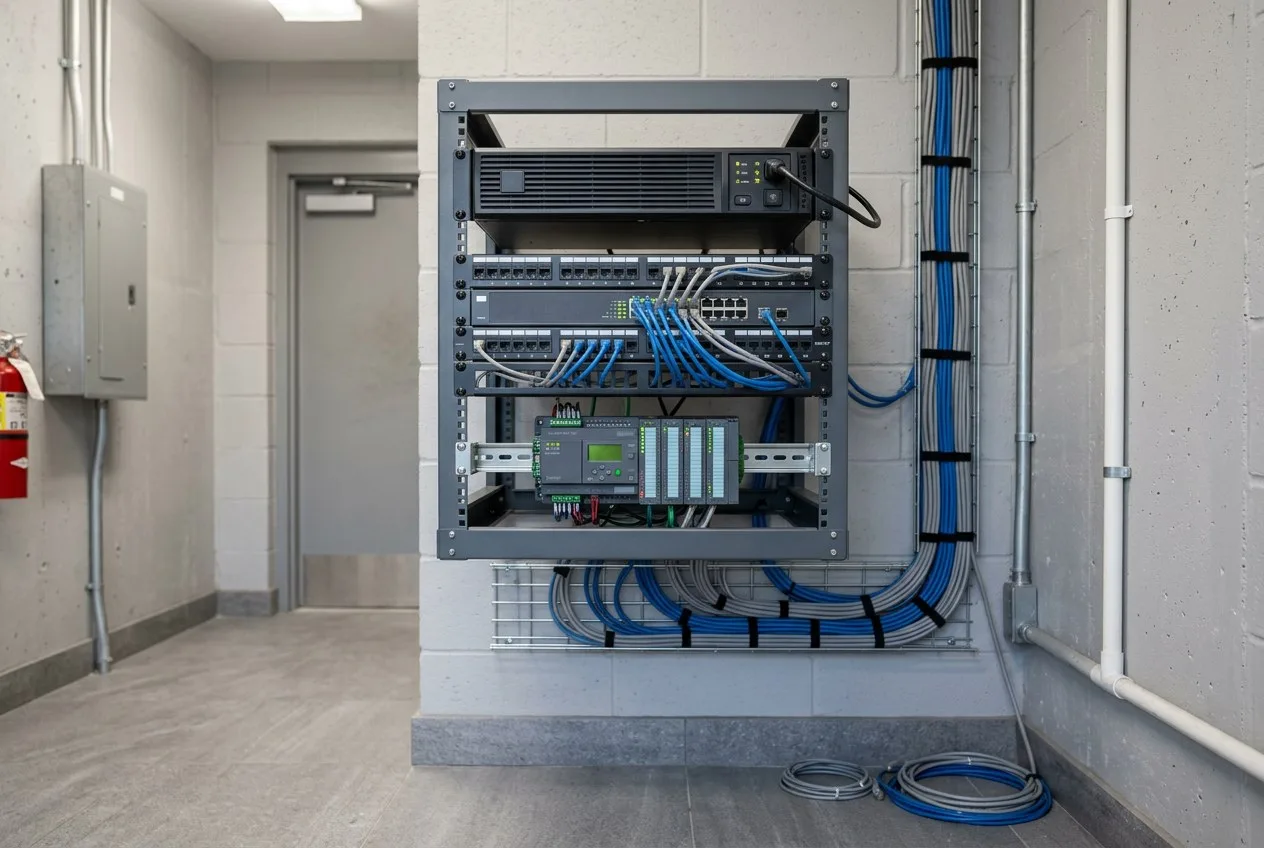
Why do I need UPS at a gas station?
UPS (uninterruptible power supply) is a system that continues to feed connected devices through the battery when the grid goes out or breaks down. To learn the working logic from the basics What is UPS You can check our article. The value of this function at the station emerges at three points:
- Sales continuity: If the pump authorization and payment chain survive the outage, there will be no customer queue.
- Record integrity: Sales, tank movement and inventory data can be corrupted in sudden shutdown. This data is important for both business and official reporting.
- Device life: Sudden voltage fluctuations and interruptions in the network shorten the life of computers and control cards.
The station may be at the edge of the city grid or at a point open to lightning. In this case, the frequency of short outages and surges increases. To see the cost of a power outage numerically The cost of a power outage to the business You can adapt the method in the text to the station.
Which loads should be connected to the UPS at the station and which should not?
We can roughly divide a station system into two layers. The top layer is the devices that process and store information; this is where the actual work of the UPS begins. The bottom layer is power-consuming field loads such as dispenser pump motors, submersible pumps, lighting, and compressors.
The center of pump automation is in most systems forecourt controller (field control unit). This device is connected to dispensers, payment readers, tank measurement systems and price signs; it transfers sales data to the cash register system. It is the central unit that authorizes, manages and monitors controllers, dispensers, card readers and tank measuring devices. Therefore, this is the first group of devices that the UPS must protect.
| Load group | Does it connect to UPS? | Reason |
|---|---|---|
| Field control unit | Yes | Pump authorization and sales record are collected in this device; sudden shutdown creates transaction loss. |
| Cash register computer and barcode reader | Yes | Market and station sales are carried out with this system; there is a risk of database corruption. |
| Payment terminals (POS, card reader) | Yes | An unfinished transaction creates confusion. The connection device must also be in the UPS. |
| Tank level monitoring console | Yes | It keeps continuous recording and alarm; there should be no monitoring gap in the outage. |
| Modem, switch, router | Yes | Remote reporting and payment confirmation are network-dependent. |
| Security camera and recorder | Yes (separate line recommended) | So that the recording can continue in case of interruption. For details UPS for security camera and NVR See the article. |
| Dispenser pump motors | Usually no | Separate evaluation is required due to high power, inrush current and danger zone. |
| Submersible pump, compressor, air conditioner | Nope | Motor loads exceed small UPS. The generator is for these loads. |
If you are wondering why motor-based devices cause problems with the UPS Inrush current problem of motors, air conditioners and laser printers explains this subject in detail.
How will pump automation and payment chain be affected in the outage?
The chain of a sale is roughly as follows: the customer pulls the gun, the field control unit gives authorization, the dispenser flows the fuel, the amount is transmitted to the cash register system and the payment terminal. Since each link of the chain has its own power source, the rings can stop at the same time or at different moments when the grid goes out. This is the most problematic situation: the dispenser stops in one place and the control unit stays in another, the records become inconsistent.
The purpose of UPS is to avoid this discrepancy. When the control unit, cash register and payment devices are fed from the same continuous line, the interrupted transaction is closed properly in the event of an interruption. A troubleshooting guide emphasizes that the problem with all dispensers points to the control unit or mains supply line rather than a single dispenser; The fault affecting the entire field is usually related to the controller or power line. This view also works well in UPS planning: Focus on common dependencies, not individual devices.
Things to consider for payment terminals
- The terminal and the network device (switch, modem) must be on the same UPS line. If the terminal works and the network goes, the transaction cannot be confirmed again.
- The supply source for outdoor card readers goes to the pump island side at most stations. This line can pass through the danger zone; connection and protection must be designed by authorized electrical engineering.
- Certification of the payment infrastructure is done by considering the device, dispenser and payment provider together. UPS does not change this certification, but provides an uptime condition.

How to maintain tank monitoring and automation logging with UPS?
The tank level measurement system continuously measures the level, temperature and water accumulation with the probe inside the tank. The console records this data, generates an alarm and transmits it to the field control unit and the case system. The probe measures the fuel level in the tank in real time And this information is used to detect suspicion of loss or leakage by comparing the sale with the tank movement.
In the technical guide published by the Revenue Administration for automation systems in Turkey, it is a requirement to record tank movements and report them when requested. The guide, Within the scope of EMRA's board decision numbered 1240, it is mandatory to record and monitor every tank movement centrally. describes it as. The current version of the obligations stated here may change over time; for precise information, consult EMRA and the official announcements of the distribution company you are affiliated with.
For the UPS, the conclusion is simple: the tank monitoring console and the communication line connecting it to the chassis system must continue to generate data during an outage. Otherwise, events such as fuel discharge, level drop or alarm will go unrecorded. The same guideline looks for ATEX Zone 0 compliance on the level measuring sticks. This is a good reminder that the probe should be located inside the tank and the UPS should be located in the non-hazardous area.
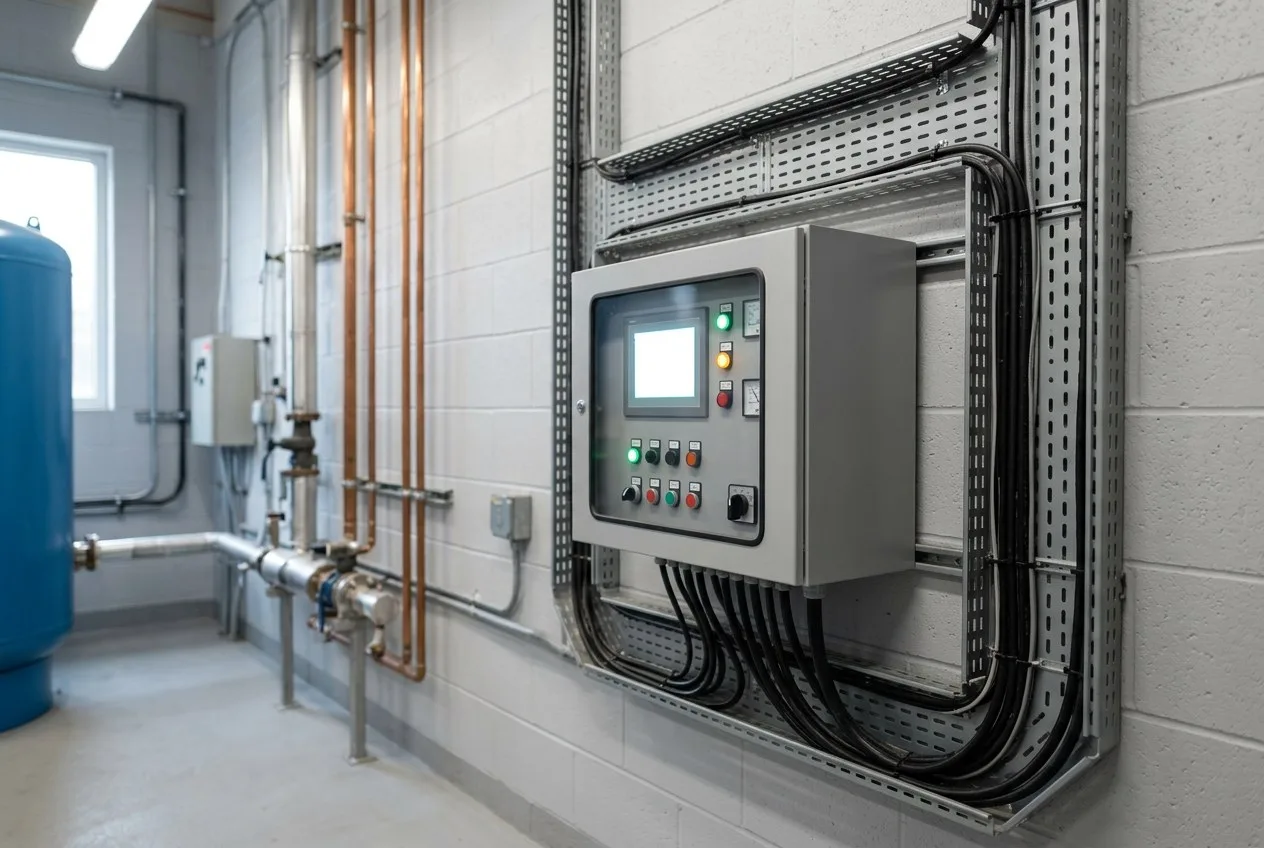
Explosive atmosphere: Where to put the UPS and battery?
This is the most critical issue at the station. Areas where fuel vapor can accumulate are classified as explosive atmospheres. On the legislative side, there are two separate ATEX regulations for the protection of equipment and workers used in explosive atmospheres; TS 12820 safety standard is also taken as reference for fuel stations. The regulation on the protection of employees from explosive atmospheres and the ATEX directives form the legal framework in this field.
The rough meaning of the regions is as follows: Zone 0 It is the place where the explosive mixture is present continuously or for a long time (such as inside a tank). Zone 1 It is the place where the mixture can form in normal operation. Zone 2 is the area where it is unlikely to occur and if it does, it is short-lived. An engineering resource, that in areas where fuel is stored, filled, unloaded and sold, the electrical installation is selected according to Zone 0 or Zone 1 conditions and that Ex protected equipment is required in these areas states. The actual boundaries of the zones are determined by the station's project and the competent expert assessment; the table below is only a conceptual framework.
| Area | Typical risk situation | UPS/battery location |
|---|---|---|
| Inside the tank, around the filling port | Zone 0 / Zone 1 can be | Only ex-certified field equipment is available. |
| Inside the dispenser and around the pump island | It could be Zone 1 / Zone 2 | No standard UPS, battery or panel is placed. |
| Station building, office, market | Generally non-hazardous area (project approved) | Yes. An airy, clean and controlled corner or technical room is suitable. |
| Separate electrical room | Provided that it is a non-hazardous area | Yes. Battery ventilation and fire safety are planned separately. |
The rule of thumb is: The UPS and batteries are placed in the area designed to be non-hazardous; the cables to the field side are routed by cable entry and barrier elements suitable for ex. The installation and commissioning of these connections is the work of electrical personnel competent in ex. Since batteries can emit hydrogen, Battery Room Ventilation and Safety The principles in our article also apply to a technical room within the station.
Grounding and surge protection
The risk of static electricity and leakage current in a fuel vapor environment is also addressed. There are sources stating that an annual measurement report is required for grounding in flammable environments; Grounding control in flammable, explosive and hazardous environments at maximum intervals of 1 year referred to as current practice. For the exact duration and content, one should refer to the applicable regulation and the authorized electrical engineer. The UPS's own protection also depends on the grounding quality; for details UPS grounding You can take a look at the article. UPS alone is not enough for stations open to lightning and network strikes; Sudden Voltage Impulses and Surge Arrester The article describes gradual protection.
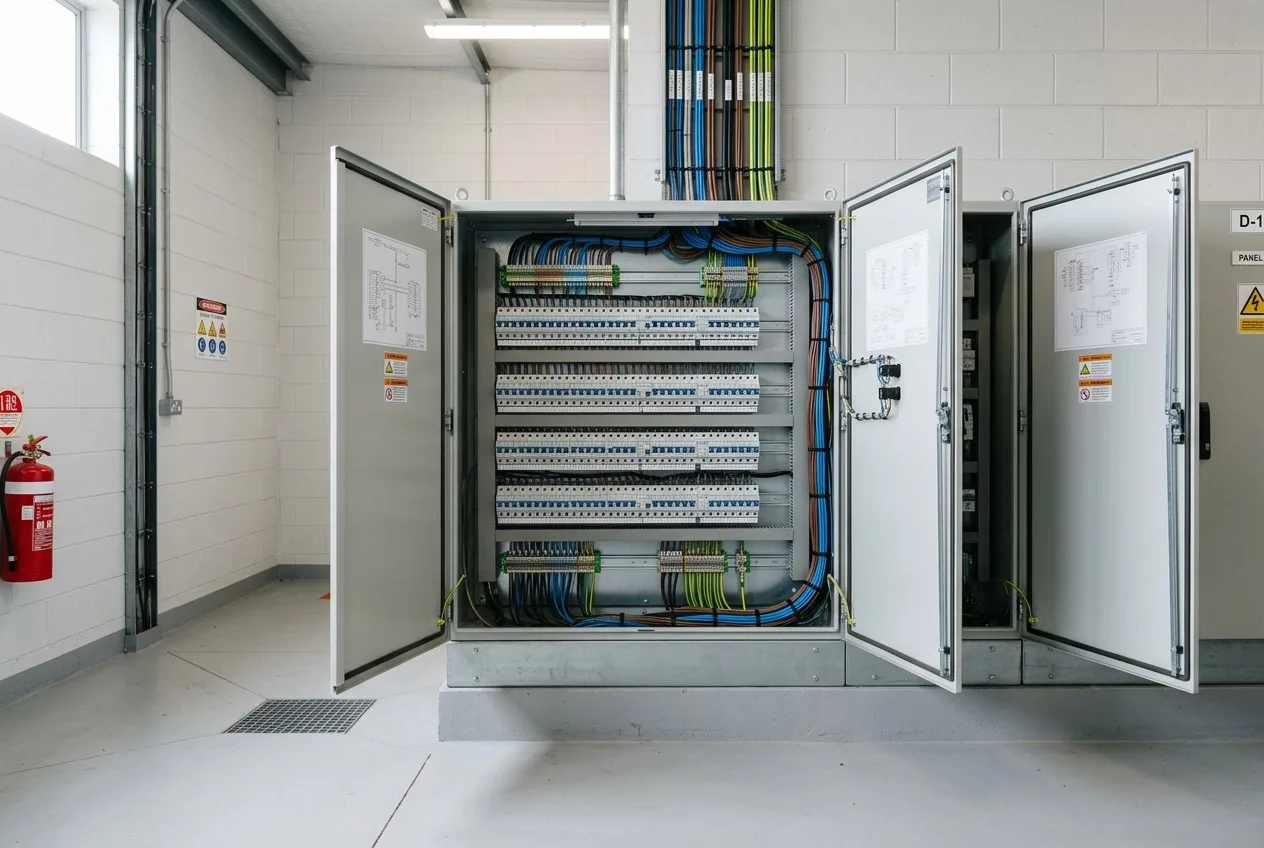
How to calculate UPS power for station?
The first step in the calculation is to add up the actual power rating in watts (W) of each device to be connected to the UPS. The value on the device label is usually the maximum value; typical operating consumption may be lower. If a measurement can be made, it is safer to get the actual value with a clamp meter or power meter. For VA, kVA and watt separation How to calculate UPS power The article also explains the reason for the power factor.
Example calculation: management line of a medium-sized station
Assumptions: The following values are typical examples, replace them with the label or measurement values of your own devices.
| Device | Power (W) |
|---|---|
| Chassis computer and display | 100 |
| Field control unit | 60 |
| Tank level console | 40 |
| Modem, switch, router | 40 |
| Camera recorder (NVR) and several cameras | 80 |
| Payment terminals and printer | 30 |
| Total | 350 |
- Reserve share: 350 W × 1.25 = approximately 440 W. This allowance is left for future devices and for the UPS not to run at full load continuously.
- Converting to VA: If we assume the output power factor of 0.8, 440 W ÷ 0.8 = 550 VA. In today's online UPSs, the output power factor is usually in the range of 0.8-1.0; see the data sheet.
- Rounding to standard value: The closest high-end class on the market is usually 1 kVA. If expansion in the future, store load or new camera is considered, the 1-2 kVA range can be chosen.
Power factor, for active and apparent power relationship What is the power factor is useful. Before choosing a UPS class How to choose a UPS The steps in the guide also complete the calculation.
How is the battery time calculated, how many minutes is enough?
At the station, the target time varies depending on the type of outage. At a station with a generator, the UPS only acts as a bridge until the generator is activated; a few minutes is often enough. If there is no generator, the goal depends on how long the business wants to maintain the sale and the controlled shutdown time of the system. General method How to calculate battery time It is in the article; Let's apply the same method to the example here.
Example calculation: 15 minutes and 60 minutes for a 350 W load
Assumptions: The load is 350 W, the inverter efficiency is about 90 percent, the battery usable depth of discharge is about 80 percent, the battery aging margin is 80 percent (i.e. five quarters of the new capacity). These are approximate values; the manufacturer's data and temperature change the result.
| Step | 15 min | 60 minutes |
|---|---|---|
| Required energy (load × time) | 350 W × 0,25 hours ≈ 88 Wh | 350 W × 1 hour = 350 Wh |
| With inverter loss (÷ 0.90) | ≈ 97 Wh | ≈ 389 Wh |
| With depth of discharge (÷ 0.80) | ≈ 121 Wh | ≈ 486 Wh |
| With the share of aging (0.80÷) | ≈ 152 Wh | ≈ 608 Wh |
| Approx. Ah in a 24 V battery array | 152 ÷ 24 ≈ 6.3 Ah | 608 ÷ 24 ≈ 25 Ah |
These figures show that at a load of about 350 W, a small battery pack is required for 15 minutes, and a group with four times the energy for 60 minutes. In fact, in lead-acid batteries, the acceptable capacity at high current is reduced from the label value (for details). What is battery capacity Ah article). Therefore, cross-check the output with the manufacturer's battery discharge table. In a hot technical room, the battery life is also shortened; temperature influence Factors Affecting Battery Life It is explained in the article.

Which type of UPS is suitable for a fuel station?
The performance classification of UPS is defined in the IEC 62040-3 standard. The standard divides UPSs into three main classes based on how dependent the output is on mains voltage and frequency. In an academic source describing this classification used in older versions, line-interactive UPS is classified as "voltage independent" in the standard. specified. Current version of the standard It covers UPSs that are powered from a maximum of 1,000 V AC mains and contain energy storage devices not exceeding 1,500 V DC. When buying, ask which version the manufacturer has tested it for.
| UPS type | Strengths | Availability at the station |
|---|---|---|
| Online (double rotation) | The output is continuously clean, the switching time is close to zero, voltage and frequency independent | The safest choice for critical loads such as crates, control units and tank consoles; It stands out in rural or generator stations. |
| Line-interactive | There is tension regulation, it is more economical | Its network is relatively clean, it can be used in small loaded stations and camera line. |
| Offline (standby) | Cheapest, simple | Not recommended for critical loads; may be considered for low-risk auxiliary loads. |
To see the difference between the types in detail, see Types of UPS You can look at the article. In large stations with more than one management line and highway facilities, the issue of redundancy also becomes important; Redundancy in UPS introduces N+1 and parallel structure.
Cabin and environmental conditions
- Temperature: Small technical rooms get hotter in summer. Battery life is significantly shortened as the temperature rises; plan ventilation or air conditioning.
- Dust and moisture: For rooms with outdoor air, a dust and moisture filter or an appropriate protection class should be considered.
- Access: The UPS and battery should be placed in a place where unauthorized personnel cannot easily reach but the service can easily enter.
How does UPS work in stations with generators?
Generators are common in large or highway stations. The generator is activated within a certain period of time after the outage; all devices stop during this interval. The UPS closes this gap. When the generator is activated, the UPS corrects its voltage and gives it to sensitive devices. For the difference between the two systems and their use together Differences between a UPS and a generator is a good start.
When working together, the following points are considered:
- Generator Power: It must be based on the total power drawn by the UPS and charging unit, as well as the harmonic currents at the input of the UPS.
- Frequency and voltage stability: If the frequency of small generators fluctuates, the UPS may not accept it and switch to the battery. For this topic Frequency and synchronization problems in generator-fed UPS See the article.
- Migration automation: The transition signal and duration given by the mains-generator transition panel to the UPS should be adjusted.
At stations that want to add electric vehicle charging points, the new load calculation is made separately; this issue UPS and energy storage for electric vehicle charging stations It is discussed in the article.
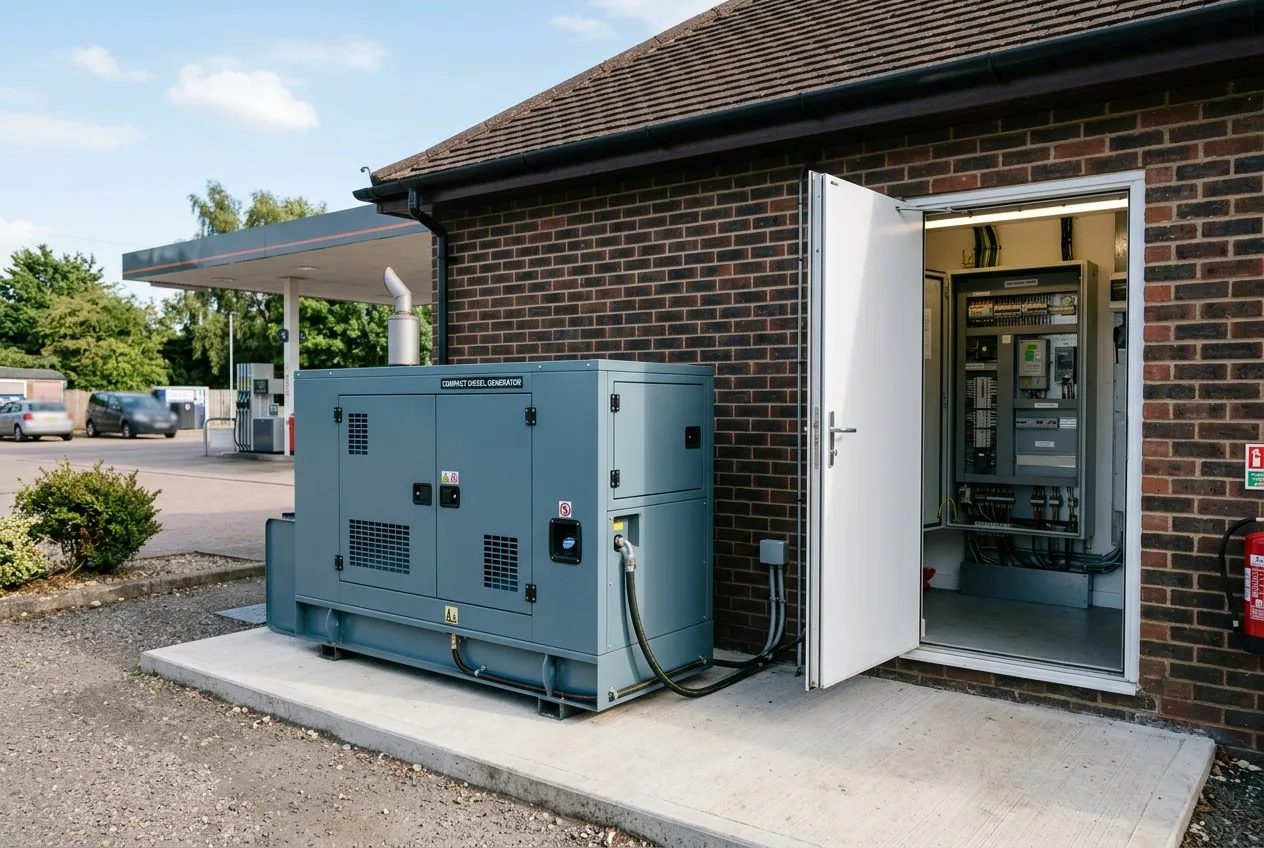
Common mistakes
| Error | Conclusion | The truth |
|---|---|---|
| Placing the UPS near the pump island or dispenser | Risk of explosive atmosphere, improper equipment | The UPS and battery are positioned in the non-hazardous area, field connections are made with ex suitable components. |
| Trying to connect the pump motor to the UPS as well | Overload alarm, UPS failure | The UPS only supplies the management and registration line; the motor load is assessed separately. |
| Excluding network devices from the UPS | The control unit works but payment confirmation cannot be obtained | The switch, modem and router are taken to the same uninterrupted line. |
| Not taking battery life into account | In the third year, the time falls below expectations | Aging allowance is added, regular battery testing is carried out. |
| Putting the UPS in the very hot room | Reduced battery life and fan life | Ventilation and ambient temperature are planned. |
| Not monitoring alarm logs | It is understood that the battery is dead in the outage | Network card and remote monitoring are installed. |
Maintenance and monitoring: Keeping the UPS running in real time
The value of the UPS depends on its activation as soon as the outage comes. Maintenance is delayed because the stations are often busy work; this causes the weakening of the battery to occur at the first outage. To determine the maintenance interval UPS maintenance frequency and maintenance schedule article. The following list is a station summarized calendar:
- Continuously: Alarm, battery status and network outage records are monitored with the network card or monitoring software. For details UPS remote monitoring and alarm management See the article.
- Periodic maintenance (usually 1-2 times a year): Battery voltage and internal resistance measurement, fan and capacitor control, connection tightness, load and efficiency measurement, alarm history.
- Autonomy test: Measurement of backup time with actual load. Testing should be done during quiet hours of the station and on schedule, as it may carry the risk of downtime.
- Battery replacement: Lead-acid VRLA batteries are typically replaced between 3-6 years in most installations; the exact duration depends on manufacturer data, temperature, and frequency of use.
To understand the difference between load tests on the battery and UPS side UPS autonomy time test is useful. Electrical safety and connection operations of parts such as batteries, capacitors and fans should be carried out by authorized technical service. Due to high DC voltage, short circuit and arc risk, these operations are not suitable for user intervention; in addition, spark risk management in the station environment requires additional precautions.
Multi-branch businesses
For businesses with multiple stations, it's important to keep UPS inventory, battery dates, and maintenance records in one place. About this UPS maintenance management in multi-branch businesses The method in the article can also be adapted to station chains. For logistics and warehouse businesses UPS for warehouses and fulfillment centers The text is also useful for comparison.
Checklist before buying
- Has the list of devices to be connected and the actual wattage figures been extracted?
- Has the area where the UPS and battery will be placed been verified by the project or authorized expert as hazard-free?
- Has it been assessed whether an online UPS is required for critical cargo?
- Target backup time (generator present/absent) determined, battery aging margin taken into account?
- Will network card and alarm notifications be installed?
- Is grounding and surge protection available, what is the last measurement date?
- Is there a written plan for periodic maintenance and battery testing?
- Is the service response time and spare parts support specified in the contract?
If you want to compare the UPS selection approach for several different industries UPS selection by sectors for cash register and payment line UPS for grocery stores and stores You can look at the article.
UPS discovery and maintenance support for your station
Contact the Bempower team to compile your station's load list, verify UPS power and battery time, or check the status of your existing UPS. from the contact page You can meet. We offer on-site exploration, UPS and battery installation, periodic maintenance and technical service in Istanbul and surrounding provinces. The installation and ex project part in explosive environment areas should be carried out together with the relevant authorized engineering and institutions.
- Investigation of Explosive Atmospheres at Fuel Stations (ATEX, TS 12820) — Republic of Turkey Ministry of Labor and Social Security, 2025. https://www.csgb.gov.tr/Media/wn0d0hs3/handeseraytuncay.pdf
- Technical Guide on the Requirements for Fuel Station Automation Systems — T.C. Revenue Administration (YN ÖKC), 2025. https://ynokc.gib.gov.tr/UploadedFiles/Files/IstasyonOtomasyonSistemiTeknikKilavuzu1_0.pdf
- IEC 62040-3:2021 Uninterruptible power systems (UPS) – Part 3 — IEC Webstore, 2021. https://webstore.iec.ch/en/publication/60140
- IEC 62040-3:2021 Standard Overview — IECEE, 2021. https://www.iecee.org/certification/iec-standards/iec-62040-32021
- Fuel Station Electrical Project and Installation Cost — Özyazıcı Engineering, 2026. https://www.ozyazicimuhendislik.com/akaryakit-istasyonu-elektrik-projesi/
- Integra 3500 Forecourt Controller — OPW, 2025. https://www.opwglobal.com/products/emea/retail-fueling-products/forecourt-management/integra-3500-forecourt-controller/integra-3500-forecourt-controller
Resources
