


Solar Panel Cleaning and Maintenance: How Often and How to Do It

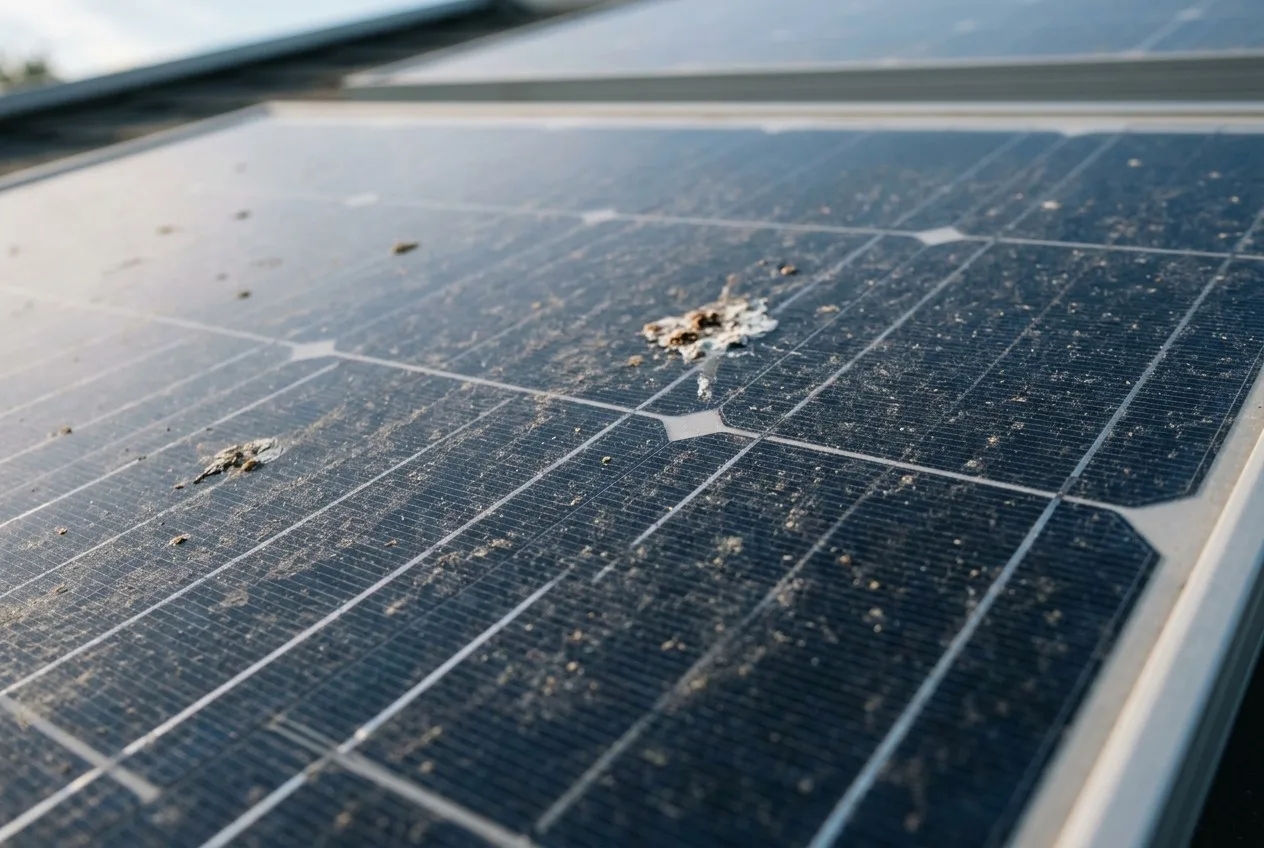
A solar panel is a device that works outdoors for years and has no moving parts. For this reason, people tend to assume it "needs no maintenance." Yet dust, pollen, bird droppings, limescale and industrial residue build up on the glass. This layer reduces the amount of light reaching the cell and quietly lowers your output. The effect of soiling varies greatly from region to region, so there is no single schedule that suits everyone.
In this guide you will find out how much soiling really affects output, when cleaning is worth the money and effort, and how to choose the right materials and method. We also cover common mistakes made during cleaning, what to check during the annual inspection, and when to leave the job to a professional. The article is written for home users, business owners and facility managers who have panels on a roof, in a garden or in a field.
Because cleaning, safety and electricity are all involved, a note: the steps below are limited to washing the glass of the panel. Work on panel cables, connectors, the DC switch and the inside of the inverter must be done by qualified electrical personnel.
How Much Does Soiling Reduce Solar Panel Output?
In engineering terms, the layer that builds up on the panel surface is called soiling Dust and similar deposits reflect or absorb part of the incoming light. Less light reaches the cell, and output drops by the same proportion. This is a type of loss that can be recovered by washing.
The figures vary widely from site to site. In NREL's fleet data, soiling losses are typically in the range of 0-15%, and the median annual average falls in the 2-3% band . In another study by the same institution, losses in temperate climates can be as low as 0.5% per year . In other words, for most rooftop systems the loss is around a few percent. Figures circulating on the market such as "up to 30%" apply only to extreme conditions such as heavy dust, long dry periods or permanently dirty surfaces. You should read the real value for your own system from your own production data.
There is also a difference between uniform (homogeneous) soiling and localized soiling. If a fine layer of dust covers everything, the loss is spread across all panels. If there is bird dropping or a leaf on a single cell, that cell limits the current. In series-connected cells, this can reduce the current and output of the entire string. The effect is greater than the size of the dirty area. You can find this mechanism explained in detail in our article on shading and bypass diodes, and the effect of dirt together with other factors on efficiency in our guide to factors that reduce panel efficiency .
When Does Cleaning Really Pay Off?
Cleaning has a cost: water, labor, time and (on a roof) risk. The gain is the energy you recover. So rather than "let's wash every month," the better question is "does washing pay for itself?" NREL reaches a similar conclusion for large systems: washing modules that are not soiled is an unnecessary expense, while not managing soiling at all means lost production . The balance is found with a site-specific calculation.
A simple calculation example
Assumptions: a 5 kWp rooftop system producing about 1,400 kWh per kWp per year (varies with region and orientation). Annual production is roughly 5 × 1,400 = 7,000 kWh.
- Scenario A (low-soiling environment): If the annual soiling loss is 2%, that is 7,000 × 0.02 = 140 kWh/year. Cleaning recovers part of this loss; in most cases one check per year is enough.
- Scenario B (dusty, rainless environment): If the loss is 8%, that is 7,000 × 0.08 = 560 kWh/year. 2-3 cleanings during the season can recover a significant part of this loss.
- Decision: Multiply the recovered kWh by your own electricity unit price and compare it with the total cost of cleaning. Because the unit price changes with the tariff, we do not give a fixed TL value here; for the current tariff, see the official pages of your distribution company or EPDK.
The most important input to this calculation is the actual loss rate. If you have a production monitoring app, you can see it easily; for details, take a look at our article on solar energy monitoring systems .
How Often Should Solar Panels Be Cleaned?
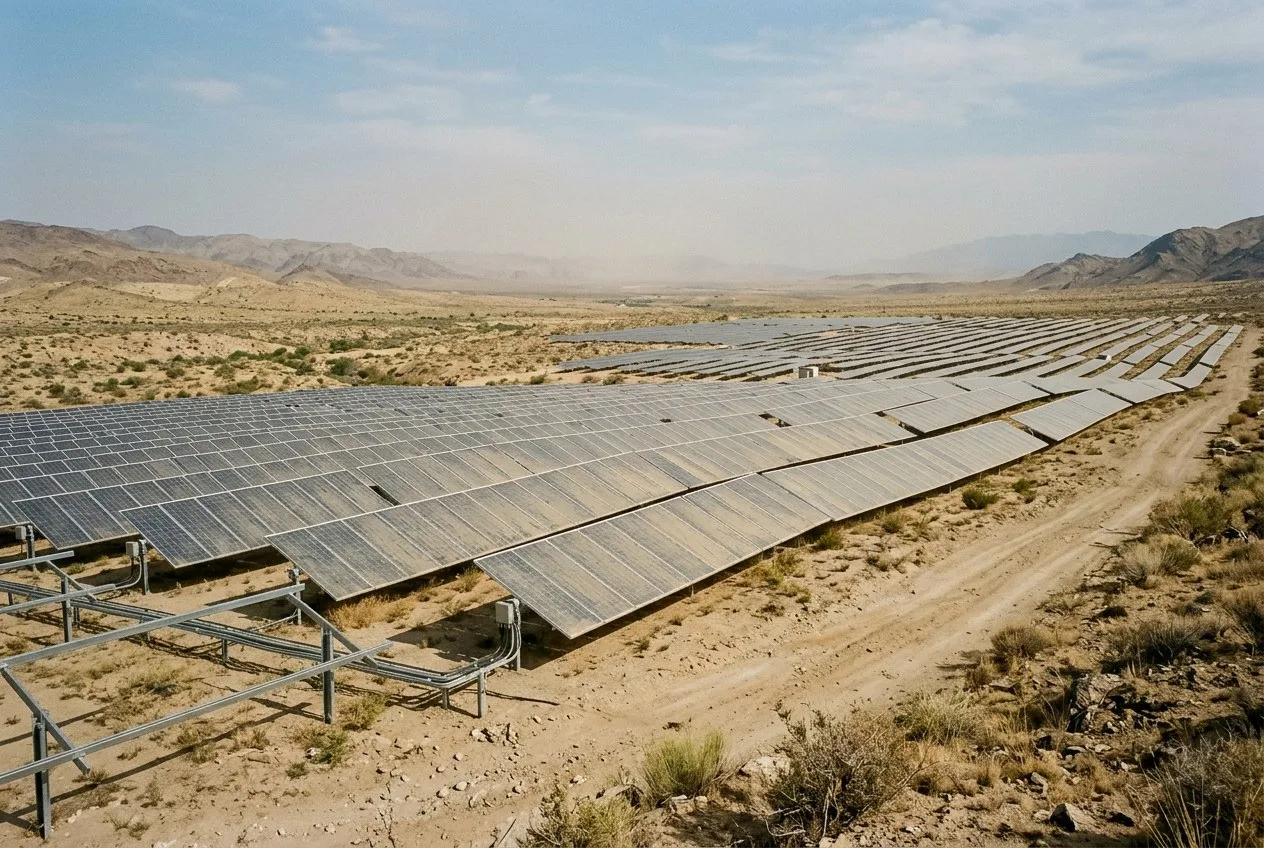
The factors that determine frequency are the amount and distribution of rainfall, dust and pollen density, agricultural or industrial activity nearby, the presence of birds and trees, and the panel tilt. Steep panels clean themselves better. Low-tilt panels hold water on their surface and leave stains when it dries. For choosing tilt and orientation, you can see our panel angle and orientation guide .
The table below is a starting point. The exact schedule is determined by production data and visual inspection.
| Environment | Starting check frequency | Cleaning trigger |
|---|---|---|
| Rainy, low-dust residential area | 1-2 visual checks per year | Visible stains, bird droppings, after a long dry period |
| City center, heavy traffic | One check per season | Oily dust film, stains after rain |
| Farmland, dirt roads, construction surroundings | Check every 2-3 months | Harvest and planting season, long dry months |
| Industrial surroundings | Check every 2-3 months | Residue film; take care when choosing cleaning products |
| Areas with many birds and trees | When needed, more often | Permanent stains or piles of leaves on the cells |
| Caravan, boat | Check every 1-2 months | Salt, dust, soiling after movement |
The IEA PVPS operation and maintenance guide prepared for hot and arid climates states that cleaning programs can reduce summer production losses by as much as 6-8% . It also stresses that special care is needed when choosing cleaning products, because unexpected degradation can occur on panels in industrial environments .
Deciding by data instead of a calendar
If you have production monitoring, this method works: compare the output of two clear days with the same orientation and tilt, the same hours and similar irradiance. A comparison made before and after cleaning shows you the real return of washing. Plan the next cleaning for the point when output drops noticeably compared to its clean state. To filter out the effect of weather, use a several-day average instead of very short-term comparisons.
Does Rain Clean the Panels?
Partly. Rain removes loose dust, but it does not completely remove sticky film, bird droppings and the pollen layer. On a low-tilt panel, water collects at the lower edge of the glass and, when it dries, leaves a dirty line along the edge (a water mark). Nexamp's guide also says that rain alone will not be enough for cleaning . In particular, the first light rain after a long dry period can turn dust into mud and leave it on the glass without washing it away. This is common in early autumn.
How to clean solar panels: a safe step-by-step method
The goal is to loosen and remove dirt without scratching the glass or damaging the coating and seals. The principle is simple: wet first, then wipe gently, then rinse.
- Choose your timing: Work early in the morning or in the late afternoon, when the panels are cool. Nexamp recommends using a soft brush, low pressure and, if possible, deionized water, and avoiding harsh chemicals and cleaning hot panels. IEA PVPS, for its part, has documented that tempered glass can break due to thermal stress or cleaning. Spraying cold water on hot glass increases this risk.
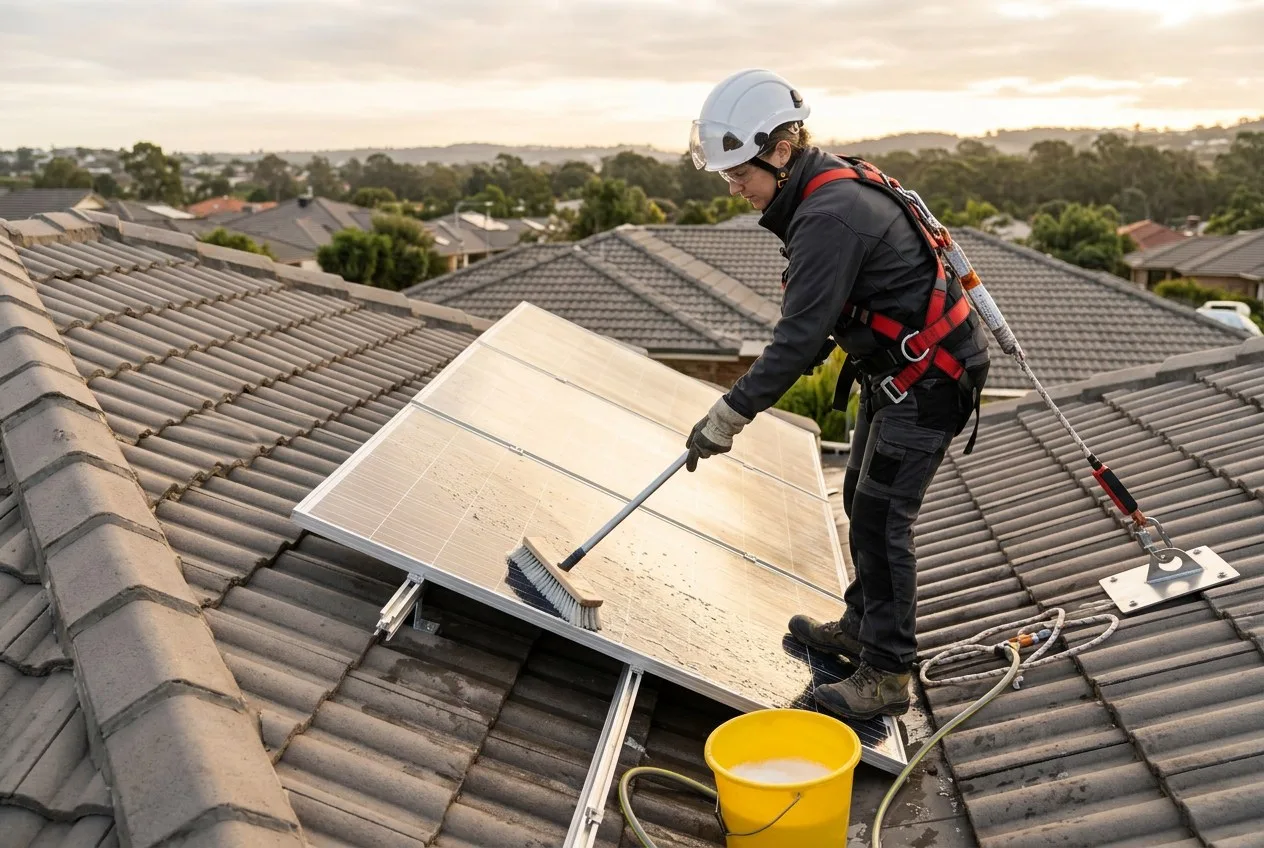
- Ensure safe access: If you must climb onto a sloped roof, do not do so without fall-protection equipment. If the panels can be reached from the ground with a long-handled brush, that is preferable. Wet glass is slippery; a wet roof is even more dangerous.
- Rinse off loose dirt: Use a garden hose at low pressure to wet the surface and wash away loose dust. Do not use a high-pressure washer; Nexamp recommends not using pressure washers at all unless the manufacturer explicitly approves them.
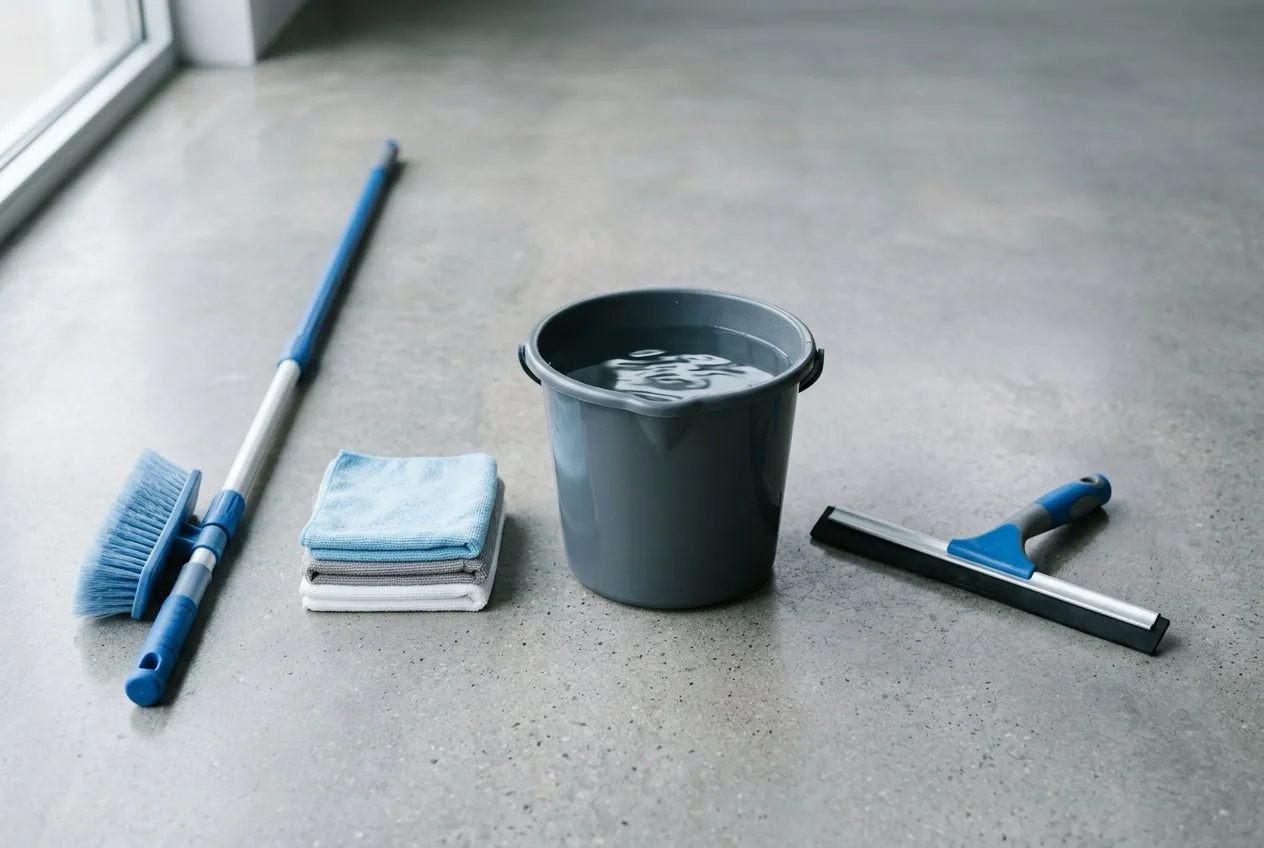
- Wipe with a soft brush: Use a soft-bristled brush or a microfiber cloth and work from top to bottom, pressing lightly. Abrasive sponges and wiping with a dry cloth can drag fine dust particles across the glass and cause micro-scratches.
- If you need detergent, choose the mildest one: For an oily film, a few drops of neutral, non-abrasive detergent are enough. Do not use solvents, strong acids/bases or descaler products without the manufacturer's approval.
- Rinse with plenty of clean water: If residue remains, it will leave stains once it dries. If your water is hard, using purified or deionized water for the final rinse reduces the risk of stains.
- Inspect: After cleaning, if you notice any signs such as cracks in the glass, seals separating at the edges, yellowing or blistering, photograph them and report them to service.
In an NREL study on biological soiling, hose water alone was found to reduce the loss only to a limited extent, while using a soft-bristled brush together with hose water reduced the loss from 14.6 percent to 8.1 percent. In other words, there is a difference between just spraying water and mechanical, gentle scrubbing; but the scrubbing must be gentle.
Common cleaning mistakes
| Mistake | Why is it a problem? | The right way |
|---|---|---|
| Washing in the midday heat | Causes thermal stress, rapid drying and stains | Early in the morning or late afternoon |
| High-pressure washing | Water ingress through seals and edges, damage to the coating | Low pressure, at garden hose level |
| Hard brush, wire, scraping | Scratches on the glass and anti-reflective coating | Soft brush and microfiber |
| Strong chemicals or solvents | Damage the coating, seals and frame surface | Water, with a mild neutral detergent if needed |
| Walking on the panels | Risk of micro-cracks in the cells and of falling | Long-handled brush or a qualified crew |
| Wiping with a dry cloth | Scratches by dragging dust particles | Wet first and wash away the dust |
| Final rinse with dirty or very hard water | Leaves stains and a film once dry | Purified or deionized water |
Why are bird droppings and leaves more dangerous?
Uniform dust reduces production; localized dirt, however, adds an extra risk. When part of a cell is shaded, that area cannot pass the current produced by the other cells in the same string. In this case, the cell becomes reverse-biased and converts the incoming energy into heat. This phenomenon is called a hot spot . Sources state that soiling can also cause this: partial shading, dirt such as leaves or bird droppings, and cell mismatch are among the causes.
IEA PVPS data indicate that in some cases, as long as the hot-spot temperature does not reach around 100 °C, the safety risk is not high. However, repeated local heating over time causes discoloration and aging of the encapsulant material. Bypass diodes limit this risk but do not eliminate it completely. For this reason, it is wise to remove dirt that leaves permanent stains without waiting for the next scheduled cleaning. If you see a darkened or browned area on a cell, it may be caused not by dirt but by permanent damage; in that case, an expert inspection is needed.
As for prevention, branches near the panels should be trimmed, and suitable deterrent measures should be considered for edges and protrusions where birds perch. If there is structural shading on the roof, such as from a chimney, antenna or railing, you cannot solve it by cleaning. This issue should be addressed in the layout plan.
Who should do the cleaning: yourself or a crew?
The Nexamp guide summarizes this dilemma as follows: although the DIY method is cheap, it has drawbacks such as safety risks, the possibility of damaging the panel and limited effectiveness. The same source recommends professional cleaning for large systems and steep roofs.
- You can do it yourself: Ground-mounted or low, easily accessible panels, balcony and garden systems, and caravan and small boat panels.
- Call a crew: Sloped and high roofs, wet or slippery surfaces, a large number of panels, hard-to-reach arrays, and stubborn dirt such as salt and chemical film.
- Never do the following: Spraying water on connectors, cables or the DC junction box, and spraying water on a panel with damaged cables or cracked glass.
When choosing a crew, ask which type of water and brush the service uses, and whether they have insurance and equipment for working at height. For a system still under warranty, compare the cleaning method with the manufacturer's conditions. It is reported that manufacturers such as Qcells state that improper cleaning can damage the glass and anti-reflective coating, and that such damage may fall outside the warranty.
More than cleaning: annual solar panel maintenance
Washing is only one part of maintenance. Dirt is not always the cause of low production. Once a year (and after events such as storms, hail or lightning) the whole system should be inspected. The list below separates the visual checks a home user can do from the electrical checks that should be left to the service team.
| Check | Who does it? | What to look for |
|---|---|---|
| Glass surface | User (visual) | Cracks, breakage, bubbles, darkening, permanent stains |
| Frame and mounting | User (visual) / service | Loose clamps, rust, bending |
| Shading | User | Growing trees, new buildings or rooftop equipment |
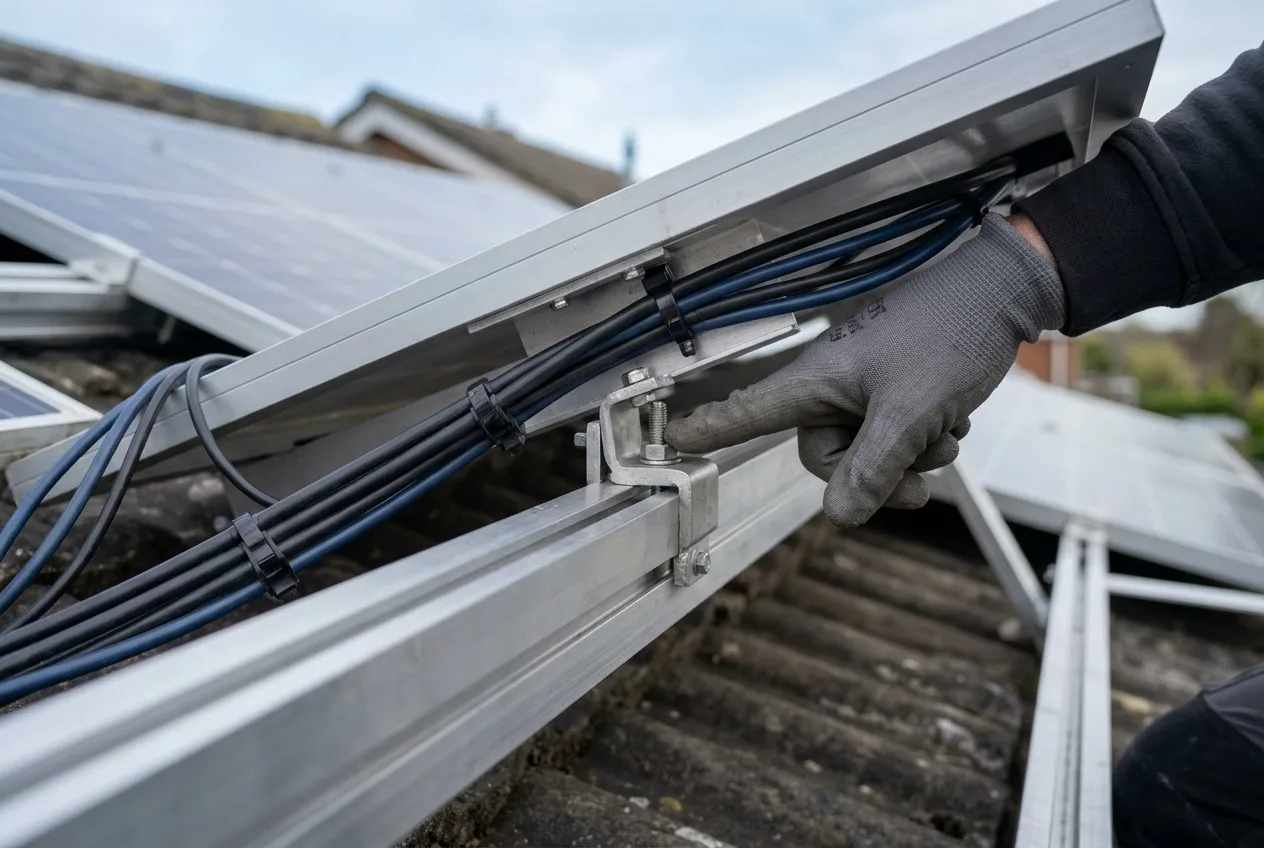
| Cable routing | Service | Rodent marks, abrasion, cables hardened by the sun, clamps |
| Connectors | Service | Signs of heating, looseness, moisture ingress |
| DC switch, fuse, surge arrester | Service | Discoloration, fuse status, surge arrester indicator |
| Grounding | Service | Connection continuity, corrosion |
| Inverter | User (display) / service | Error logs, ventilation, fan and grille dust |
| Thermal imaging | Service | Hot spots, heating connections, suspected bypass diode failure |
The DC side of the panel array is always live whenever there is light; switching off the switch does not remove the voltage on the panel cables. For this reason, work on cables, connectors and junction boxes belongs to qualified electrical personnel. You can find out what protection devices do in our article on DC fuses, switches and surge arresters, and information on grounding and lightning protection measures in our grounding guide . If you would like to see all maintenance items in a single list, see the periodic maintenance checklist .
When is a thermal camera needed?
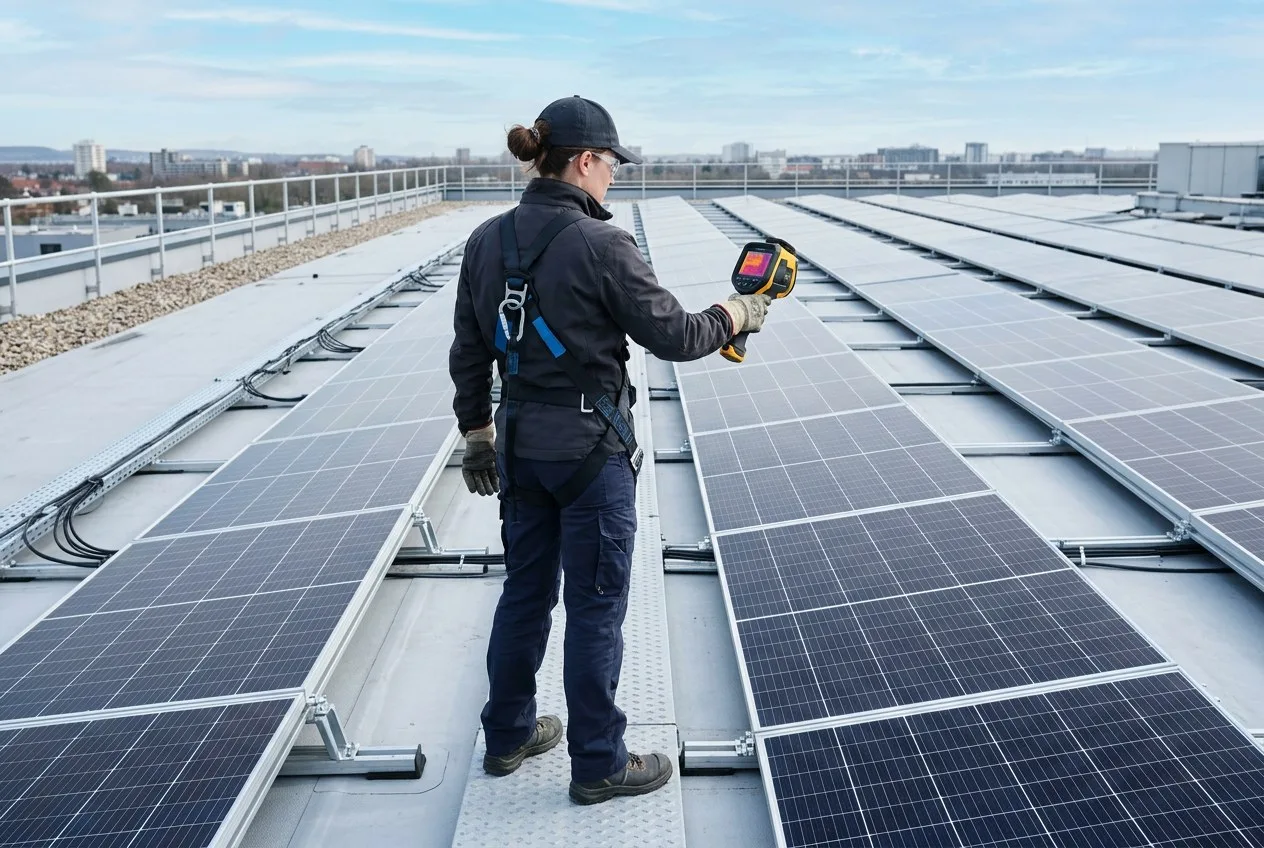
Hot spots and connection heating are not visible to the eye. A thermal camera reveals abnormally hot cells or connectors in an operating system when irradiance is sufficient. IEA PVPS Task 13 studies also classify hot spots as thermal patterns and note that they can cause burn marks due to inactive cell areas . If production is lower than expected and there is no difference after cleaning, a thermal inspection is a sensible next step.
Production did not improve after cleaning: what should you do?
If you see no difference in production after washing, dirt is not the cause. The possible causes are as follows:
| Symptom | Possible cause | Next step |
|---|---|---|
| Low production throughout the day | New shading, inverter limiting, curtailment due to grid voltage | Check the inverter logs and shading hours |
| One string is clearly lower than the other | Fault in a connector, cable, fuse or a single panel | Measurement by authorized service and thermal inspection |
| Sudden drop at certain hours | Partial shading, bypass diode kicking in | Identify the source of the shade |
| Slow decline spread over years | Panel aging, permanent soiling or coating loss | Compare the annual production trend |
| Inverter shows an error message | Insulation, grid or DC voltage problem | Note the message and report it to service |
To narrow down the problem systematically, you can use our troubleshooting guide for a solar energy system that produces too little .
Why does panel maintenance in battery-backed systems also affect the battery side?
In a grid-connected system without batteries, the result of a dirty panel is simply lower production. In a system with batteries, a dirty panel also reduces the energy that charges the battery. Especially in winter, on days when the sun is already weak, the battery may not fill up enough. Frequent operation at a low state of charge can also have a negative effect on battery life. That is why, in a battery-backed system, panel cleaning and battery health are linked. For the battery-side checks to go along with panel maintenance, you can read our article on battery maintenance in solar energy systems . For homes and businesses that need uninterruptible power, UPS, battery and inverter maintenance falls within Bempower's field; the panel and installation side is the job of the relevant solar energy specialists.
Maintenance plan and record keeping
A short, regular plan reduces surprises. The framework below suits most homes and small businesses:
- Monthly: Check the production monitoring screen and roughly compare expected and actual production.
- At the start of each season: Visually inspect the panels and remove bird droppings and leaves if there are any.
- End of the dry season and pollen season: Do a light wash if necessary.
- Once a year: Call an authorized team for an electrical check, a connection and mounting inspection, and thermal imaging if needed.
- After an incident: Have a visual inspection and service check carried out after hail, storms, lightning and fire.
Keep the date and method of each cleaning, along with the production values before and after, as a short note. After a year, these notes will show you the most accurate cleaning frequency for your own system. NREL's modeling also shows that soiling changes from year to year, that is, that soiling losses vary by site and over time . Rely on your own data instead of a fixed calendar.
Safety rules for solar panel cleaning
- Do not go up on the roof in rainy, windy, icy or stormy weather.
- Do not work at height alone; do not step on a sloped roof without fall-arrest equipment.
- When working near power lines, do not use an extension pole with a metal handle; do not spray water on the lines or panels.
- If you see damage on the cables, burn marks on a connector or a crack in the glass, stop cleaning and report the system to a specialist.
- After cleaning, check the inverter display and error logs for a short time; if there is any abnormal warning, notify service.
If your solar energy system works together with a UPS, a battery bank or a hybrid inverter, regular maintenance of the side that kicks in during an outage is at least as important as that of the panels. Bempower provides survey, installation, periodic maintenance and technical service for UPS systems, battery banks and inverters. For on-site support in Istanbul and the surrounding provinces, you can reach us through our contact page .
- Guidelines for Operation and Maintenance of Photovoltaic Power Plants in Different Climates — IEA PVPS Task 13, 2022. https://iea-pvps.org/wp-content/uploads/2022/11/IEA-PVPS-Report-T13-25-2022-OandM-Guidelines.pdf
- Degradation and Failure Modes in New Photovoltaic Cell and Module Technologies — IEA PVPS Task 13, 2025. https://iea-pvps.org/wp-content/uploads/2025/02/IEA-PVPS-T13-30-2025-REPORT-Degradation-and-Failure.pdf
- PV Module Failure Sheets (PVFS) Annex: Degradation and Failure — IEA PVPS Task 13, 2025. https://iea-pvps.org/wp-content/uploads/2025/02/IEA-PVPS-T13-30-2025-PVFS-ANNEX-Degradation-and-Failure.pdf
- Solar Panel Cleaning & Maintenance Guide — Nexamp, 2026. https://www.nexamp.com/blog/solar-panel-cleaning-and-maintenance
Sources
