


Choosing Batteries for Solar Energy: Gel, AGM, OPzV and Lithium (LiFePO4)

In a solar energy system, the panels and the inverter are usually the first items discussed. Yet the component that most often determines the system's day-to-day performance, maintenance needs and long-term cost is the battery. The market offers very different options such as gel, AGM, OPzV and LiFePO4. If you choose based only on an "Ah" and price comparison, you may face unexpected replacement costs after a few years.
In this guide, we compare the four battery families in terms of cycle life, usable capacity, temperature behavior, charging requirements, safety and maintenance. We calculate step by step the battery size needed to deliver the same energy, and use tables to show which technology makes sense in which scenario. The article is written for homeowners, owners of country houses and off-grid facilities, business managers, and purchasing or technical staff.
We do not recommend brands or models; the aim is to help you ask the right questions when a quote lands in front of you. The figures are typical ranges; always consult the manufacturer's datasheet for exact values.
Why isn't a solar battery chosen like a "normal" battery?
In a UPS, the battery spends most of the year waiting on float charge and only comes into play during an outage. In a solar energy system, however, the battery is charged and discharged every day: it fills from the panels during the day and drains in the evening and at night. This is a daily cycling (cycling) load, and each technology responds to it differently. You can find the basic logic of cycling in our article how a solar energy system works and which architectures require a battery in our comparison of systems with and without batteries .
When evaluating a battery for solar energy storage, three questions need to be considered together:
- How many times a day, and how deeply, will it cycle? A battery that discharges 50-80 percent every day and one that operates only a few times a year are not chosen with the same technology.
- What is the environment where the battery will be located? A heated basement and a garden shed that reaches 40 °C in summer give different results.
- How easy is access for maintenance? A house in the city and a pump station kilometers away cannot sustain the same maintenance schedule.
There is a separate series of international standards for batteries used in solar systems. IEC 61427-1 defines the requirements and performance verification tests for secondary batteries used in photovoltaic energy systems, for off-grid applications ; moreover, it applies to every type of secondary battery . In the standard's test approach, a block of about 150 cycles is considered close to one year of photovoltaic storage use . In other words, the evaluation criterion is not "standby life" but cycle endurance.
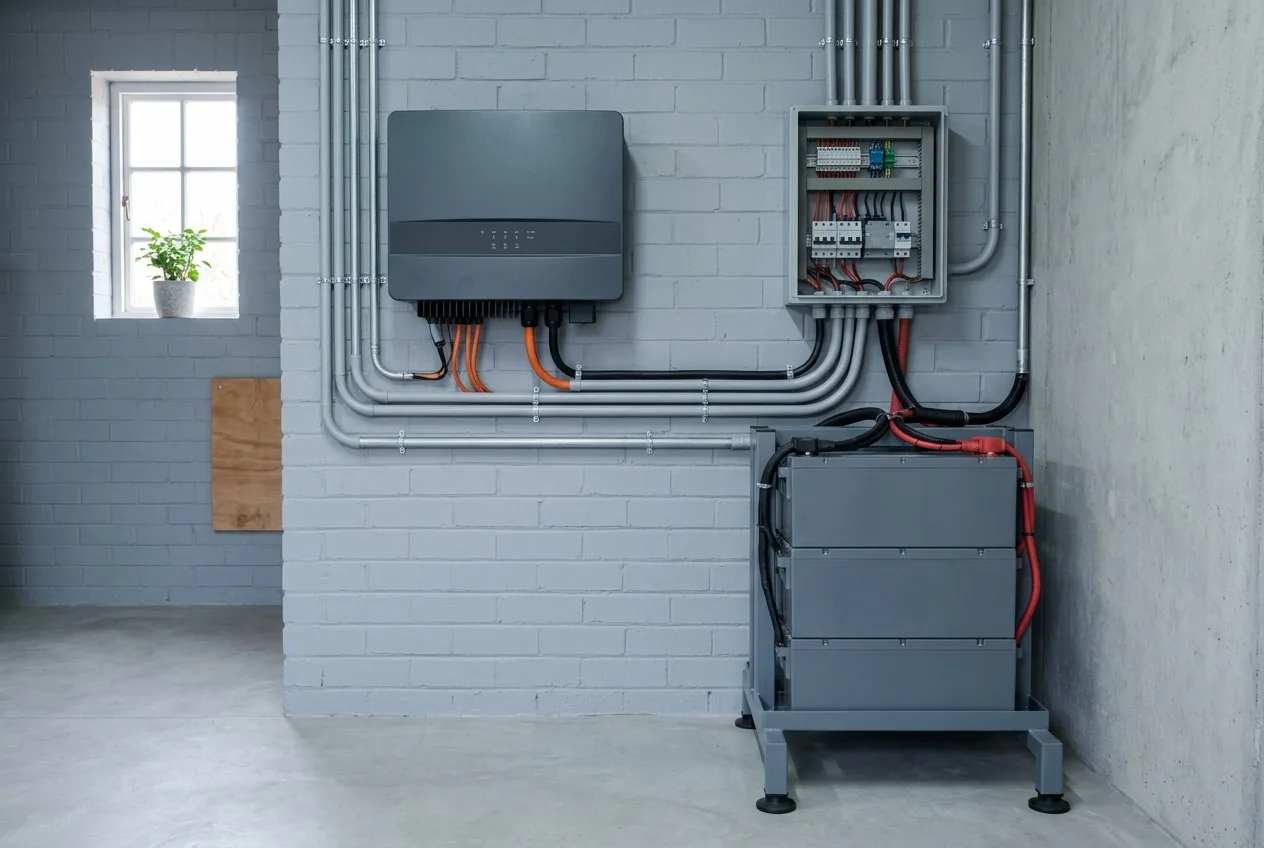
A quick look at the four battery technologies
The four options fall into two main families: sealed (VRLA) lead-acid batteries (AGM, gel, OPzV) and lithium iron phosphate (LiFePO4). VRLA stands for "valve-regulated lead-acid": the electrolyte does not flow freely, and water loss is very low thanks to the gas recombination mechanism. For this reason, no electrolyte level checks or distilled water top-ups are needed. For an overview of the differences between AGM, gel and VRLA, see differences between VRLA, AGM and gel batteries .
| Technology | Construction | Strength | Points to watch |
|---|---|---|---|
| AGM | Electrolyte absorbed in a glass fiber mat, usually flat plate | High current, low internal resistance, reasonable price | Life shortens under deep daily cycling; sensitive to temperature |
| Gel (monobloc) | Electrolyte gelled with silica | Can be more resistant to deep discharge and cycling than AGM | Narrow charge voltage limit; weak at high current and in cold |
| OPzV | 2 V cell, tubular positive plate, gel electrolyte | Very long life, deep cycling, maintenance-free | Heavy, large, high initial investment; charge setting is critical |
| LiFePO4 | Lithium iron phosphate cells + BMS | High usable capacity, long cycle life, light weight, high efficiency | Charging restricted below 0 °C; BMS and inverter compatibility is essential |
When does an AGM battery make sense in solar energy?
An AGM battery is a type of VRLA in which the electrolyte is held in the capillary structure of a glass fiber mat. According to manufacturer guides, it is superior in applications requiring high current ; for this reason it is commonly seen in caravans, boats and small backup systems with loads that draw sudden current, such as engine starting. It is also maintenance-free and flexible in terms of mounting position.
Its weak point in solar energy is deep, daily cycling. The same manufacturer sources state that AGM has a shorter cycle life than gel in very deep-cycle applications. In other words, in a system where the battery is discharged close to 50 percent every day, an AGM may fall short of its calculated life. It is reasonable to consider AGM in the following cases:
- If the daily discharge is shallow (for example, only small loads such as a modem, camera and lighting at night).
- If the solar system works together with the grid and the battery mainly serves as outage backup.
- If the initial budget is limited and you are willing to accept replacement every few years.
It is also important to know what the capacity label really means; the Ah value is given for a specific discharge time. For details, you can read our article what is battery capacity (Ah) .
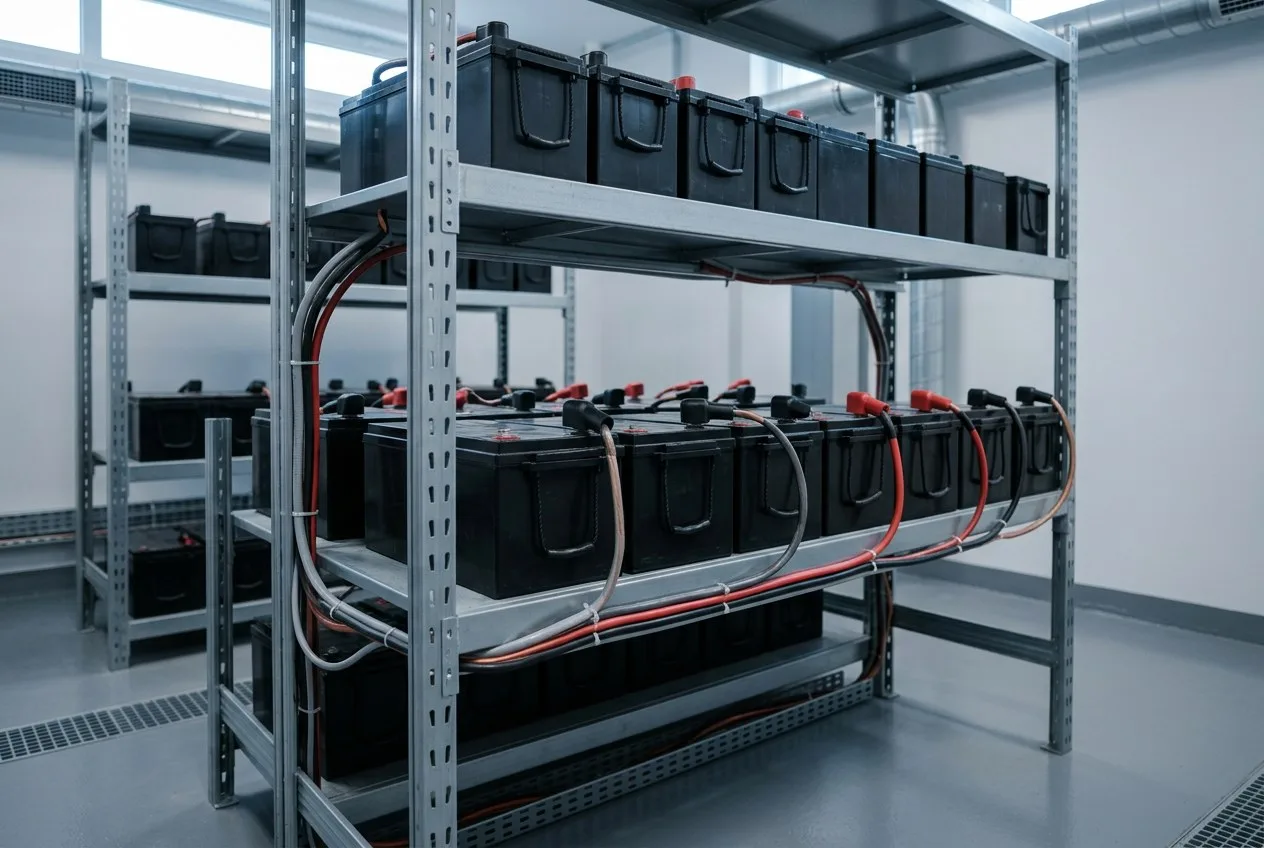
Gel battery: a sealed alternative for deep cycling
In gel batteries, the electrolyte is a gel thickened with silica. According to Deka's VRLA guide, a gel battery is better suited to very deep discharge applications and can withstand deeper discharge while maintaining performance . The same source also notes that in a gel battery, as the temperature drops below 0 °C, power falls faster than in AGM . In other words, gel is designed for slow, deep discharge rather than sudden high current.
The most critical aspect of a gel battery is the charge setting. The same guide emphasizes that keeping the upper charge voltage limit low is mandatory for a 12 V gel battery; it states that limits such as 14.1 V for gel and 14.6 V for AGM must not be exceeded . Limit values differ from manufacturer to manufacturer; these numbers are only meant to give an idea. If the "AGM" or "gel" profile is selected incorrectly on the charge controller or hybrid inverter, the battery may dry out or may not charge fully. For how the settings are made, see battery charge settings (bulk, absorption, float) is explained in the article.
On heat, gel can offer an advantage over AGM. The Deka guide describes gel batteries as much less prone to thermal runaway than AGM . The table in Victron's datasheet points in the same direction: for a deep-cycle gel battery it gives a design life of about 12 years at an average temperature of 20 °C, versus 7-10 years for AGM; at 30 °C these values drop to 6 years for gel and 4 years for AGM .
What is an OPzV battery? What determines its long life?
OPzV is a 2 V stationary cell. As manufacturer descriptions explain, it is a tubular gel cell designed for deep discharge, long life and very low maintenance . The gel electrolyte protects the tubular positive plate; because the electrolyte is solidified with silica, the tubular plate structure is preserved and resistance to daily deep cycling increases . OPzV has three notable features:
- Design life: Manufacturers specify a float life of up to the 20-year class in stationary use. This is a design value under laboratory conditions (usually 20-25 °C); it is not a warranty period.
- Cycle life: One manufacturer's catalog lists design values such as about 5,200 cycles at 20% discharge, 3,000 at 50% and 1,800 at 80% at 27 °C; these values are catalog design data . Another source gives a range of 1,200-1,800 cycles at 80% discharge for premium designs. In other words, the values differ markedly from one manufacturer to another.
- Maintenance: Oxygen recombination recovers the water consumed during charging ; no water top-up is needed.
There is a price to pay: the cells are heavy and large, and building a 48 V bank from 2 V cells requires connecting 24 cells in series. For the series-parallel logic, see battery string and series-parallel connection . Also, as one manufacturer source puts it, a gel cell lives or dies by the correct setting of the charger ; therefore the charging profile must match the manufacturer's values. The same source also reminds that a charging profile set for a flooded battery will shorten its life .
For OPzS, the flooded sibling of OPzV with more detail, and other industrial solutions, there is the article What are OPzS and OPzV batteries
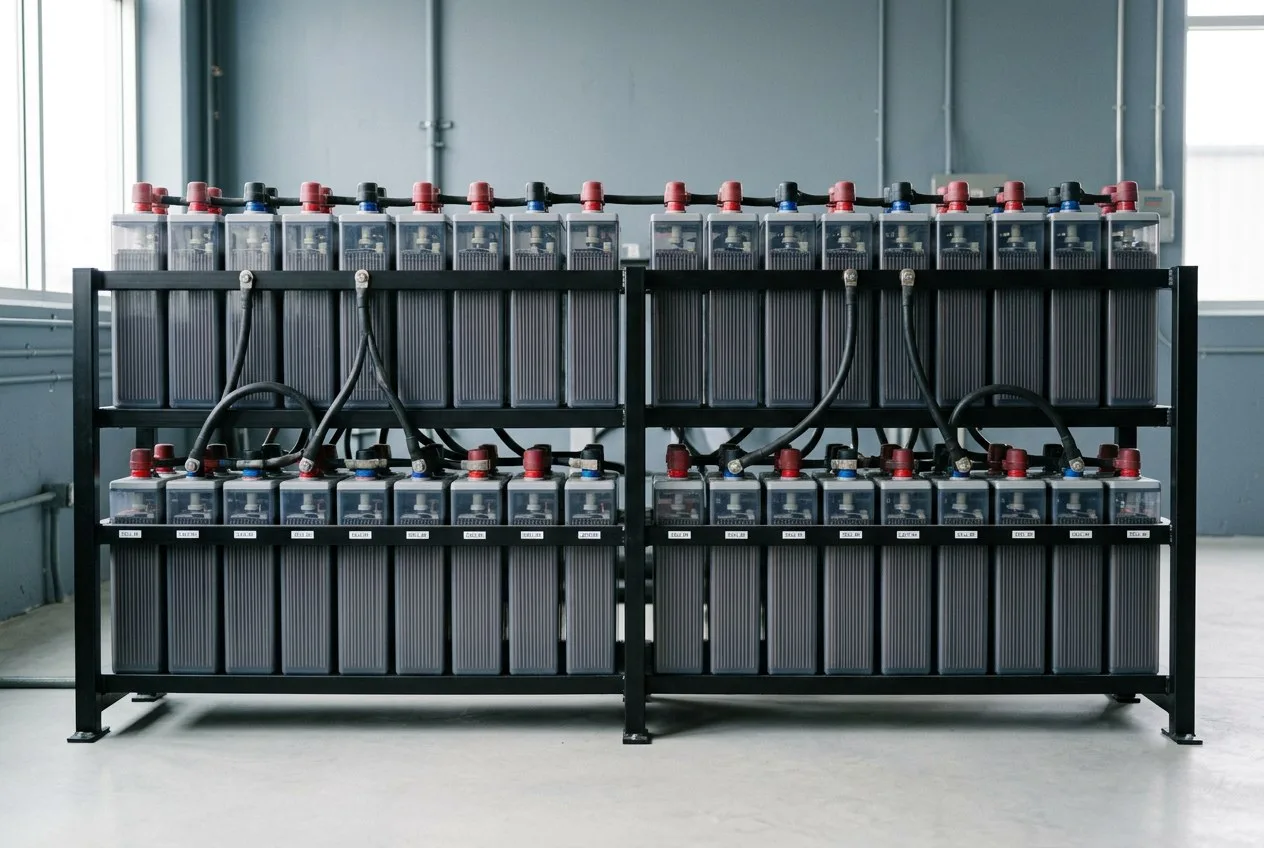
Why is LiFePO4 so common in solar energy?
LiFePO4 (lithium iron phosphate) is a lithium-ion chemistry known for its stable structure. The safety roadmap prepared by Sandia for the DOE states that thermal stability supports the spread of LFP in grid-scale storage . In return, it has a lower average potential and, consequently, lower energy density ; however, in a stationary installation weight and volume are often not decisive. For basic information about the technology, see our article What is a LiFePO4 battery
Its main advantages in solar systems are:
- High usable capacity: Market sources recommend a depth of discharge of 80-100% for LiFePO4 and about 50% for lead-acid. In addition, charge efficiency is given as about 95-98% for LiFePO4 and 70-85% for lead-acid .
- Cycle life: Industry publications frequently cite a range of 2,000-6,000 cycles ; however, the result depends on depth of discharge, temperature, charge rate and product design . These figures should therefore be considered "typical" and confirmed with manufacturer data.
- Light weight and flat voltage curve: It can be mounted on a wall or in a rack cabinet; the relatively constant voltage throughout discharge can reduce premature inverter shutdown.
It also has drawbacks. The first is BMS dependence. The BMS monitors cell voltage, temperature and current and protects the battery; details are in What is a BMS article. The second is communication compatibility with the inverter; which battery protocols hybrid inverters support should be checked before purchase. The third is the charging limit in cold weather; it is covered in the temperature section below.
If you are curious about the use of lithium on the UPS side, the article lithium-ion UPS batteries explains the difference from lead-acid. For the differences between lithium chemistries, the LiFePO4 vs. NMC comparison can help.
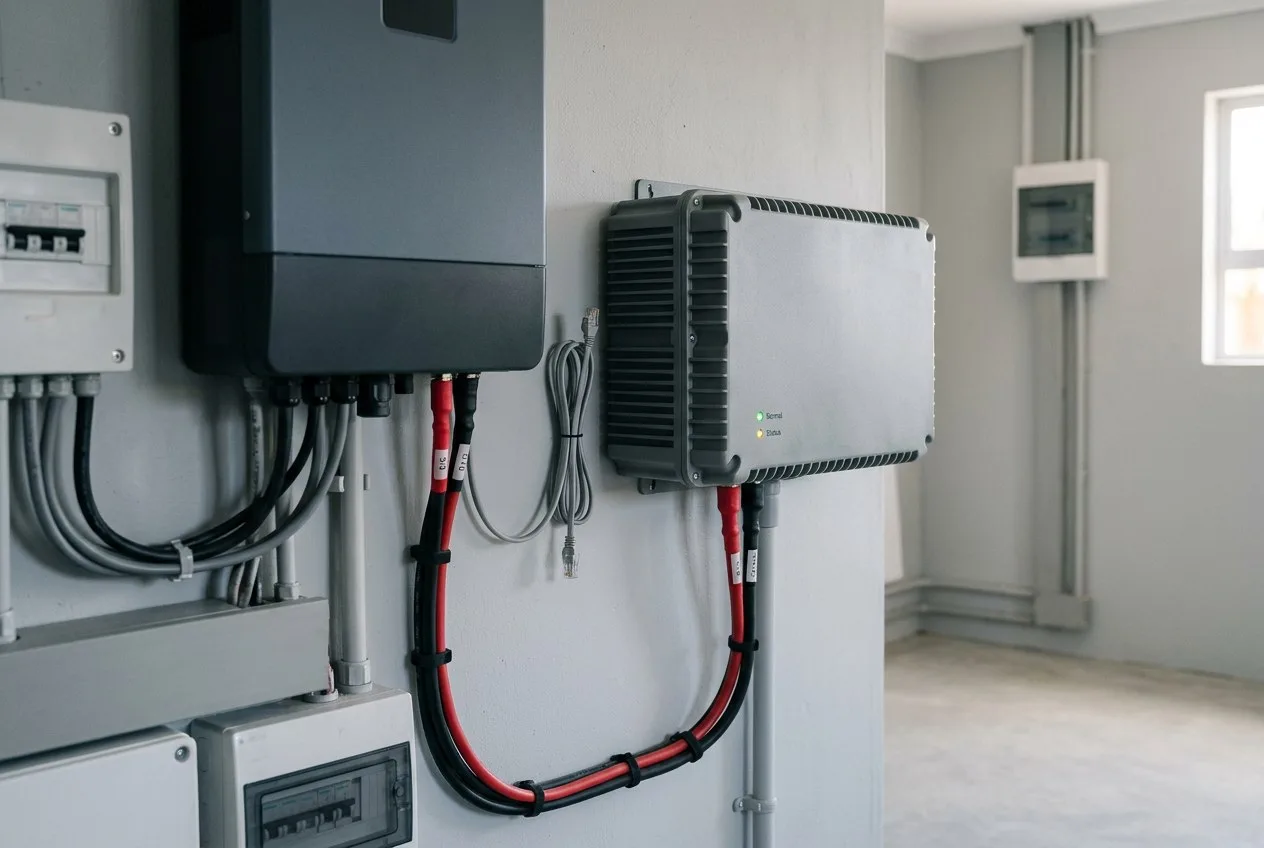
Comparison table: life, capacity, temperature and maintenance
The table below shows typical ranges side by side. The figures vary markedly with manufacturing quality, depth of discharge and temperature; when choosing, only the datasheet of the relevant product should be used as the basis.
| Criterion | AGM | Gel monoblock | OPzV | LiFePO4 |
|---|---|---|---|---|
| Recommended depth of discharge in daily use | Approx. 30-50% | Approx. 50% | Approx. 50-80% (per datasheet) | Approx. 80-90% |
| Cycle life (typical) | Several hundred to around a thousand | Around a thousand and above | One to three thousand and above (depending on DoD) | One to six thousand |
| High current | Good | Medium | Good (depending on cell size) | Very good (within BMS limits) |
| Behavior in cold | Capacity drops | Power drops more | Capacity drops | Discharge continues; charging restricted below 0 °C |
| Behavior in heat | Lifespan shortens rapidly | Can be better than AGM | High design life, but still temperature-sensitive | More tolerant, but still ages |
| Maintenance | Low | Low | Very low | Very low (BMS monitoring) |
| Initial cost | Low | Low-medium | High | Medium-high |
| Weight/volume | Heavy | Heavy | Very heavy, requires a large area | Light and compact |
For a detailed look at how depth of discharge affects battery life, we recommend our article on depth of discharge (DoD) and cycle life .
Calculation example: How many Ah are needed for the same energy?
Instead of price per Ah, comparing "actual usable energy and total cycle energy" gives a much more accurate picture. The example below uses fixed assumptions to simplify the calculation; in a real project, the capacity calculation should be done following the steps in the article on battery capacity calculation .
Assumptions
- AC energy the battery must supply through the night until morning: 4 kWh/day.
- Inverter efficiency: %90.
- System voltage: 48 V (nominal).
- Lead-acid (gel/OPzV) depth of discharge: %50; LiFePO4: %90.
- The temperature and aging margins that reduce capacity are ignored in this example.
Step-by-step calculation
- Energy the battery must deliver on the DC side: 4 kWh ÷ 0.90 ≈ 4.4 kWh.
- Nominal energy for lead-acid: 4.4 kWh ÷ 0.50 ≈ 8.9 kWh. Ah value: 8,900 Wh ÷ 48 V ≈ 185 Ah; the closest market value is approximately 190 Ah (9.1 kWh).
- Nominal energy for LiFePO4: 4.4 kWh ÷ 0.90 ≈ 4.9 kWh. Ah value: 4,900 Wh ÷ 48 V ≈ 103 Ah; the closest value is a 51.2 V, 100 Ah battery (5.1 kWh).
Total cycle energy (energy delivered over the cycle life)
The cycle counts below are examples only; actual values vary by manufacturer. Let's assume 2,500 cycles at 50% discharge for lead-acid and 4,000 cycles at 90% discharge for LiFePO4.
| Calculation | Lead-acid (OPzV type) ~190 Ah | LiFePO4 ~100 Ah (51.2 V) |
|---|---|---|
| Nominal energy | 9.1 kWh | 5.1 kWh |
| Usable energy per cycle | 9.1 × 0.5 ≈ 4.6 kWh | 5.1 × 0.9 ≈ 4.6 kWh |
| Assumed number of cycles | 2.500 | 4.000 |
| Total lifetime energy | ≈ 11.4 MWh | ≈ 18.4 MWh |
| Runtime at one cycle per day | ≈ 6.8 years | ≈ 11 years |
This example shows two results. First, for the same daily energy, a lead-acid battery needs roughly twice the nominal capacity. Second, in a system cycled once a day, the number of cycles translates directly into years; 2,500 cycles means about seven years. If a technology's calendar life is shorter than that, its high cycle count matters little; and calendar life is determined by temperature. To calculate the return on investment using the same logic, see the article on payback period calculation .
Temperature: Why do lead-acid and lithium behave differently?
Lead-acid lifespan in a hot environment
The lifespan of a lead-acid battery is very sensitive to temperature. Based on the Arrhenius equation, WEG's VRLA guide states that for every 10-degree increase in ambient temperature, float life is roughly halved . Legrand's white paper reports a similar rule. If the battery reaches 35-40 °C in summer in a garden shed left in the sun or in an attic room, the life of a VRLA battery with a 10-year target can shorten considerably. The table in Victron's datasheet confirms this: the lifespan of an AGM battery, seven to ten years at 20 °C, drops to about two years at 40 °C. According to the same datasheet, monthly self-discharge at 20 °C is below 2% and doubles with every 10 °C increase .
Charge voltage must also be adjusted for temperature. The same datasheet gives the recommended temperature compensation as -4 mV per cell (-24 mV/°C for a 12 V battery) . For this reason, using a battery temperature sensor on the charge controller is one of the cheapest life insurance measures in lead-acid systems.
Charging lithium in the cold
Although LiFePO4 tolerates heat better, cold charging is an important limit. At low temperatures, lithium ions cannot enter the graphite negative electrode quickly enough, which can lead to metallic lithium building up on the surface (lithium plating). A manufacturer's guide explains that charging in freezing conditions can cause permanent capacity loss and a safety risk . Quality batteries automatically cut off charging in this situation through the BMS; heated battery models or a heated installation location solve this problem. For winter conditions, see also how much solar energy is produced in winter .
In practice, the temperature plan can be summarized as follows:
- If the battery room is not heated and drops below freezing in winter, heating or insulation is required for LiFePO4.
- In places that get very hot in summer and cannot be ventilated, lead-acid life drops quickly; the installation should be moved to a shaded, airy spot, or an air-conditioned space should be allocated.
- If temperature communication is set up between the battery and the inverter, make sure the charge settings change according to battery temperature.
Safety: What risks does each battery carry?
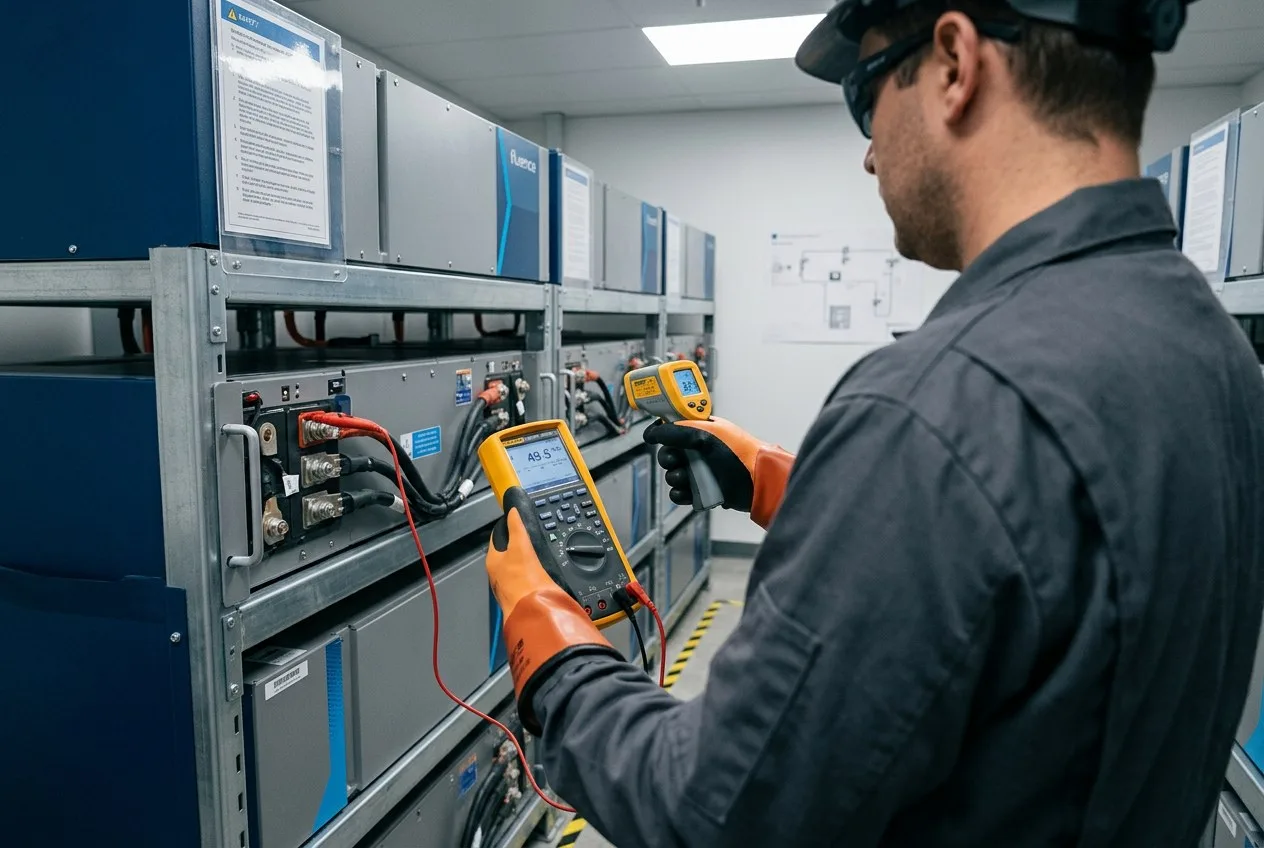
Safety is a real topic for every technology, though it differs in each. Installation, connection and maintenance work must be carried out by authorized electrical personnel or technical service because of high DC voltage, short-circuit current and arc risk; this guide is for selection only. For work safety, see occupational safety in UPS and battery work .
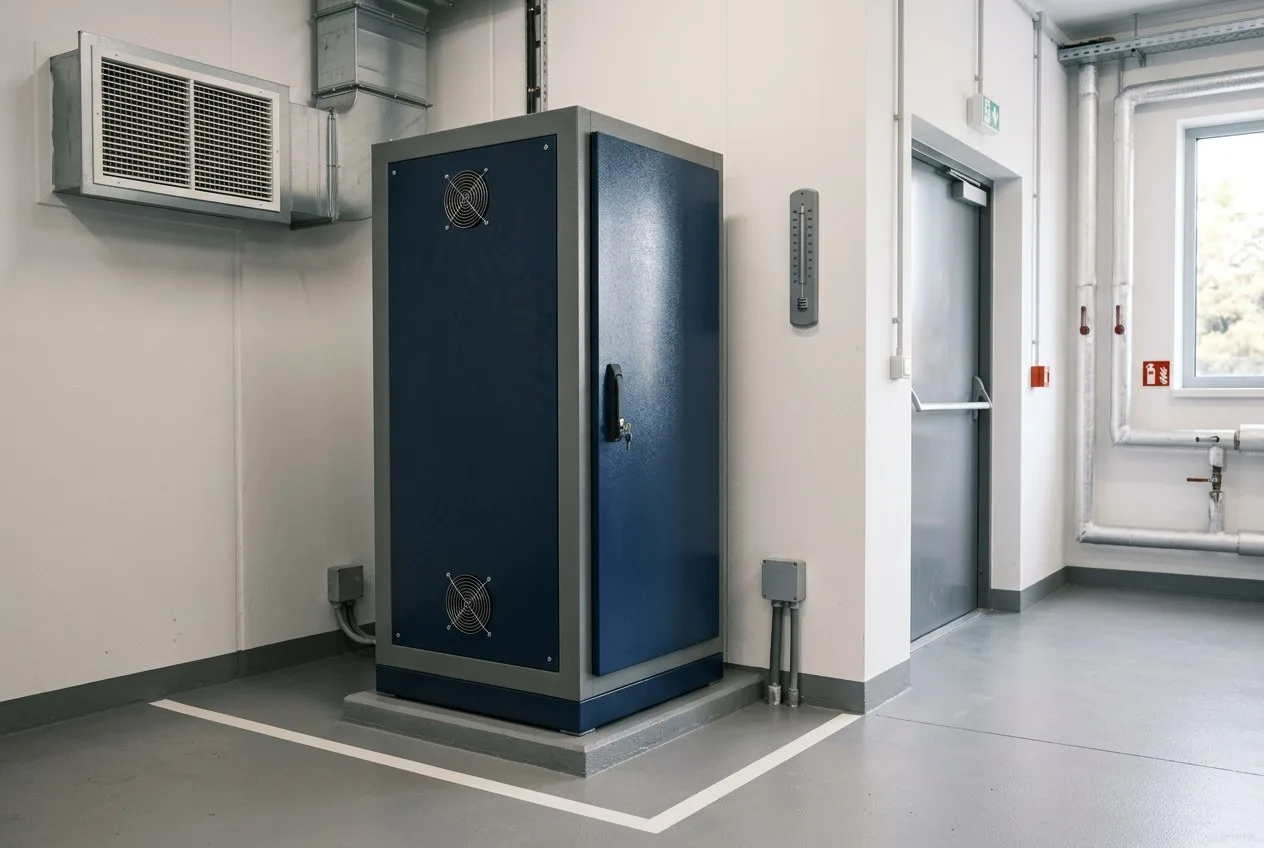
- VRLA (AGM, gel, OPzV): They emit very little gas compared with flooded batteries; however, under overcharge and heat, gas release, swelling and thermal runaway can occur. Batteries must be positioned according to placement rules for heat and ventilation. For signs of swelling, see what causes battery swelling .
- LiFePO4: LFP chemistry is thermally stable; however, Sandia's roadmap states clearly that LFP does not solve every problem and that incidents have also occurred in LFP-based systems . The main risk for lithium-ion batteries is thermal runaway . Manufacturing quality, BMS, cable and connection quality, placement and fire precautions are decisive; for details, see fire safety in lithium battery storage and what is thermal runaway .
- Waste from old batteries: Lead-acid batteries are hazardous waste and must not be thrown into ordinary trash; the article on disposal of old batteries explains the process.
On the standards and documentation side, IEC 62619 stands out for stationary lithium batteries. According to IECEE's definition, this standard specifies requirements and tests for the safe operation of secondary lithium cells and batteries in industrial use, including stationary applications . The 2022 edition also expands requirements in areas such as BMS safety, EMC and software . According to IEC's own description, the standard covers only the first life of cells and batteries; it does not consider reuse or repurposing . Therefore second-hand or reused lithium batteries fall into a different risk class; also read solar energy with second-hand batteries . For how to review which document, the guide to documents and standards is useful.
Which battery for which scenario?
The table below matches typical scenarios to make the decision easier. The final choice is settled through a technical site survey based on the load profile and ambient conditions.
| Scenario | Leading option | Rationale and point of attention |
|---|---|---|
| Urban home with hybrid system, mainly outage backup | LiFePO4 or AGM/gel | The battery mostly sits full; inverter compatibility and budget are decisive. For lithium, BMS communication must be verified. |
| Off-grid home with deep cycling every day | LiFePO4 or OPzV | High usable capacity and cycle life are needed. Plan heating for lithium in cold climates. |
| Country house, weekend use | AGM/gel or LiFePO4 | Long idle periods require attention to battery self-discharge; plan a refresh charge for the winter vacancy. |
| Remote telecom, camera, pump site | OPzV or LiFePO4 | Access for maintenance is difficult; long life and monitoring stand out. Heat management is essential for hot sites. |
| Caravan and boat | LiFePO4 or AGM | Weight and space are limited; vibration and high momentary current must be taken into account. |
| Business-critical load backup | is planned separately from the UPS battery | Do not confuse a solar battery with a UPS battery; a separate site survey must be carried out for critical loads. |
On the architecture side, the differences between on-grid, off-grid and hybrid systems and the off-grid installation guide; for voltage selection, the article on 12 V, 24 V and 48 V battery voltage complete the decision process.
Common mistakes when choosing a battery
- Comparing only Ah and price. Two batteries with the same Ah have different usable energy and lifespan; as in the calculation above, cost per cycle and usable capacity should be evaluated together.
- Forgetting the charge profile. AGM, gel, OPzV and LiFePO4 require different charge voltages. Selecting the wrong profile on the inverter or charge controller can ruin the battery in a short time.
- Mixing batteries. Combining batteries of different brands, chemistries, ages or capacities in the same bank leads to imbalance. A new battery should not be connected in parallel with an old bank.
- Ignoring ambient temperature. In an unheated room, lithium charging may be cut off; in a hot environment, the lifespan of lead-acid can be halved.
- Overlooking the current limit. For loads with high starting current, such as air conditioners, pumps or refrigerators, the battery's continuous and peak discharge current must be checked. For load examples, see the article refrigerator, combi boiler and air conditioner calculation .
- Neglecting battery maintenance and testing. Maintenance-free does not mean monitoring-free; voltage, temperature and capacity checks should be planned at least once a year. As a practical guide, battery maintenance in solar energy systems .
Questions to ask before buying (short checklist)
- At what depth of discharge and temperature does the manufacturer state the cycle life? Is there a curve in the datasheet?
- Are the design life and warranty period stated separately, and does the warranty include an energy throughput (kWh) or capacity loss condition?
- Does the selected inverter or charge controller support this battery chemistry and communication protocol?
- Do the maximum continuous and peak current ratings meet the load profile?
- Is the battery's operating and charging temperature range suitable for the installation site?
- For lithium, are the relevant safety certificates available (for example, test reports associated with IEC 62619)?
- Have the layout, ventilation, and fuse/breaker protection of the battery bank been planned? For DC protection, the article on DC fuses, breakers, and surge arresters will serve as a guide.
- Who will handle the collection and recycling of the battery at the end of its life?
Are solar batteries and UPS batteries the same thing?
Although they look similar, the two batteries differ in terms of their duties. UPS batteries are generally optimized for high-current, short-duration discharge and mostly stand by on float charge. A solar battery, on the other hand, undergoes continuous cycling. Using a UPS battery in a solar system can shorten its life; conversely, a deep-cycle battery may not suit every UPS. For the selection criteria of UPS batteries, you can read the articles how to choose a UPS battery and which battery is used in which system
Post-selection steps: commissioning, testing, and monitoring
Even if the right battery is chosen, commissioning and initial tests determine the life expectancy. The first charge should be performed with the manufacturer's settings, voltage differences within the battery string should be measured, and the acceptance test should be documented. The UPS-world equivalent of these steps is described in the article commissioning after battery replacement After the system starts operating, you can take a look at monitoring systems to track production and battery status.
How to measure the capacity and health of the battery bank over time is a separate topic. For lead-acid batteries, internal resistance and capacity tests stand out; for lithium, cell balance and BMS logs are the focus. For this, see capacity and health testing in a solar energy battery bank will serve as a guide.
Support for batteries, inverters, and UPS with Bempower
Bempower does not provide solar panel installation or GES (solar power plant) application services; however, it offers sales, installation, periodic maintenance, and technical service for battery groups, inverters, and UPS systems. If you would like to assess the condition of an existing battery bank, plan a battery replacement, or have inverter and battery compatibility checked, you can contact us via the contact page We provide on-site surveys and technical service in Istanbul and surrounding provinces.
- IEC 61427-1:2013 Secondary cells and batteries for renewable energy storage – Part 1: Photovoltaic off-grid application — Swedish Institute for Standards (SIS) / IEC, 2013. https://www.sis.se/en/produkter/energy-and-heat-transfer-engineering/solar-energy-engineering/iec6142712013/
- IEC 62619:2022 – Safety requirements for secondary lithium cells and batteries for industrial applications — IECEE, 2022. https://www.iecee.org/certification/iec-standards/iec-626192022
- IEC publishes standard on battery safety and performance — IEC, 2022. https://www.iec.ch/blog/iec-publishes-standard-battery-safety-and-performance
- DOE OE Energy Storage Systems Safety Roadmap — Sandia National Laboratories / U.S. DOE, 2024. https://www.sandia.gov/app/uploads/sites/213/2024/05/EED_2827_FIG_SafetyStrategy-Final.pdf
- DOE ESHB Chapter 3: Lithium-Ion Batteries — Sandia National Laboratories / U.S. DOE, 2021. https://www.sandia.gov/app/uploads/sites/163/2021/09/ESHB-Ch3_Lithium-Batteries_Preger.pdf
- Gel and AGM Batteries Datasheet — Victron Energy, 2023. https://www.victronenergy.com/upload/documents/Datasheet-GEL-and-AGM-Batteries-EN.pdf
- VRLA Valve Regulated Lead Acid Batteries User Manual — WEG. https://static.weg.net/medias/downloadcenter/hb2/h4a/WEG-VRLA-batteries-user-manual-10005922959-en.pdf
- Li-Ion vs VRLA in UPS Applications White Paper — Legrand, 2022. https://ups.legrand.com/media/document/WP_Li-Ion%20vs%20VRLA%20batteries_print.pdf
- Valve-Regulated Lead-Acid (VRLA) Manual — Deka / East Penn. https://ressupply.com/documents/deka/VRLA_Manual.pdf
- OPzV Battery Manufacturer — 2 V Tubular Gel Cells — Microtex, 2026. https://microtex.com/opzv-battery/
Sources
