


Can a Refrigerator, Combi Boiler and Air Conditioner Run on Solar Power? Load and Battery Calculation

One of the most frequently asked questions in an area with frequent power outages, or in a country house with no grid connection, is: "Can I run a refrigerator, a combi boiler and an air conditioner with solar panels?" The short answer is yes, but the needs of the three appliances are very different. A refrigerator is a small but continuous load. A combi boiler uses very little electricity, but it does not work at all without it. An air conditioner is one of the largest electricity consumers in a home and can determine the size of the system on its own.
In this guide, we explain step by step, with numerical examples, the real power and energy needs of each appliance, the problem of surge current at compressor start-up, and how to size the inverter, battery and panels. The article is intended for home users, owners of country houses and summer homes, and technical staff assessing small backup power needs in businesses.
Note: The calculations below are for planning purposes. In a real project, device labels, measurements and manufacturer datasheets should be used as the basis; DC connections and the battery and inverter installation must be carried out by qualified electrical personnel.
Can a Refrigerator, Combi Boiler and Air Conditioner Run on Solar Power?
Yes, they can, but this requires a battery and a suitable inverter in addition to the panels. A solar panel produces power only during the day. A refrigerator also runs at night, a combi boiler draws the most load in the morning and evening, and an air conditioner mostly in the afternoon. The battery bridges this time gap. We explained in detail how the panel, battery and inverter work together in our article on how a solar energy system works ; here we focus only on the load side.
| Appliance | Typical operating power | Daily energy | Main challenge |
|---|---|---|---|
| Refrigerator | Approx. 80-250 W (while the compressor is running) | Approx. 0.5-1.5 kWh | Short-term high current at compressor start-up and 24/7 operation |
| Combi boiler | Approx. 90-150 W when heating | Approx. 1-2 kWh in the heating season | Does not work at all without electricity; continuity is essential even though the power is low |
| Air conditioner (12,000 BTU) | Approx. 0.8-1.5 kW | Approx. 3-8 kWh depending on usage time | High power and energy; determines the inverter and battery size |
The values in the table are typical ranges. The value for your own appliance varies depending on the model, age, room temperature and usage habits; for an exact figure, check the appliance label, the user manual and measurements.
Measure First: The Difference Between Watts, kWh and Starting Power
The most common mistake in solar calculations is confusing three different values:
- Watt (W): The power the appliance draws at a given moment. It determines the size of the inverter.
- Watt-hour (Wh) / kilowatt-hour (kWh): The energy consumed over a given period. It determines the size of the battery and panels.
- Starting (peak) power: When motorized appliances start up, they draw much more power than normal for a fraction of a second up to a few seconds. It determines the inverter's short-term capacity.
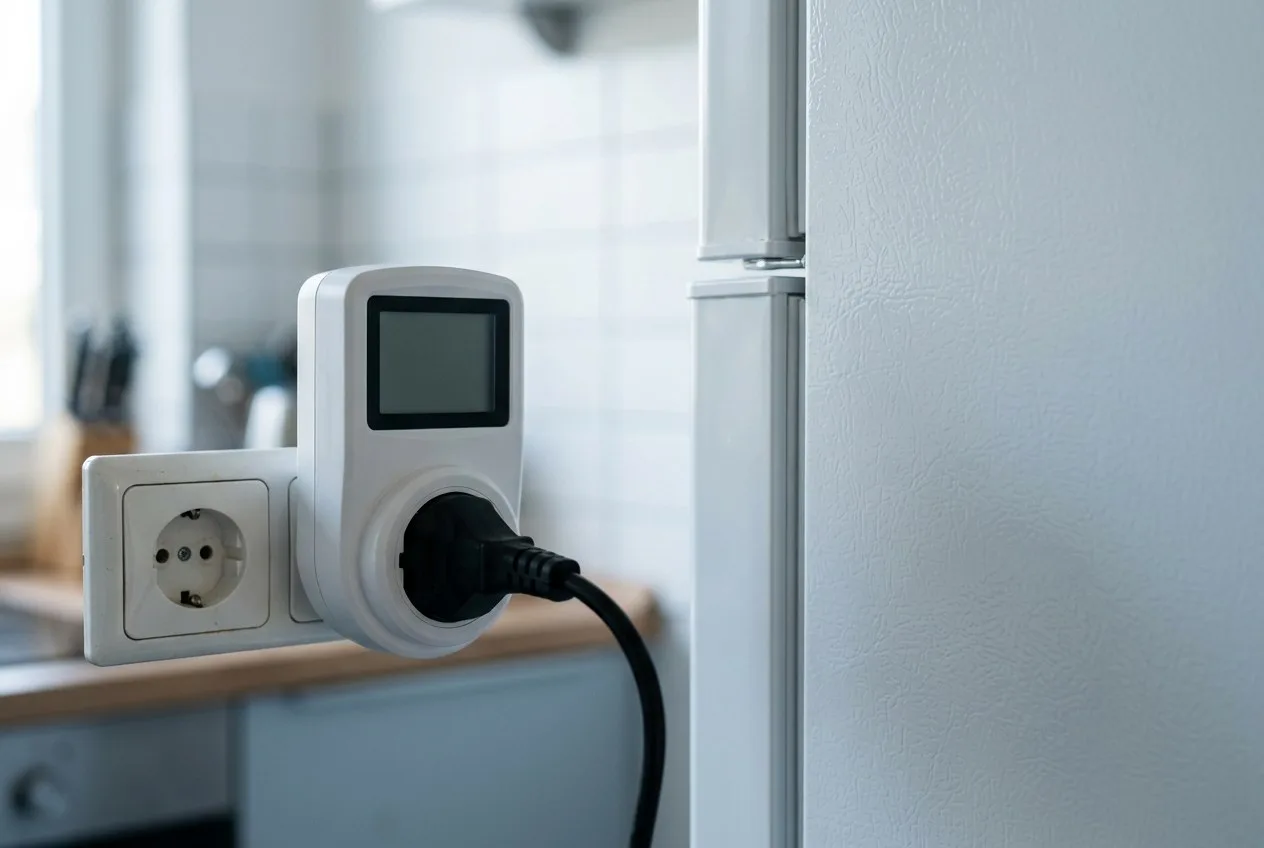
To find the daily energy, it is enough to multiply the power by the operating time. The U.S. Department of Energy's method is based on the same logic: the power written on the appliance (or the product of amps and volts) is multiplied by the usage time to obtain kWh. For appliances that run in cycles, such as refrigerators, the power on the label is not drawn continuously; therefore, the most accurate method is to read several days of actual consumption with a plug-in energy meter. The standby (phantom) consumption of appliances can also be seen through measurement.
Solar Power and Battery Calculation for a Refrigerator
A refrigerator switches its compressor on and off according to the thermostat. While running, it draws about 100-250 W; over a day, it is often active for only about one third of the time. Each time the compressor starts, a starting current several times the running power, commonly around 600-1,200 W, may be observed; it can be even higher in older and larger models.
Finding the daily energy from the label
The annual energy consumption in kWh is written on the refrigerator label. The text of the 2010 labeling regulation states that this value is found by multiplying the 24-hour standard test by 365, and that actual consumption depends on how and where the appliance is used. In other words, the label is a good starting point, but a hot kitchen or frequent door opening increases consumption.
- Label value: 250 kWh/year (assumption).
- Daily energy: 250,000 Wh ÷ 365 ≈ 685 Wh; rounded, about 700 Wh.
- An optional 10-15% margin can be added for kitchen temperature and door openings; in this example we keep it fixed at 700 Wh.
Every AC load that uses an inverter has two additional losses: conversion efficiency (we assume about 90%) and the standby power the inverter draws even when there is no load (for example 20 W; the actual value is in the manufacturer's datasheet). The energy drawn from the battery for the refrigerator is: 700 ÷ 0.90 ≈ 780 Wh, and adding the standby consumption of 20 W × 24 hours = 480 Wh gives about 1,260 Wh. Note how much weight standby consumption carries for a small load.
Can a Combi Boiler Run on Solar Power? Electrical Side and Limits
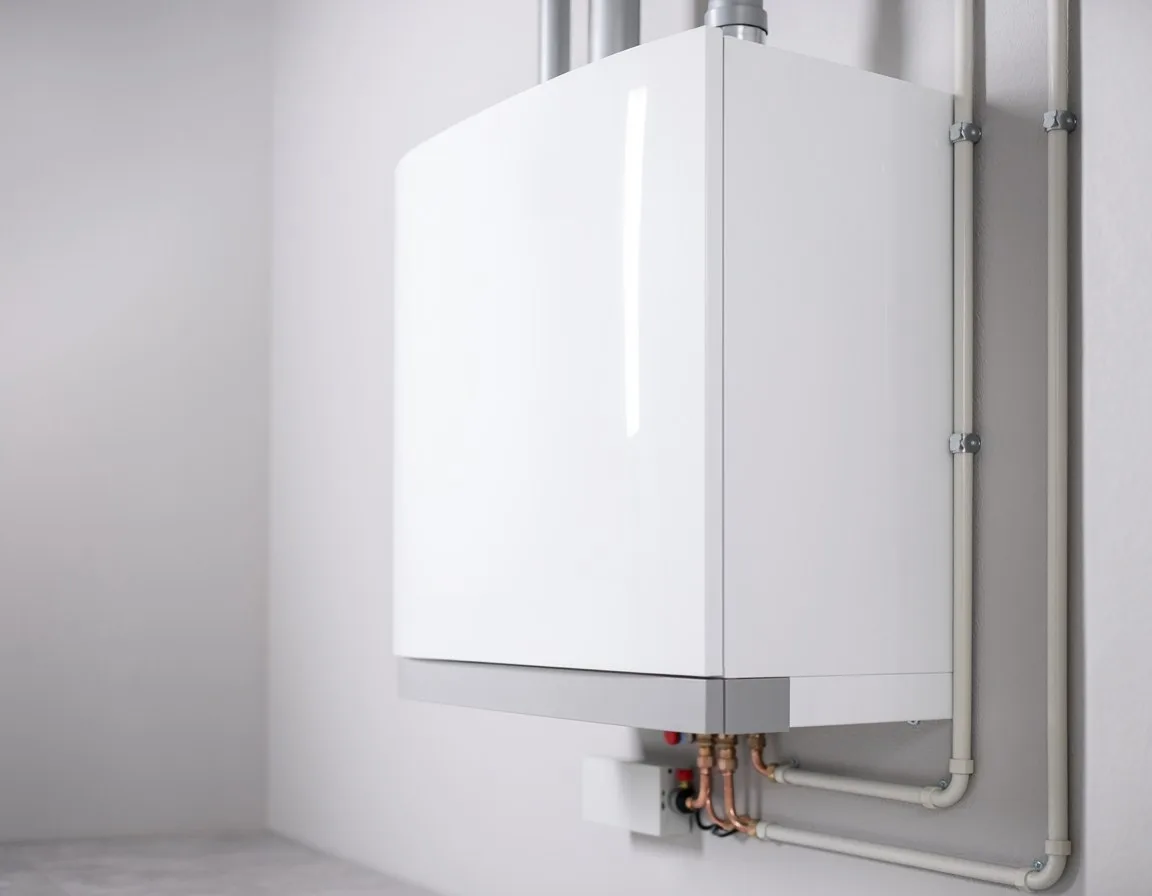
A combi boiler produces heat from natural gas; it uses electricity only for the fan, circulation pump, electronic board, ignition and gas valve. For this reason, when the power is cut, a modern combi boiler stops completely and the gas valve closes. In long outages, the main risk is that the plumbing freezes, because the frost protection also runs on electricity.
The good news is that consumption is low. New-generation circulation pumps draw about 50 W at maximum operating conditions; together with the fan and board, the combi boiler's total power during heating generally stays in the range of about 90-150 W. Therefore, a solar-battery system can keep a combi boiler running for hours, even for a day or two.
Points to note for the combi boiler
- Natural gas: The system provides only the electricity. If there is no LPG cylinder or natural gas at the country house, the combi boiler cannot produce heat anyway.
- Waveform: A pure sine wave inverter should be preferred for the combi boiler's pump and fan motors and its board. You can find the differences in our article on pure sine and modified sine inverters .
- Transfer time: If the combi boiler loses power even for a moment during an outage, it may shut down. Therefore, the transfer time between the grid and the battery is important; this topic is covered in the article how to choose a UPS for a combi boiler .
- Connection: Connecting the boiler to the inverter output should be left to authorized technical personnel because of the appliance's warranty and safety requirements.
Can an Air Conditioner Run on Solar Power? The Biggest Load
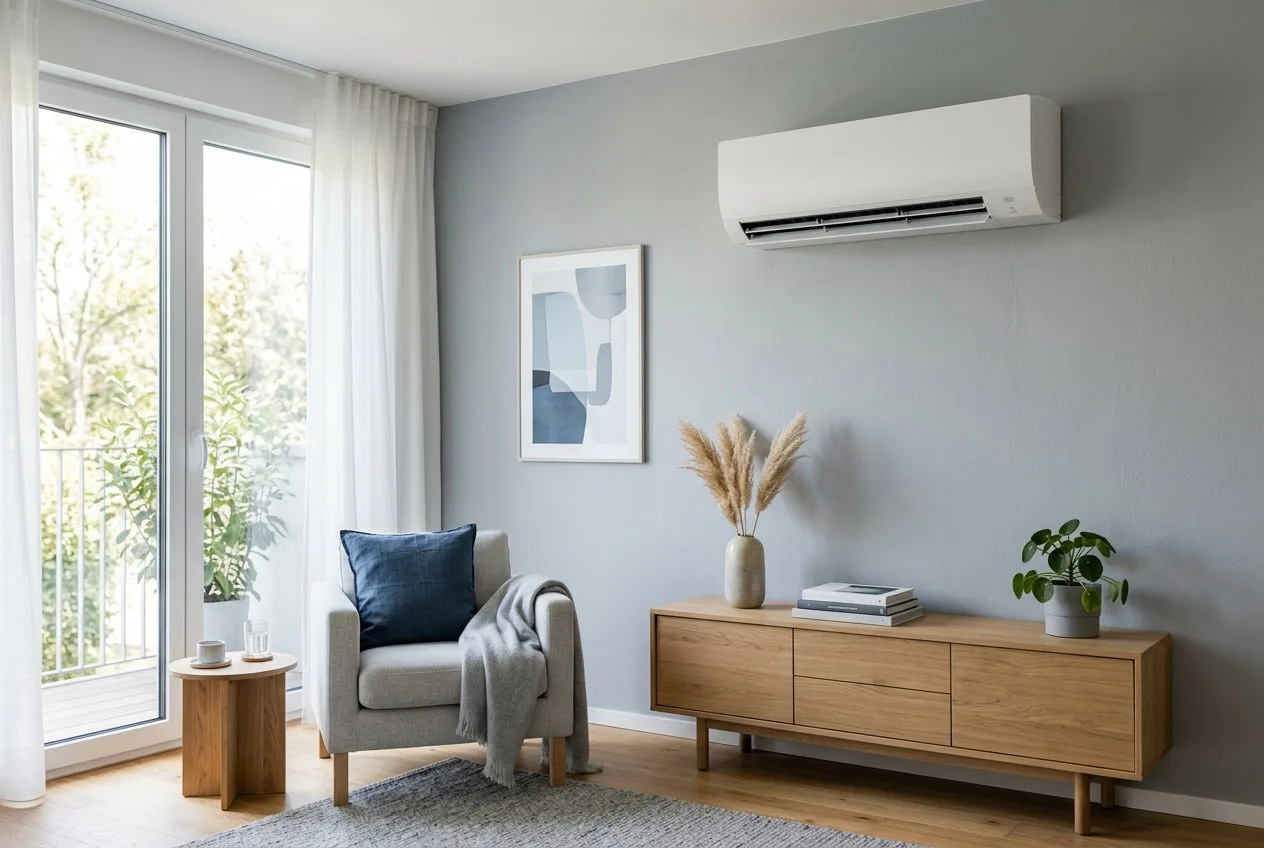
Of these three appliances, the air conditioner demands the most power and energy. A 12,000 BTU inverter air conditioner can draw about 1.2-1.5 kW at full load; once the room cools down, the compressor speed drops and the average power falls noticeably. This difference matters a great deal in the calculation: the energy calculation is based on the measured average power, not the maximum power on the label, while the maximum power is used to check the inverter size.
Inverter compressor vs. fixed-speed compressor
Fixed-speed (on-off) compressors draw an inrush current of about 4-6 times the running current at every start. Inverter compressors start smoothly from a low speed, so they largely eliminate this peak. If you are considering a solar-powered air conditioner, a model with inverter technology significantly reduces the size and cost of the system. We covered the inrush current problem of motorized loads in more detail in the article inrush current for motors, air conditioners and laser printers .
Air conditioner size directly affects energy use
The U.S. Department of Energy states that an air conditioner chosen too large for the room increases purchase cost and energy consumption, and that dehumidification also weakens because of frequent on-off cycling. NREL's study on oversized air conditioners also shows that oversizing causes additional cycling losses. EER (the ratio of cooling capacity to power) is used as the efficiency measure; the higher the value, the less electricity is needed for the same cooling. In other words, the cheapest way to shrink a solar system is to choose a correctly sized, efficient air conditioner and to reduce heat gain during the day (shading, curtains, insulation).
Sample Calculation: Winter and Summer Scenario, Step by Step
In the calculation below, we size the critical loads of a home for one day of backup (autonomy). The assumptions are as follows:
- System voltage is 48 V, battery chemistry is LiFePO4 (usable depth of discharge assumed to be 80%).
- Inverter efficiency is 90%, inverter standby consumption is 20 W (24 hours = 480 Wh).
- Refrigerator: labeled 250 kWh/year, about 700 Wh per day.
- Boiler: average 100 W during the heating season, 10 hours per day = 1,000 Wh.
- Air conditioner: 12,000 BTU inverter model, measured average 800 W, 6 hours per day = 4,800 Wh.
- Winter panel production assumption: 2 peak sun hours (PSH) per day; summer: 5.5 PSH. Total efficiency factor of the panel system is 0.75. These values vary by region.
| Calculation step | Winter (refrigerator + boiler) | Summer (refrigerator + air conditioner) |
|---|---|---|
| Daily AC load | 700 + 1,000 = 1,700 Wh | 700 + 4,800 = 5,500 Wh |
| Inverter efficiency (÷ 0.90) | ≈ 1,890 Wh | ≈ 6,110 Wh |
| Standby consumption (+ 480 Wh) | ≈ 2,370 Wh | ≈ 6,590 Wh |
| LiFePO4 nominal capacity (÷ 0.80) | ≈ 2.96 kWh, i.e. approximately 3.0 kWh | ≈ 8.24 kWh, i.e. approximately 8.2 kWh |
| Ah value at 48 V | 3,000 ÷ 48 ≈ 62 Ah | 8,200 ÷ 48 ≈ 171 Ah |
| If it were lead-acid (50% DoD) | 2.37 ÷ 0.50 ≈ 4.7 kWh, approximately 99 Ah (48 V) | 6.59 ÷ 0.50 ≈ 13.2 kWh, approximately 275 Ah (48 V) |
| Panel power (daily energy ÷ (PSH × 0.75)) | 2,370 ÷ (2 × 0.75) ≈ 1,580 W | 6,590 ÷ (5.5 × 0.75) ≈ 1,600 W |
| Number of 400 W panels | Approximately 4 | Approximately 4 |
The table gives two important results. First, because the air conditioner runs in summer and the combi boiler in winter, a panel area of roughly the same size turns out to be sufficient in both seasons; however, to reach this value in winter we had to account for the lower production. Second, the air conditioner increases the battery requirement by about three times. We explained why capacity cannot be used one-to-one at the Ah value on the label in our article what is battery capacity (Ah) and we covered the other calculation method in how to calculate battery runtime .
If you want a larger margin for cloudy days (days of autonomy), you need to multiply the calculated energy requirement by the number of days. You can find this extended calculation in the article how to calculate solar battery capacity .
Inverter Sizing: Continuous Power and Surge Power Are Checked Together
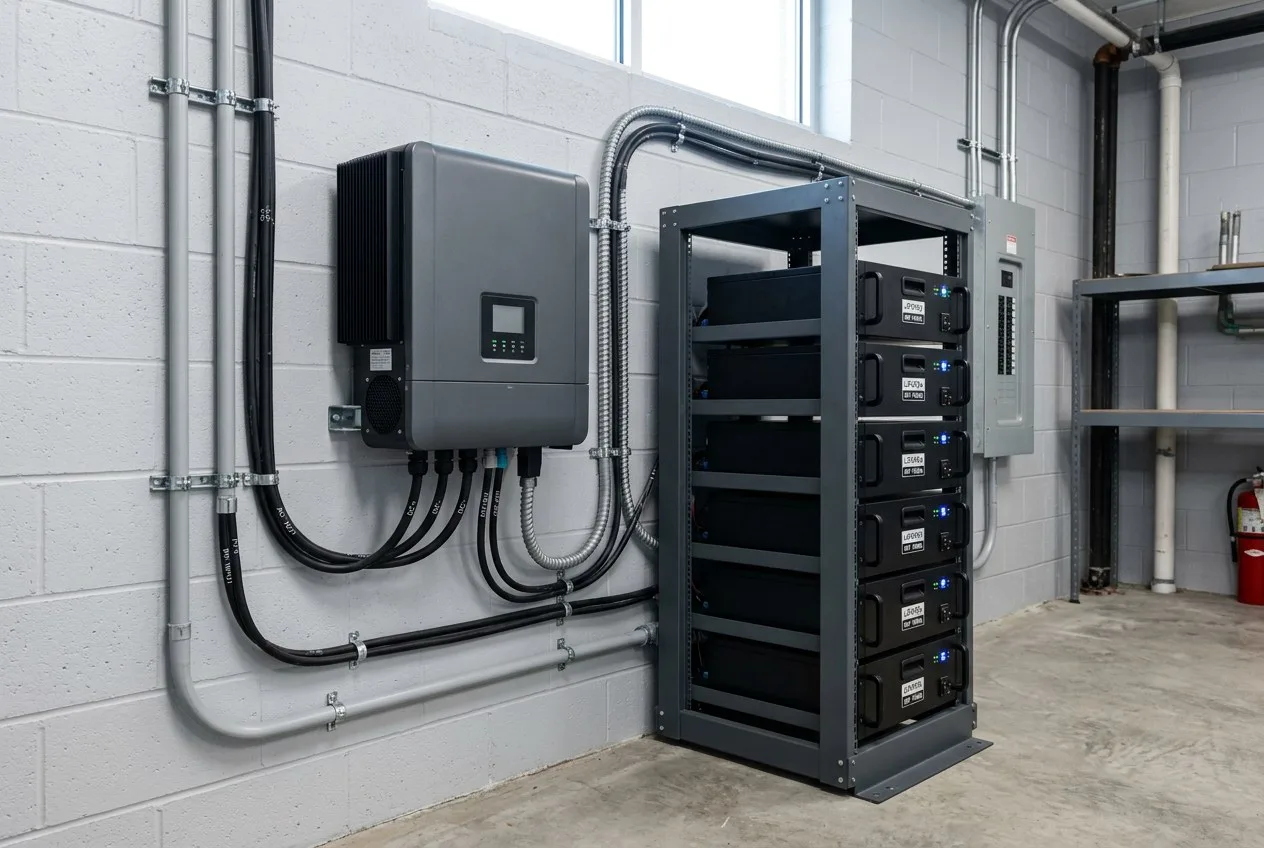
The battery stores energy, while the inverter converts that energy into AC that devices can use. When choosing an inverter, two values are considered: continuous output power and short-term (peak) output power. Continuous power keeps the motor running, while peak power starts the motor; confusing the two leads to systems that run briefly and then shut down due to protection kicking in. For power factor and the VA-W difference, see the article the differences between VA, kVA and Watt .
| Step | Calculation (example) | Result |
|---|---|---|
| Loads that can run at the same time | Air conditioner 1,500 W (max) + refrigerator 150 W + combi boiler 100 W | 1,750 W |
| 25% margin | 1.750 × 1,25 | ≈ 2,190 W; in practice a 2.5-3 kW class inverter |
| Refrigerator startup | 150 W × 4-8 (common range 600-1,200 W) | A peak lasting a few seconds; compare it with the peak value in the datasheet |
| Fixed-speed air conditioner startup | 1,500 W × 4-6 | 6-9 kW; difficult for most home-type inverters. An inverter air conditioner should be preferred |
| DC current (48 V, 2,190 W) | 2.190 ÷ 0,90 ÷ 48 | ≈ 51 A; at 12 V it would be about 200 A |
The fact that the DC current is roughly four times higher in a 12 V system shows why a 48 V system means smaller cables and lower losses. For details on choosing the voltage, see choosing 12 V, 24 V and 48 V battery voltage . High current also makes the choice of cable cross-section, fuse and busbar critical. Wrong choices in these areas create a risk of overheating and fire.
Some practical rules:
- Switch devices on one after another, not all at once, so that startup currents do not overlap.
- The battery's BMS (battery management system) maximum discharge current must cover the inverter's DC current at full load.
- At high ambient temperatures the inverter's output capacity may drop; check the manufacturer's temperature derating curve.
Battery Chemistry and Depth of Discharge: Different Capacity for the Same Energy
As you saw in the calculation, for the same daily load LiFePO4 required about 3.0 kWh of nominal capacity, while lead-acid required about 4.7 kWh. The reason is depth of discharge (DoD), meaning how much of the battery is used in each cycle. Lead-acid batteries are generally planned at about 50% for the sake of their lifespan, while lithium iron phosphate batteries are planned at about 80-90%. For the relationship between cycle life and DoD, see depth of discharge and cycle life .
| Criterion | Lead-acid (AGM / gel) | LiFePO4 |
|---|---|---|
| Planned DoD | About 50% | About 80-90% |
| Daily cycling use | Limited cycle life; check the manufacturer's table | Generally higher cycle life; check the manufacturer's table |
| Cold environment | Capacity drops; leave a margin | The low-temperature charging limit is managed by the BMS |
| Installation location | Ventilation and gas precautions may be required (depending on type) | BMS, layout and fire safety plan are important |
For details on choosing the chemistry, you can see choosing batteries for solar energy . Because lithium batteries contain dense energy, cabinet layout, ventilation and protection components must be planned separately; we covered this topic in fire safety in lithium battery storage .
Number of Panels: Base It on Winter Production
Panel power is found by dividing the daily energy by the peak sun hours and the system efficiency. A common practice is to use a system efficiency factor in the range of 0.55-0.75; this factor represents temperature, shading, cable losses, dirt and charge controller losses together. What matters is to use the production of the season when the load is heaviest instead of a single yearly average. In winter months production is low and the combi boiler is also running, so if the calculation is made for winter, the system will work comfortably all year. Update the production assumption for your region using the approach in how much solar energy produces in winter ; for the number of panels, see how many solar panels are needed .
Which System If You Have Grid Power? On-Grid, Hybrid and Off-Grid
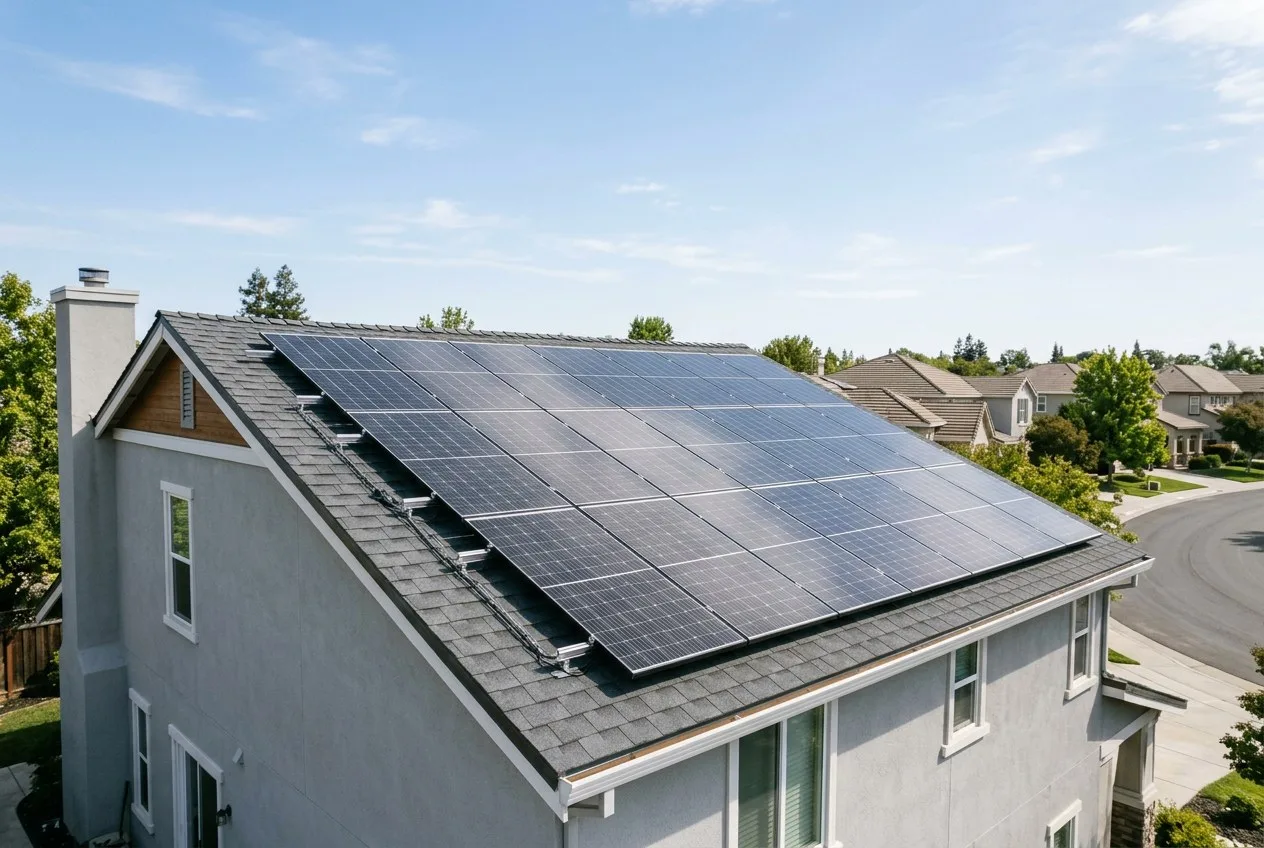
If your home already has grid electricity, whether your existing or planned solar system works during an outage depends on the inverter type. Standard grid-connected (on-grid) inverters shut down when the grid goes out for safety reasons; even if the panels are in the sun, there is no electricity in the house. Solutions that can continue supplying power during an outage are hybrid inverters and off-grid systems. The difference between these three setups is explained in on-grid, off-grid and hybrid systems , and the behavior of a hybrid inverter at the moment of an outage is explained in what is a hybrid inverter .
A practical approach is to separate the loads to be backed up. Instead of the whole house, moving only critical circuits such as the refrigerator, combi boiler, internet and lighting to a separate panel connected to the backup output, and using the air conditioner directly during the day from panel production, significantly reduces battery cost in most homes. Whether the air conditioner will be placed on the battery system during an outage should be a conscious decision. To compare other options such as the grid and a generator, the differences between a UPS and a generator can also help.
Common Mistakes and the Right Approach
| Mistake | Result | Correct approach |
|---|---|---|
| Calculating energy from the nameplate rating | Oversized or undersized system for air conditioners and refrigerators | Measuring actual kWh with a plug-in meter |
| Ignoring starting (surge) power | The inverter shuts down with an overload alarm | Compare peak power with the datasheet and start devices one at a time |
| Counting the entire battery capacity as usable | The battery wears out early and runtime is shorter than expected | Dividing the energy requirement by DoD |
| Forgetting standby consumption | Battery runtime drops significantly with small loads | Multiply the inverter's standby power by 24 hours and add it |
| Planning for winter based on summer production | The battery does not charge in winter months | Use the season with the lowest production as the basis |
| Running a combi boiler and refrigerator with a modified sine inverter | Risk of noise, overheating and board failure | Use a pure sine inverter |
| Not considering the natural gas and plumbing situation | Heating cannot be provided even when electricity is available | Evaluate the system together with the combi boiler's gas and plumbing conditions |
Safety and Installation Notes
Solar panels always generate voltage in daylight, and the DC voltage can be high in series-connected strings. Battery banks, on the other hand, have a very high short-circuit current; incorrect connections carry the risk of arcing, overheating and fire. For this reason, cable cross-section, DC fuse, switch and surge arrester selection should be done by calculation; DC fuse, switch and surge arrester protection the principles in this article should be reviewed before installation. Battery and inverter connections must be made by authorized electrical personnel.
Connecting devices such as combi boilers and air conditioners to the inverter output, as well as grounding and residual current protection, also require application-specific checks. The device manufacturer's connection requirements and warranty terms must be read at this stage.
Technical Support for Your Backup Power Plan
In backing up a refrigerator, combi boiler and air conditioner, the real work is accurate load measurement and selecting a battery and inverter suited to that load. Bempower provides survey, installation, periodic maintenance and technical service for UPS, battery banks and inverters. To discuss your backup power needs, your inverter and battery selection, or the condition of your existing battery bank, you can reach us via the contact page .
- Purchasing Energy-Efficient Room Air Conditioners — U.S. Department of Energy, FEMP, 2025. https://www.energy.gov/cmei/femp/purchasing-energy-efficient-room-air-conditioners
- Energy Impacts of Oversized Residential Air Conditioners — NREL / U.S. DOE Building America, 2025. https://www1.eere.energy.gov/buildings/publications/pdfs/building_america/energy-impacts-residental-ac.pdf
- Regulation on energy labelling of refrigerators and freezers (Official Gazette, 30 January 2010) — Official Gazette of the Republic of Türkiye, 2010. https://www.resmigazete.gov.tr/eskiler/2010/01/20100130-16.htm
- Circulation (Combi Boiler) Pumps — Wilo Türkiye, 2025. https://wilo.com/tr/tr/Devirdaim-(Kombi)-Pompalar%C4%B1-_4288.html
- Combi Boiler During a Power Outage: What Happens, What to Do After the Outage? — Parcabayim.com, 2026. https://www.parcabayim.com/elektrik-kesintisinde-kombi-ne-olur-ne-yapmali
- How Many Watts Does a Refrigerator Use? Running, Surge, and Daily kWh — SolarWattCalc, 2026. https://solarwattcalc.com/guides/how-many-watts-does-a-refrigerator-use
- How to Design Off-Grid Solar System: Sizing Guide — SunGold Solar, 2026. https://www.sungoldsolar.com/blogs/how-to-design-off-grid-solar-system/
Sources
