


Nickel-Cadmium (NiCd) Batteries: Where and Why Are They Used in Industry?

When power goes out in a substation, in the signaling room of a subway line, or at a base station on the mountain, a battery pack is often the first thing that comes into play. While lead-acid batteries are common in these groups, nickel-cadmium (NiCd) batteries have also been used for decades when it is said that "life, temperature resistance and reliability are paramount". However, knowledge about NiCd batteries is often lacking: memory effect, cadmium anxiety or the perception of "outdated technology" can mislead the decision process.
In this article, you will find how the NiCd battery works, what cell types are available, why it is preferred in which industries, and its strengths and weaknesses compared to lead-acid and lithium options. It also includes a sample calculation for the number of cells and capacity, maintenance guidelines, frequent failures, and disposal.
Article; It was prepared for energy facility and factory technical officers, purchasing and specification units, maintenance engineers and business owners evaluating the replacement of an existing NiCd battery group. Operations requiring safety (connection, electrolyte replacement, testing) should only be performed by authorized and trained personnel; the information provided here is general information to aid decision-making and does not replace manufacturer documentation.
What is a NiCd battery and how does it work?
A NiCd battery is a type of rechargeable battery that uses an alkaline solution such as potassium hydroxide (KOH) as an electrolyte, with nickel oxide hydroxide on the positive plate and cadmium on the negative plate. The nominal voltage per cell is approximately 1.2 V. Since this value is about 2 V in a lead-acid cell, more cells are connected in series in the NiCd system for the same DC bus voltage.
The alkaline electrolyte does not consume active material like sulfuric acid as in lead-acid batteries. During charging and discharging, the electrolyte mainly acts as an ion carrier and its density does not change significantly according to the state of charge. The practical consequence of this is that you cannot understand the state of charge by measuring electrolyte density; voltage, current and capacity tests are used to determine the condition. For similar measurements on the lead-acid side how battery voltage is measured and interpreted You can take a look.
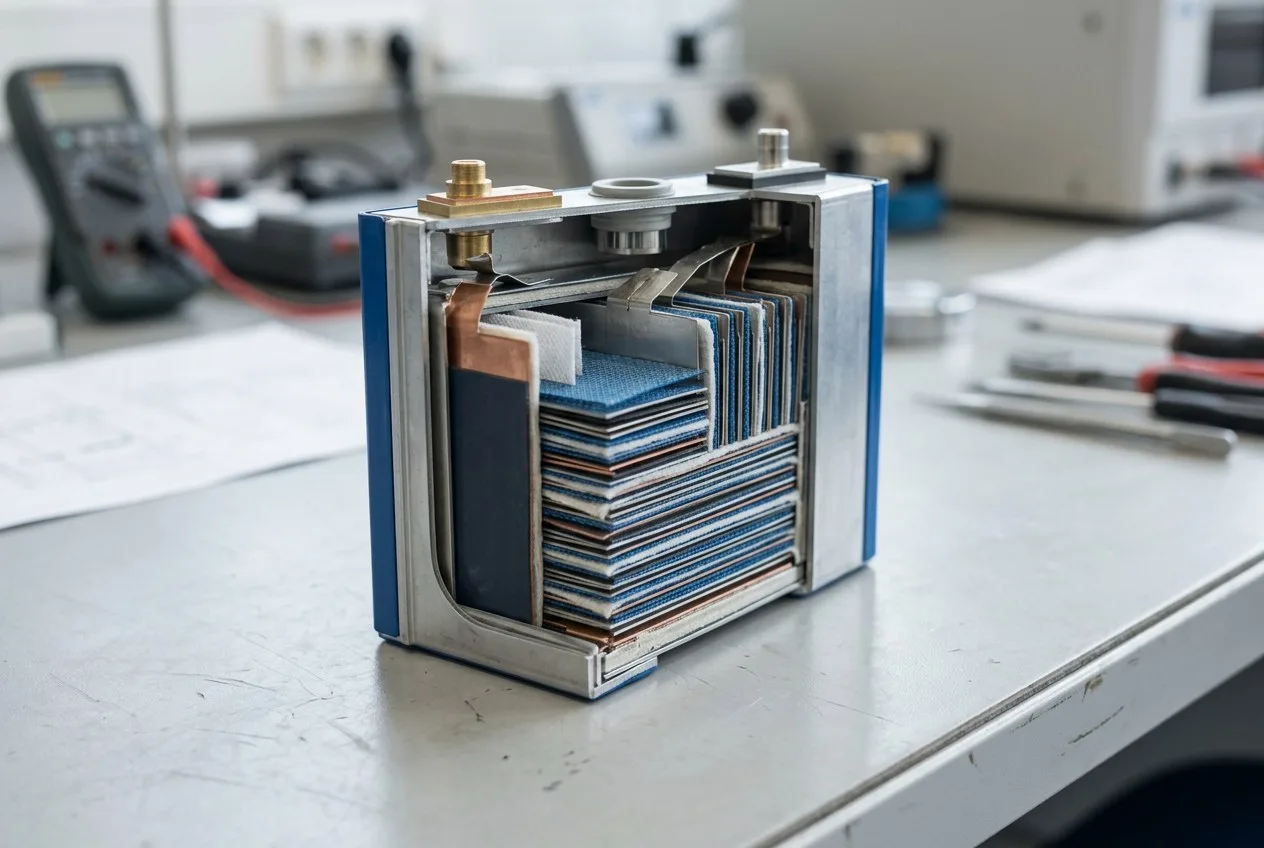
Cell types: open, closed and plate structure
The NiCd cells you'll encounter in industry are roughly divided into:
- Ventilated prismatic cells: It is covered with plastic or steel, with a gas outlet plug and filling hole on top. They lose water over time when the float charges, so periodic water top-up is required.
- Cells with partial gas recombination (low maintenance): It recombines some of the gas they produce within the cell; the water completion interval is significantly extended. The design and test criteria of these cells are defined in different standards; the manufacturer and the relevant IEC standard are consulted for details.
- Pocket plate structure: The active material is contained in perforated steel pockets. It is mechanically very robust and is the classic construction of stationary applications.
- Sintered and fiberplate structures: Thinner and larger surface plates are used in cells that can deliver high current.
Low, medium and high current (L, M, H) classes
Manufacturers usually divide NiCd cells into low (L), medium (M) and high (H) current classes according to their discharge profile. Low current class is chosen for long-term, low-current backup supply (e.g., communication, alarm); High current class is chosen for loads that require high current in a short time (e.g., generator or turbine starter, circuit breaker motors). How discharge rate affects capacity In the article C-ratio and the Peukert effect You can find; In NiCd, this effect is generally milder than lead-acid, but it should still be sized according to the manufacturer's discharge tables.
Why are NiCd batteries preferred in the industry?
Behind NiCd preference lies not a single superiority but a combination of several characteristics. The following characteristics describe typical behavior; exact values vary by cell type and manufacturer.
- Wide operating temperature: The loss of capacity and life at both low and high ambient temperatures is generally less than with lead-acid batteries. This difference is significant in unheated cabinets in cold climates or in rooms close to hot boiler rooms.
- Long service life: Properly operated stationary NiCd assemblies report service lives of around twenty years. This reduces the frequency of changeovers and the risk of downtime associated with each changeover.
- Mechanical and electrical durability: It is tolerant of vibration, shock, overcharging, and short-term abuse.
- Deep discharge tolerance: The recovery feature after discharge is more forgiving compared to the sulfation problem seen in lead-acid batteries. This problem on the lead-acid side From the article Sulfation You can look at it.
- Sudden failure behavior: Cell degradation often proceeds slowly and predictably; this allows for planned change. (But don't count this as assurance alone; regular testing is essential.)
- High current capacity: Class H cells provide an advantage in applications that require high power in a short time.
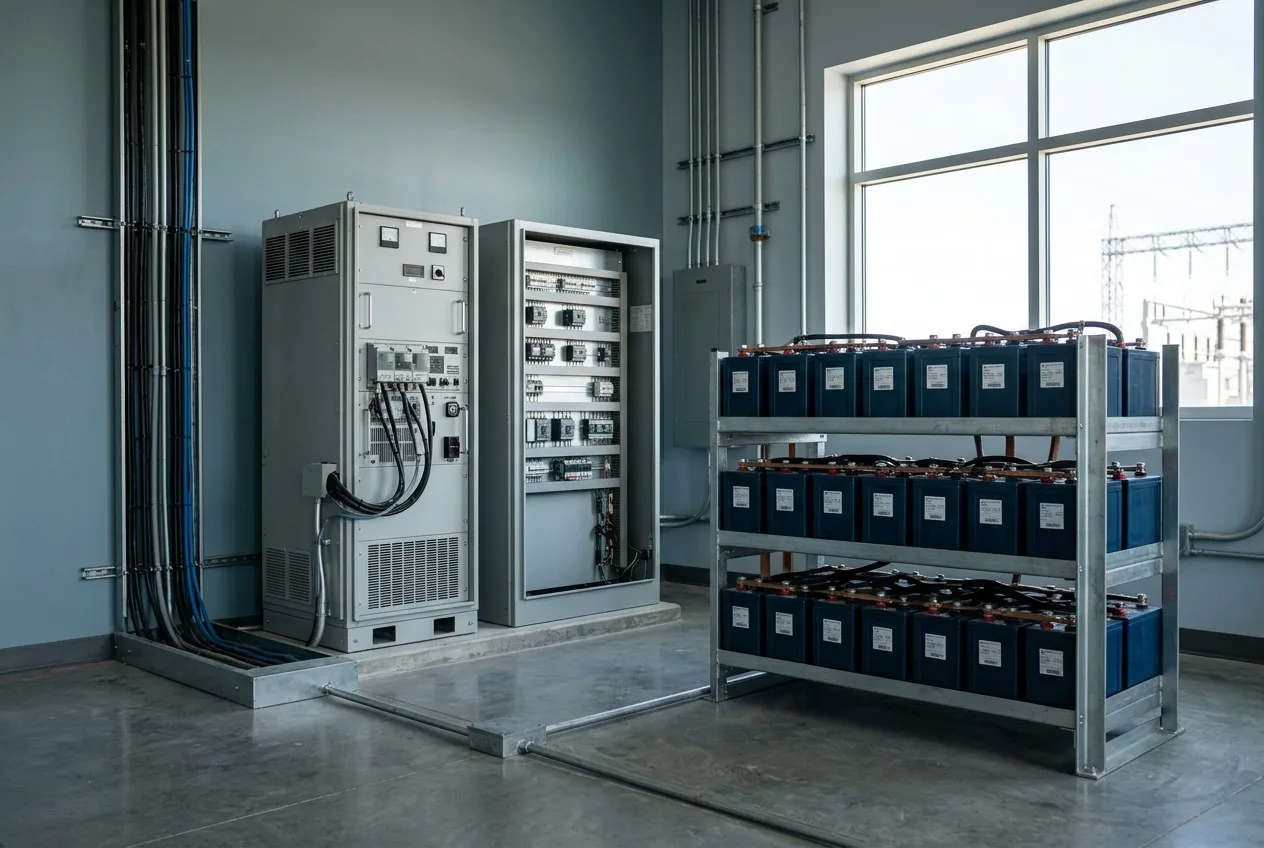
Where are NiCd batteries used?
Areas of use converge: DC systems that must be activated in the event of an outage, have limited maintenance access or have difficult ambient conditions.
| Application | Why consider NiCd? | Point to note |
|---|---|---|
| Power plants and substations | Reliable DC supply for protection relays, breaker coils and SCADA; long life | Breaker on-off instantaneous current, DC bus voltage tolerance |
| Railway and metro | Vibration, temperature fluctuation, signaling and door control backup | Vehicle-mounted and fixed plant separation; cell type selection |
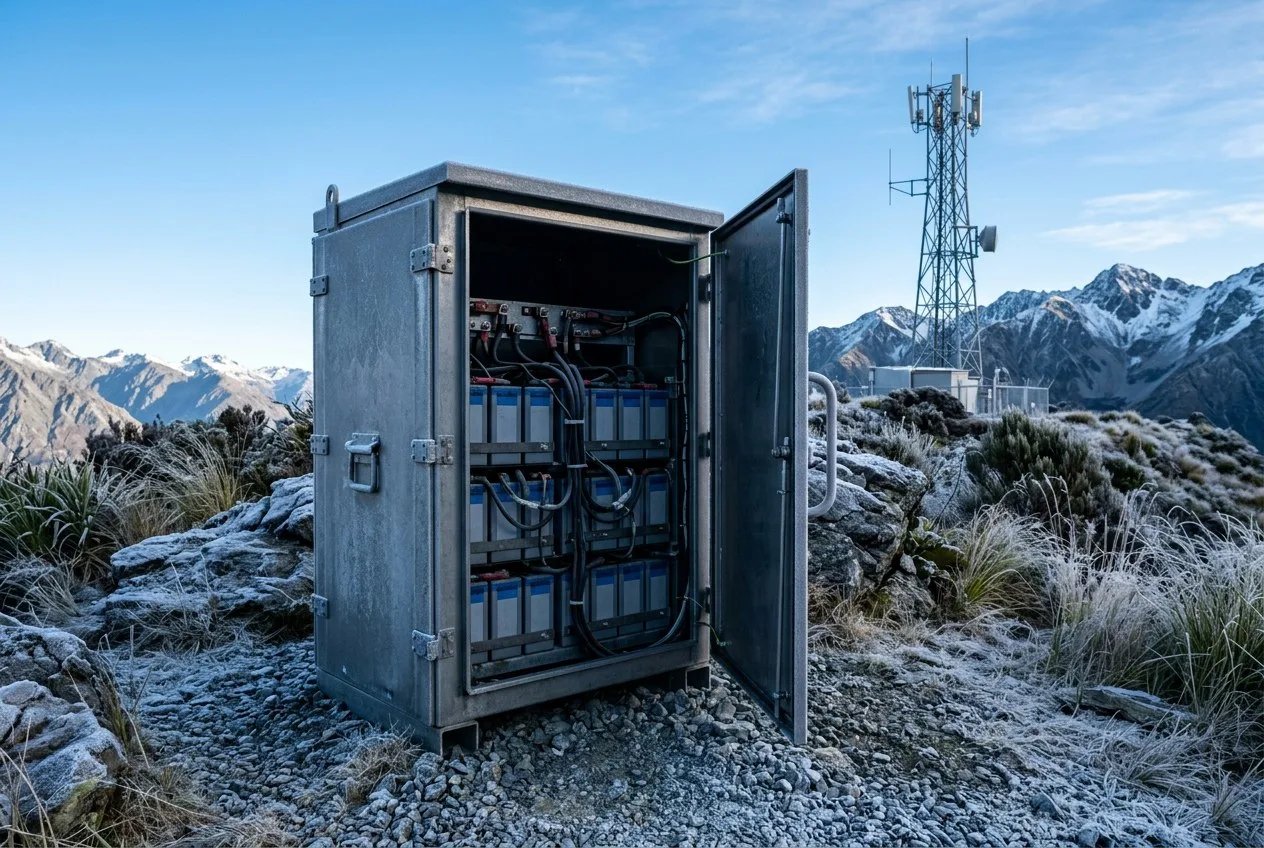
| Telecom and remote field | Durability in unheated cabins, infrequent maintenance visits | Low-temperature charging voltage adjustment |
| Oil, gas and petrochemicals | Emergency shutdown systems, control and safety DC busbar | Danger zone and ventilation rules |
| Generator and turbine starter | Ability to deliver high current at low temperature | High current class cell and cable cross-section |
| Emergency lighting and fire systems | Long standby systems | Statutory test periods and fire legislation |
For industry-specific details UPS for power plants and substations by UPS, rectifier and battery systems in telecom facilities You can read the articles. NiCd batteries usually work with a rectifier (the unit that converts AC to DC and keeps the battery charged and feeds the load) in these facilities; relationship Battery and rectifier compatibility in DC power systems You can find it in the article.
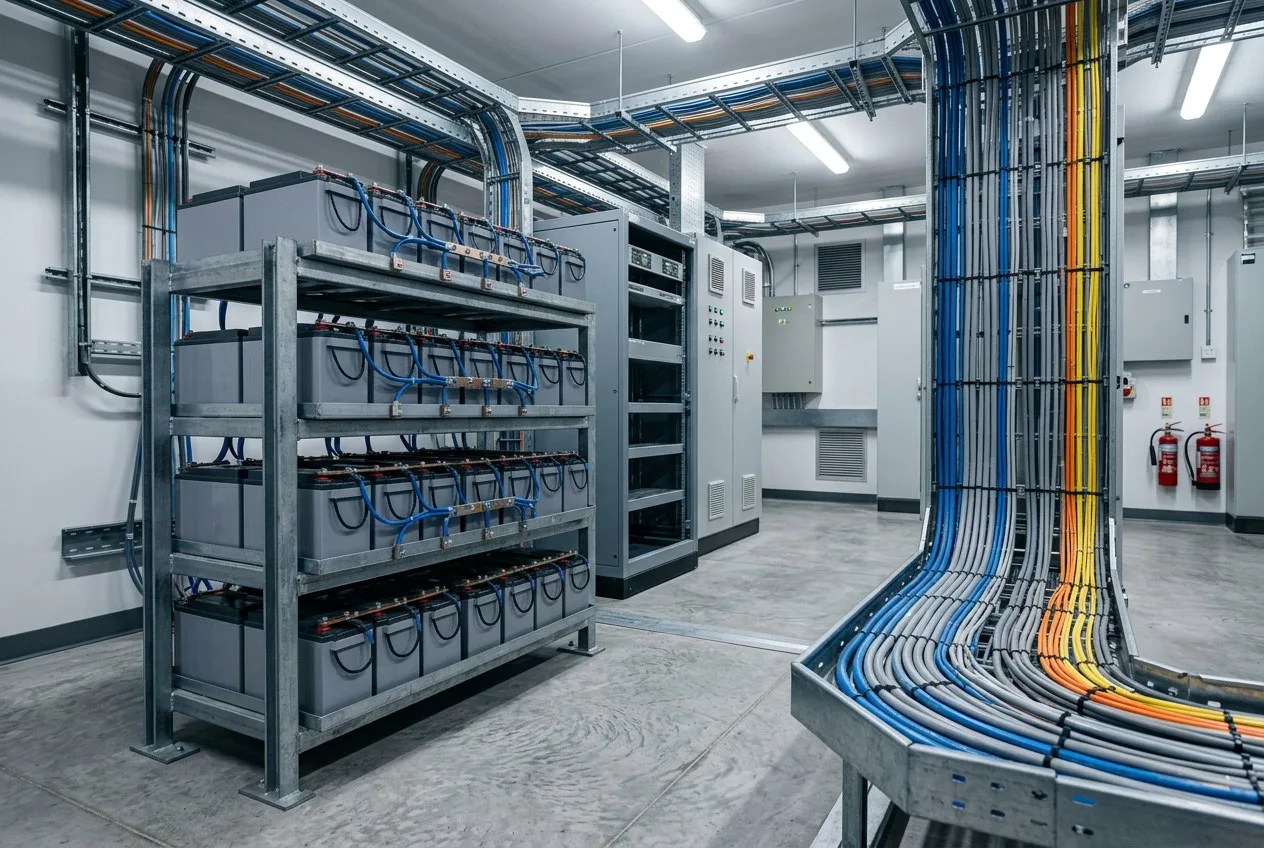
NiCd, lead-acid, OPzS/OPzV and lithium: how do they compare?
There is no single "best" battery; the right choice varies by application, budget, environment, and maintenance capacity. The table below shows typical trends, not a brand or product comparison.
| By | NiCd (stationary) | VRLA lead-acid | OPzS / OPzV | LiFePO4 |
|---|---|---|---|---|
| Cell voltage | ~1.2 V | ~2 V | ~2 V | ~3.2 V |
| Service life | Too long | Medium (very sensitive to temperature) | Long | Long (cycle-weighted) |
| Temperature tolerance | Wide | Narrow | Medium | Narrow for charging, protected by BMS |
| Initial investment | High | Low | Medium-high | Medium-high |
| Need for care | Water top-up (open type) | Low | OPzS: water completion; OPzV: low | Low; BMS monitoring |
| Electronic protection | Not required | Not required | Not required | BMS mandatory |
| Environmental load | Cadmium: strict disposal | Lead: built-in recycling | Lead: built-in recycling | Evolving recycling |
Long-life options on the lead-acid side OPzS and OPzV batteries In his article, the safety and life aspects of lithium In LiFePO4 and NMC comparison We discussed. For technology that is on the agenda as a new alternative Sodium Ion Battery You can look at the article.
What are the limits and disadvantages of NiCd batteries?
An honest assessment should also include negative aspects:
- Initial investment cost: For the same energy, it is usually more expensive than lead-acid. It is necessary to consider the cost not only with the purchase price, but with the number of replacements over a lifetime (total cost of ownership approach).
- Low cell voltage: For the same bus voltage, more cells mean more connection points and more space.
- Cadmium: Cadmium is a toxic heavy metal. Its production, transportation, and waste management are subject to strict rules. As long as the cell is intact, the risk of use is low; the main responsibility lies with the disposal phase.
- Difficulty in understanding the state of charge from voltage: The voltage curve is flat; it is difficult to predict the state of charge by looking at the voltage alone.
- Self-discharge: It may be more noticeable than lead-acid batteries, especially at high temperature; compensated by float charging but caution is required in untethered storage.
- Electrolyte carbonation: In ventilated cells, the electrolyte absorbs carbon dioxide from the air over time; performance may degrade, and electrolyte replacement may be required.
On the regulatory side, the limitations on the use and collection of cadmium-containing batteries differ by country and product class. Since industrial conditions of use and obligations can change over time, it is recommended to refer to the official legislation pages of the Ministry of Environment, Urbanization and Climate Change for up-to-date information.
How to size a NiCd battery pack? Example calculation
There are two questions in sizing: the number of cells required by the bus voltage and the capacity to supply the load for the desired amount of time. The following calculation is a simplified example to illustrate the logic only; the actual project should use manufacturer discharge tables and the corresponding standard method (e.g., sizing guidelines such as IEEE 1115).
Step 1: Number of cells
Assumptions: Nominal 110 V DC busbar, float voltage per cell approx. 1.40 V, end-discharge voltage 1.05 V.
- 110 V ÷ 1.2 V ≈ 92 cells (nominal)
- Float: 92 × 1.40 V ≈ 129 V
- End of discharge: 92 × 1.05 V ≈ 97 V
It is checked whether this range (≈97-129 V) fits within the voltage window accepted by the loads. If not, the number of cells, the charge voltage, or the busbar design are reconsidered. For the same busbar, about half the number of cells (e.g., 55-60) is required in lead-acid; this shows the difference in the number of cells of the two technologies.
Step 2: Capacity
Assumptions: Average load of 10 A, backup of 8 hours, aging allowance of 1.25, low temperature correction of 1.10, design margin of 1.10 (these are sample coefficients; actual values are taken from the manufacturer and standard).
- Base energy: 10 A × 8 h = 80 Ah
- Corrections: 80 × 1.25 × 1.10 × 1.10 ≈ 121 Ah
- Selection: Initial standard capacity above this value (e.g. around 125-130 Ah); plus a separate check for breaker instantaneous current, if available
To understand according to which discharge time (such as C5, C10) and which final voltage the capacity values on the label are given to the battery label reading guide see the For general time calculation Battery Time Calculation Article also helps.
Charging and operation: How are NiCd batteries charged?
NiCd batteries are usually held with a constant voltage float charge. The float voltage per cell varies by manufacturer and cell type; typical values are around 1.4 V. Higher voltage may be applied for fast charging (boosting). However, adjust the charging setting according to the manufacturer data sheet and charger manual, not the battery. This setting may also require compensation based on temperature.
Do not confuse it with lead-acid charging logic: the number of NiCd cells, float and end-discharge voltages are different. If an existing rectifier is tuned to another battery technology, connecting a NiCd battery directly can damage both the battery and the load. Logic on the lead-acid side In the article Battery Charging and Discharging you can find; If technology replacement is to be made, the suitability of the charger must be verified by the authorized service.
Balancing in serial groups
In NiCd groups, differences between cells may occur over time. Weak cells are determined by periodic measurement; the balancing (equalization) procedure is carried out according to the manufacturer's instructions. For details of the concept to the battery balancing article Check it out.
NiCd battery maintenance: what to check?
A NiCd battery is not "maintenance-free"; only the maintenance intervals and content differ from lead-acid. In open-type cells, these checks are typical:
| Control | What to look for? | Frequency |
|---|---|---|
| Electrolyte level | Between the lower and upper mark; if low, topping up with suitable distilled water | According to the manufacturer's chart |
| Float tension | Group and cell voltages are within the expected range | Monthly / quarterly |
| Connection and polarity control | Looseness, crystallization, oxidation; torque control | At least once a year |
| Body and cover | Cracks, swelling, leaks, carbonate build-up | On every visit |
| Temperature | Room and cell temperature; charge compensation compatibility | Continuous / periodic |
| Capacity test | Percentage value by rated capacity; annual trend | According to standard and specification |
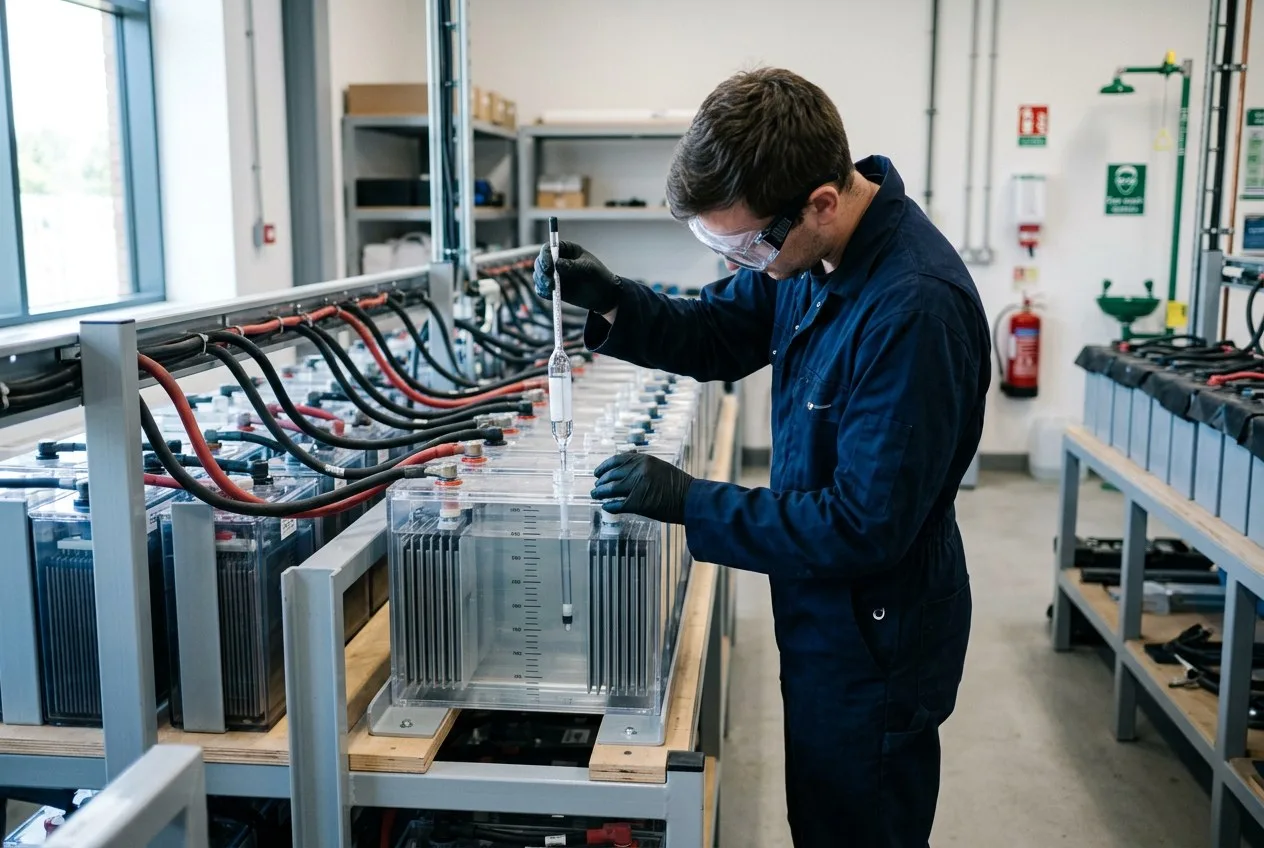
Only use water of the manufacturer's quality for water top-up; tap water and acidic battery water are absolutely unsuitable. The electrolyte is alkaline and corrosive: contact with eyes and skin can cause severe burns. Protective glasses, gloves and work clothes are therefore essential, and eye washing should be available nearby. Sparks, open flames and cigarettes are prohibited in the room due to hydrogen output; ventilation must be maintained. For details Battery Room Ventilation and Safety by Occupational safety in UPS and battery work See his articles.
An important warning: Do not use the same tools, funnels, hydrometers, and water containers for lead-acid and NiCd batteries. Traces of acid contaminate the alkaline electrolyte. In facilities where the two technologies are located in the same location, the equipment must be marked separately and stored separately.
Common NiCd battery problems and their possible causes
| Symptom | Possible cause | What should be done? |
|---|---|---|
| Electrolyte is rapidly decreasing | High charging voltage, high temperature, lack of compensation | Have the charging setting and room temperature checked by qualified personnel |
| Low result in capacity test | Aging, carbonated electrolyte, low charge voltage | Electrolyte and charge evaluation according to manufacturer procedure |
| Cell voltage is inconsistent | Cell failure, long-term undercharging, poor connection | Cell-based measurement and balancing if necessary |
| White crystal at the pole head | Carbonate or electrolyte leakage, overflow from the plug | Safe cleaning, connection check, elimination of the cause of overflow |
| Swelling/deformation of the body | Overcharging, blockage in gas discharge | Plug and charge check; evaluation of damaged cell |
| Short backup time | Load increase, aging, low temperature | Load analysis and capacity testing |
For test methods and interpretation of results Battery discharge test and Interpreting Test Results You can look at the articles. An important note: Internal resistance and conductivity measurements in a NiCd battery may not be as strong a health indicator as in lead-acid; that's why the capacity test comes to the fore.
Safety: What to consider when working with a NiCd battery
- High DC energy: Large groups can provide high voltage and very high short-circuit current. There is a risk of arcing and burns; insulated tools, personal protective equipment and authorized personnel are required.
- Electrolyte contact: Risk of alkaline burns; Have eye protection, gloves and first aid supplies.
- Hydrogen: The gas released during charging can form an explosive mixture if it accumulates; ventilation design should be done with the occupational safety specialist and project engineer.
- Temperature and heat leakage: NiCd does not present a fire chain risk as lithium chemistries; however, improper charging or short circuits can cause heating in any type of battery. Concept In the thermal leakage article You can read it.
- Layout: For weight, rack strength, cell spacing and reach Battery cabinet and assembly See the article.
How to dispose of old NiCd batteries?
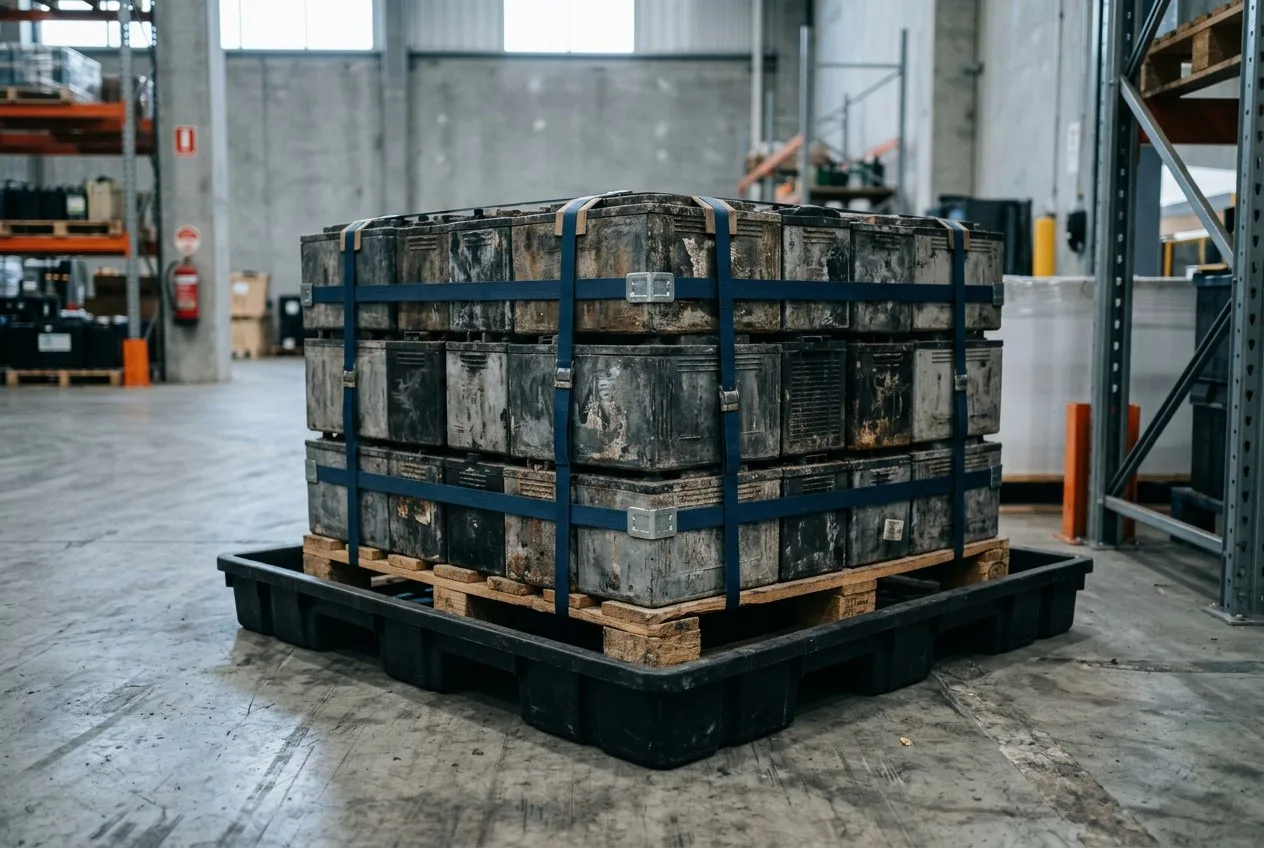
Cadmium is a heavy metal that is harmful to human health and the environment. Therefore, NiCd cells that have completed their life should not be given to garbage, scrap or irregular collectors. The right way; It is the packaging of the cells in a way that will not leak and delivered them to authorized waste collection and recovery facilities in a certified manner. During transportation, the poles must be insulated against short circuits and the rules for transporting dangerous goods must be followed.
Waste responsibility may be on the side that produces the waste in the organization; this issue should be clearly written in the contracts. Check the official page of the relevant ministry for current waste management obligations and documents. For the approach on the lead-acid side Disposal of old batteries The text also shows the general logic.
NiCd or another battery? List of criteria for the decision
The following questions help clarify whether NiCd is right for you:
- Does the ambient temperature vary over a wide range (unheated field cabinet, hot room)?
- Should the service life be long and the number of replacements be low?
- Do you need a high current (breaker, starter) in a short time?
- Do you have a competent maintenance scheme to top up water and measure regularly?
- Has it been verified whether the existing rectifier or charging system is compatible with NiCd?
- Is a documented disposal route planned for cadmium waste?
- Was the initial investment budget evaluated together with the lifetime cost?
If your answers are predominantly "yes", NiCd may be a strong candidate. If the budget is limited, the environment is controlled, and the life expectancy is shorter, VRLA or other technologies may be suitable. For the general framework of selection criteria How to choose a UPS battery You can also review the article. If you want to change technology in an existing system, the number of cells, charging setting, cable cross-section, protection devices and placement should all be re-evaluated.
Common mistakes
- Running NiCd battery with lead-acid charging setting.
- Not looking at the electrolyte level and assuming the battery is "maintenance-free".
- Supplementing with tap water or acidic water.
- Using the same tools on both acid and alkaline batteries.
- Not just measuring voltage and capacity testing.
- Delivering cells that have completed their life without documentation.
- Not updating the backup battery time according to the load increase.
Evaluate your battery system with Bempower
Bempower; It provides exploration, installation, periodic maintenance and technical service for your UPS, battery pack and rectifier systems. If you want to evaluate the condition of your existing battery group, its compatibility with your charging system or renewal options on site From our contact page You can contact us.
