


Energy Storage and Peak Load Management in Business: Will a UPS Battery Do Any Other Job?

In a business, the battery pack in the middle of the UPS room sits on charge for most of the year without doing any work. The same business draws high power from the grid in the evening or at the start of the shift and pays for it on the bill. The natural question is: Can this energy storage, which has already been purchased, maintained and waiting, be used outside of the backup task in the event of an outage?
The answer is "yes in some conditions", but these conditions are much more decisive than you think. Battery chemistry, the control capability of the UPS, the tariff structure and most importantly, the protection of energy sufficient for the critical load in the event of an outage determine the economy and safety of the business. This guide explains what peak load management, load shifting and demand-side services are, where the UPS battery works in them and where it hurts, with numerical examples.
Letter; It was prepared for business owners, facility and energy managers, IT and technical service managers and purchasing units. Since the amounts related to the tariffs change over time, the TL value is not given; instead, formulas and decision criteria are presented that you can calculate with your own invoice.
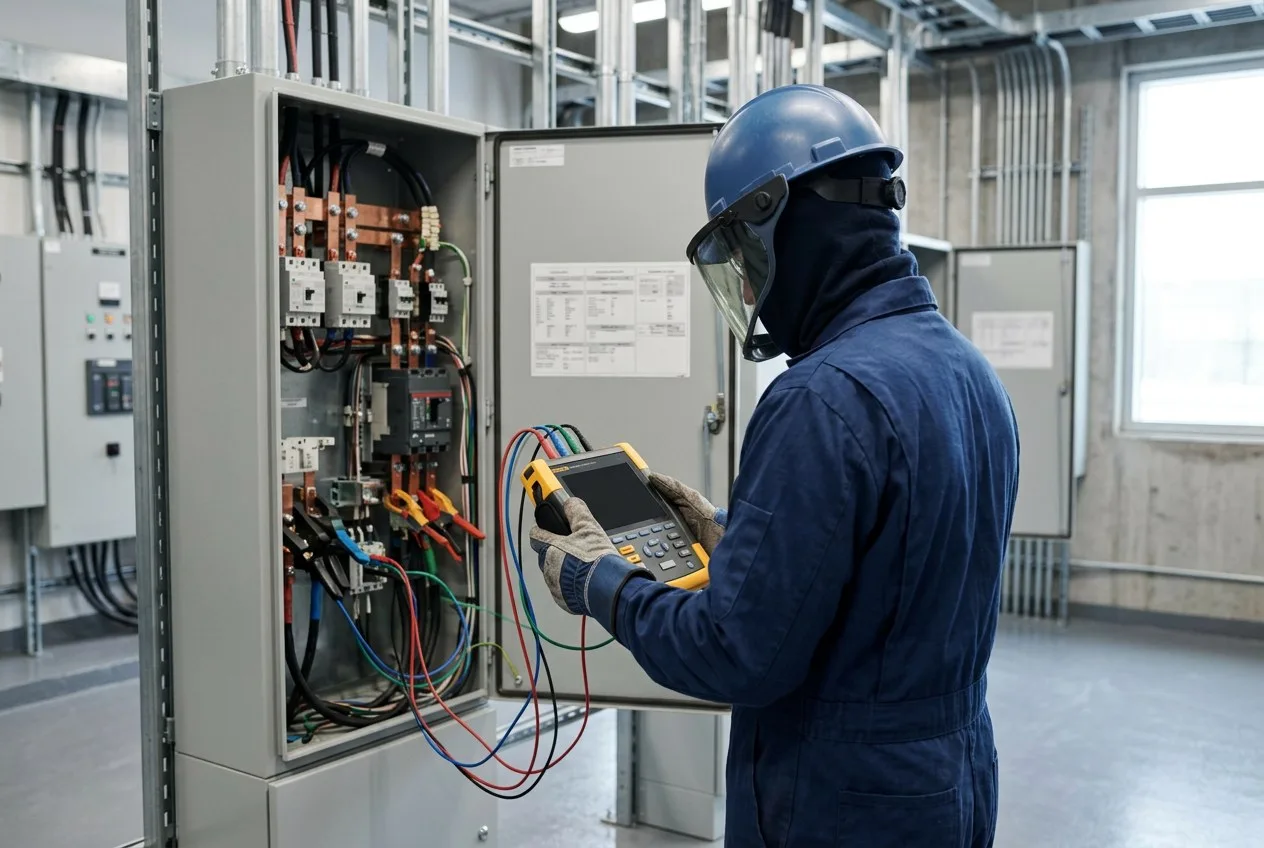
What does peak load management and energy storage mean?
Peak loadis the peak power (kW) that a business draws from the grid in a given time period. Peak load trimming (peak shaving) is the reduction of this peak by supporting it with stored energy for a short time. In the academic literature, the logic is summarized as follows: in commercial and industrial tariffs, there is often a power cost proportional to the highest measured consumption during the period, in addition to the energy cost; the battery shrinks this peak by discharging when the site draws the highest power and charging when it draws lower. The measurement is usually not instantaneous, but over the average of certain minute intervals.
Another concept that is confused with this load shifting (load shifting, time-based arbitrage). The aim here is not to cut the hill, but to use the energy charged in the cheap hour in the expensive hour. The third group is the one that responds to the demand of the grid operator demand response and frequency services. The three serve different goals and require different behavior from the same battery.
| Application | Purpose | Battery behavior | Daily cycle requirement |
|---|---|---|---|
| Backup (UPS task) | Feeding critical load in outage | Mostly full, rarely discharged | Almost non-existent |
| Peak load trimming | Reducing power-related costs and excess of contractual power | Short-term, high-power discharges | A few to every day a month; depending on the load profile |
| Load shifting (TOU) | Buying energy at a cheap hour and using it at an expensive hour | Longer-lasting, medium-power discharges | Usually 1 cycle per day |
| Demand response / frequency services | Grid support, revenue | Frequent and short charge-discharge according to operator command | Very high, depends on market rules |
Can a UPS battery do these jobs? Technical Facts
Manufacturers have developed products in this direction. For example, a manufacturer explains that in the "energy-aware" UPS approach, UPS batteries can be switched in to reduce grid draw in tariffs with high power costs, and in time-based tariffs, they can be used to support the load during high-priced hours and recharge during low-priced hours. In the same manufacturer's material, it is also emphasized that the primary task of the UPS is to ensure continuity in outages.
This information does not mean that "every UPS battery can do this job". Three prerequisites must be met together:
- Capability on the UPS side: A standard online UPS rectifier consists of a battery and inverter chain (How UPS works article). In order for the battery to energize the load when the mains is present, the UPS must support this mode and the control software must allow it. Most commercial UPSs do not have this mode; the battery only activates when the mains is cut off.
- Durability on the battery side: A battery built for standby duty is not the same as a battery built for frequent cycling. More in the next section.
- Control and measurement: Peak management requires a controller that monitors the total draw of the business at the meter point. UPS alone cannot know.
It is possible to size a battery to meet both UPS autonomy and peak support; however, the economic benefit depends on the difference between the peak and regular tariff, the daily implementation time, and the additional costs that make this function possible. This inference is expressed in the same order in grid-interactive UPS patent definitions; however, a patent definition does not imply a warranty of a product operating in the field.
First, look at your bill: What would you reduce in Turkey?
Storage investment only makes sense if there is an invoice item that you can reduce. International studies also show that the peak reduction benefit will disappear if there is no power-based cost. The main items to look at in Turkey are:
- Multi-time tariff (day / peak / night): For subscribers whose meter time has been updated according to daylight saving time, the zones are applied as 06-17 during the day, 17-22 peaks, and 22-06 at night throughout the year. For current unit prices and how the slice application works according to your meter, refer to the tariff tables published by EMRA and your retail sales company.
- Power cost and power excess cost: For distribution system users in the binomial tariff class, the monthly fee charged over the power specified in the contract Power Price, in case of exceeding this power, the price charged for the exceeded part Power Excess Fee is called. These items vary according to the subscriber group, connection type and contract; consult the written information of your distribution company for measurement interval and application details.
- Reactive energy cost: This item is not related to peak power, but to the reactive energy ratio and is not solved by the battery; it is a matter of compensation. For the concept of power factor power factor to our article can be looked at.
An important caveat: If the value of peak management depends on rare events such as a "single monthly high", the battery does not have to run every day, but it has to be ready at the right moment every month. This depends on the success of the control software in load estimation. Bill analysis should be done with a meter load profile of at least 12 months (better if there is 15 minutes of data).
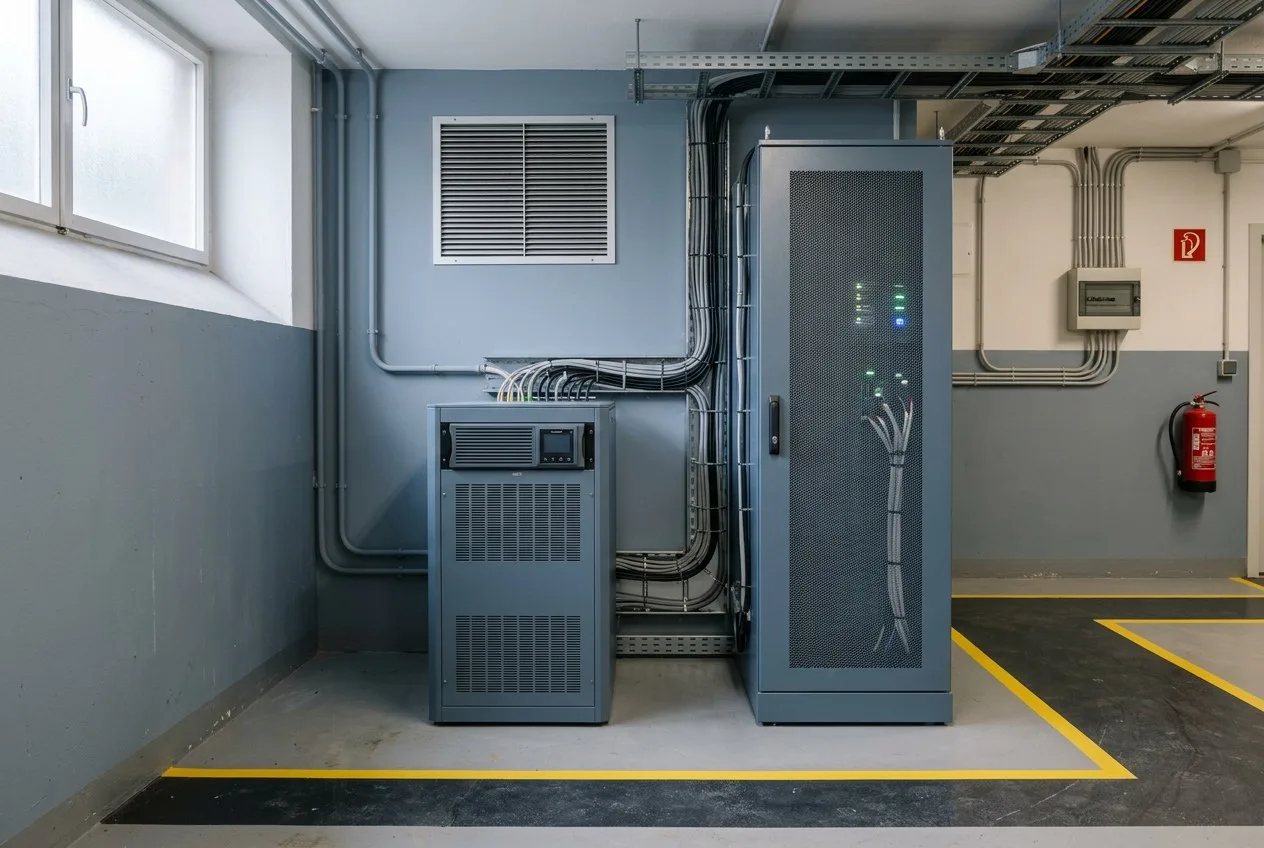
The most critical risk: Not losing backup capacity
The main job of the UPS battery is to load the critical load when the grid goes At that moment is to feed. If the battery is partially discharged for peak support during the day and there is an outage at that time, the autonomy period may be shorter than calculated. Therefore, a healthy design divides the capacity into two: locked for critical load Reserve and can be used for energy services Flexible section. In the manufacturer's documentation, this idea is shown as additional capacity for critical load protection and energy services.
Rules of thumb for making this distinction:
- Reserve Downtime cost analysis determine accordingly; Define the rule "UPS will always give at least X minutes of autonomy" as the hardware limit in the software.
- Consider the aged state of the battery in the reserve calculation; the capacity of the new battery will not be the same in the 5th year. To verify the actual situation Autonomy Duration Test is done.
- Verify in the acceptance test that peak mode is automatically canceled in the event of an outage and all energy is reserved for backup.
- For systems with generators, test the transition behavior separately; for details The difference between UPS and generator See the article.
How tight this limit is drawn varies by industry. In places where continuity is a priority, such as a hospital, data center, or call center, the elastic partition is kept small; it can be larger in a separate system that feeds non-critical lines. For data center redundancy architecture UPS architecture and Tier levels gives a frame.
Battery chemistry is decisive: Lead-acid vs. lithium
VRLA (valve-controlled lead-acid) batteries, which are commonly used in UPSs, are designed for one of two modes of operation: Float task and Cycle Task. According to a manufacturer's statement, in float mode, batteries are kept constantly filled with small current and occasionally see short or infrequent deep discharges; the UPS also operates in this mode. The same source gives an estimated life of about 200 full discharges in cycle mode and 3-4 years in float mode. These figures vary by product and condition; always refer to your specific battery's datasheet.
Another technical presentation states that float life decreases at high temperatures. This means that when you start the battery for peak management, additional warm-up, additional cycling and more frequent charging come into play at the same time. For temperature and other factors Factors Affecting Battery Life The article is useful.
| By | VRLA (standby type) | Lithium (e.g., LiFePO4) |
|---|---|---|
| Design intent | Full waiting, rare discharge | According to the product; designs more suitable for the cycle task are common |
| Typical cycle life | Usually hundreds of cycles (depending on depth of discharge) | Usually thousands of cycles (depending on depth of discharge and temperature) |
| Daily cycle eligibility | Limited; life can be consumed quickly | More convenient; warranty conditions should be checked |
| Depth of discharge tolerance | Low-medium; deep discharge shortens life | Usually higher |
| Monitoring | With external measurement and testing | Built-in BMS (battery management system) |
| Additional attention | Temperature and float voltage | Cabinet layout, fire safety, manufacturer approval |
The ranges in the table are a general framework; the actual number of cycles varies according to the product, temperature, charge-discharge rate and usage pattern. The number to be written in the contract is the value in the product's data sheet and warranty conditions.
For the details behind lithium's advantage lithium-ion UPS batteries article, for the relationship between cycle life and depth of discharge Depth of discharge and cycle life You can check the article. Manufacturers also state that the high cycle speed and long life of lithium enable demand management and time-based cost reduction. The cost of battery wear is also considered one of the key elements of operating costs.
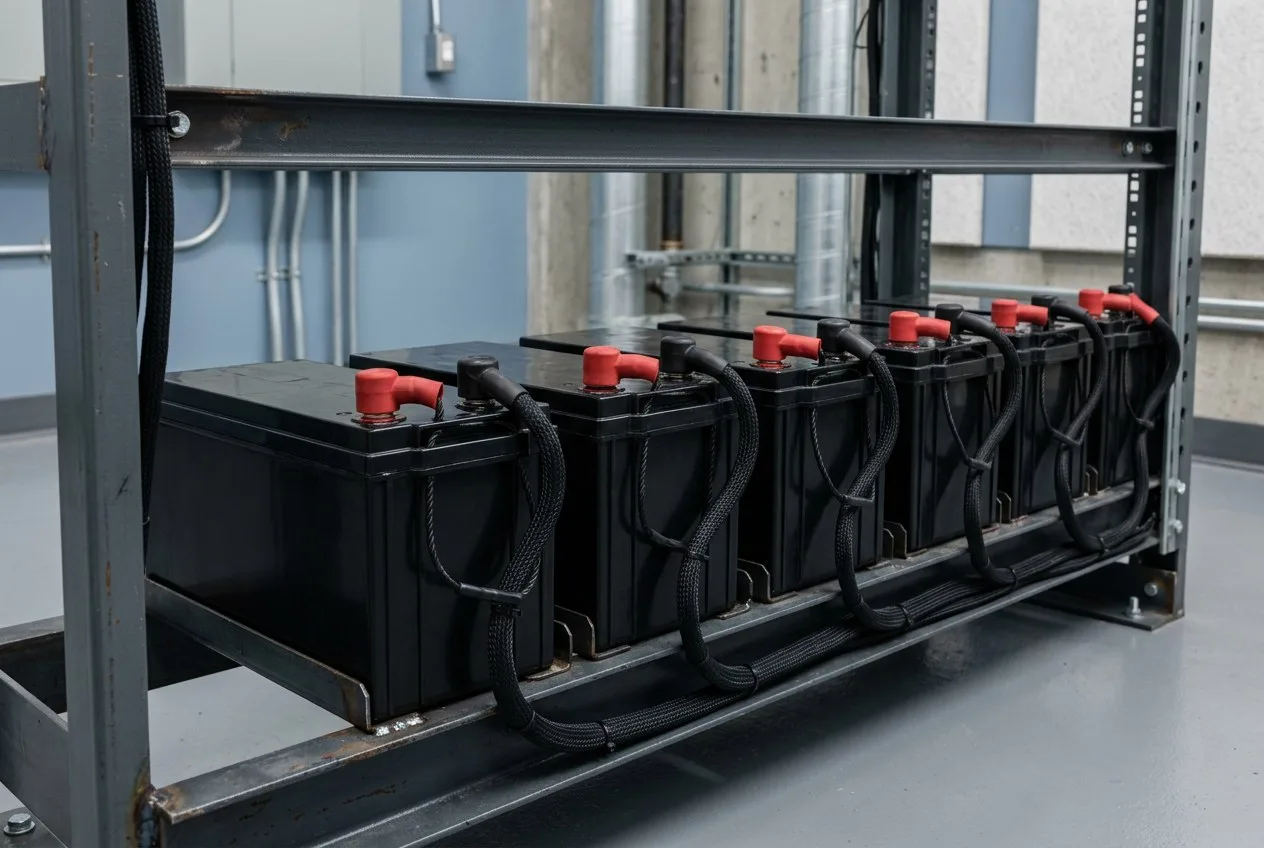
How to calculate capacity for peak load shaving?
Peak shaving requires two different sizes: Power (kW), that is, how much it will cut through the peak; and Energy (kWh), that is, how long will the peak last? If these two values are mixed together, the system will be either insufficient or unnecessarily large.
Example 1: Battery size for peak shaving
Assumptions (for illustrative purposes, adapt to your own facility):
- The maximum measured draw of the enterprise is 220 kW, the target is 190 kW. Power to be cut: 30 kW.
- The load above the target lasts about 40 minutes on the longest day.
- Inverter (UPS inverter and rectifier) efficiency was accepted as ~94%, usable depth of discharge was accepted as 80%.
- The same battery will also carry a autonomy reserve of 10 minutes over 60 kW for critical load.
| Step | Account | Conclusion |
|---|---|---|
| 1. Peak energy (AC) | 30 kW × (40/60) h | 20 kWh |
| 2. Energy to be drawn from the battery | 20 kWh ÷ 0.94 | ≈ 21.3 kWh |
| 3. Reserve energy (AC) | 60 kW × (10/60) h | 10 kWh |
| 4. The equivalent of the reserve in the battery | 10 kWh ÷ 0.94 | ≈ 10.6 kWh |
| 5. Total available | 21,3 + 10,6 | ≈ 31.9 kWh |
| 6. Rated capacity | 31.9 kWh ÷ 0.80 | ≈ 40 kWh |
This means that a system with a nominal capacity of about 40 kWh and capable of transferring at least 60 kW (backup) of power is required; Note that 60 kW in addition to 30 kW will not be required at the same time for peak support, because the interruption and peak support do not work at the same time. In the actual project, the aging allowance, temperature correction and manufacturer discharge curves are also involved. For battery time logic Battery Time Calculation can be looked at.
Example 2: What does peak decay gain?
The unit price of the power-dependent price varies according to your tariff; therefore, the formula is written as letters:
Unit power cost × kW reduced ≈ monthly earnings (TL/kW-month)
Here, a reduction of 30 kW means a monthly gain of 30 × unit price; the annual value is 12 times that. You will only achieve this gain if the battery is ready and at the right capacity in the highest range each month. Missing the forecast in a single month (for example, if the battery is discharged if the load lasts longer than expected) partially or completely erases that month's gain. Therefore, load estimation is as important as the control algorithm; in the literature, this logic is discussed with methods such as "adjusting the target peak" and deadband.
Load shifting (time-based tariff) calculation
In load shifting, the battery Round-trip yield is decisive. Since there are losses in charging and discharging, the energy you store and get back is somewhat less.
Example 3: Charging at night, discharging at peak
Assumptions: In the peak segment (17-22), 40 kWh energy will be met by the battery, the round-trip efficiency is 90%, the unit price of the night segment is pnight, peak unit price ppolka dot (get it from your own bill).
| Step | Account | Conclusion |
|---|---|---|
| 1. Energy to be drawn from the night | 40 kWh ÷ 0.90 | ≈ 44.4 kWh |
| 2. Daily earnings | 40 × ppolka dot − 44.4 × pnight | It depends on the prices |
| 3. Break-even rate | ppolka dot ÷ pnight | At least ≈ should be 1.11 |
| 4. Annual cycle (250 business days) | 250 × 1 | 250 cycles/year |
| 5. Cycle in 10 years | 250 × 10 | ≈ 2,500 cycles |
The result is read from two directions. First, even if the unit price ratio is well above 1.11, the gain is only the kWh you use and may not be large enough to pay back the investment. Second, one cycle per day is about 2,500 cycles in 10 years. This number is more than for batteries whose life in the cycle task is measured in hundreds; if the manufacturer's warranty is given for this use, it is not a problem, if not, the result will be very different from what is expected. The depth of discharge directly affects the usable cycle life; therefore, shallow discharge with a larger battery instead of drawing the same energy with a deep discharge with a small battery usually extends the life.
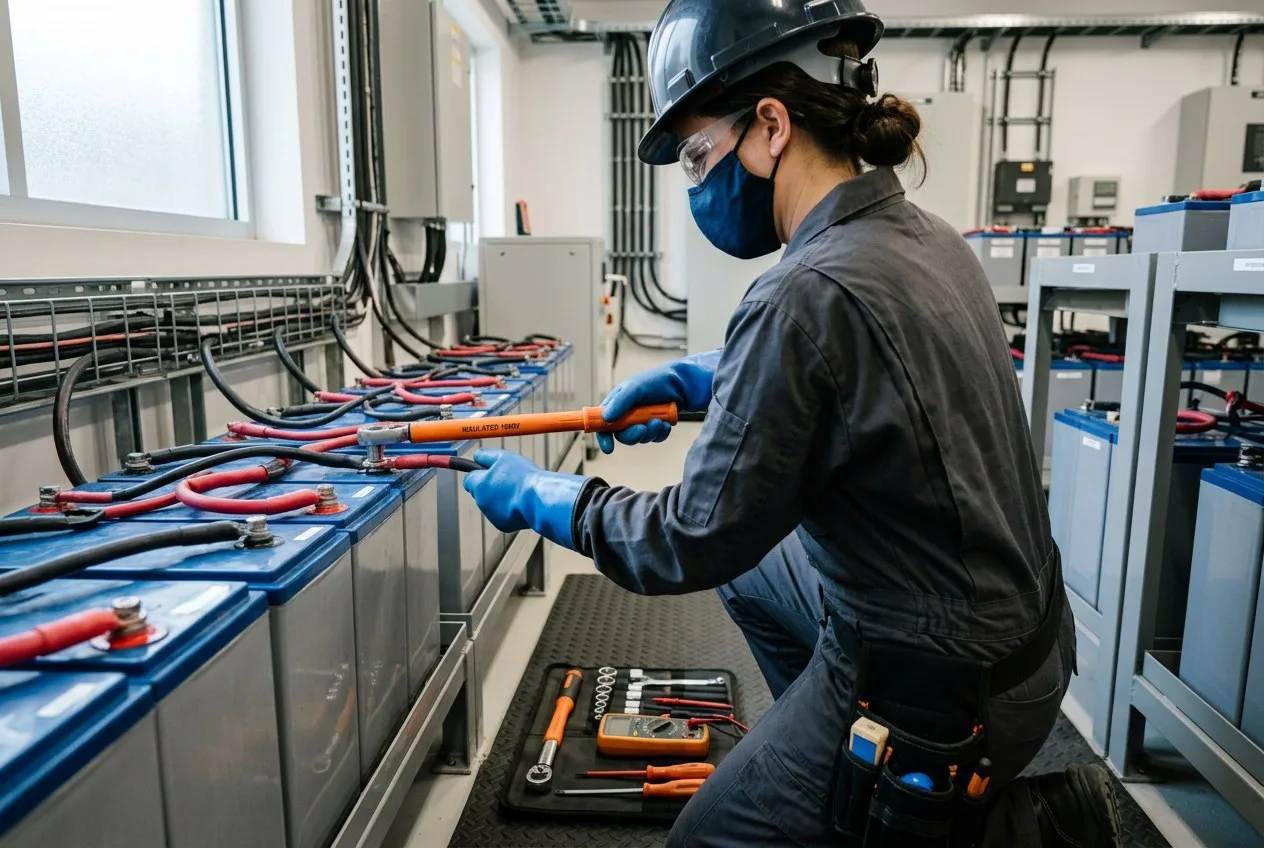
In which businesses does it make sense and in which not?
This practice does not suit every business. The table below can be used for a pre-screening.
| Status | Suitability for peak/load shifting | Reason |
|---|---|---|
| Facility with short-term and recurring peaks that pay power cost/overage cost | High potential | Cutting the short crown requires little energy; gain is kW-based |
| Big difference between polka dots and night and no flexible load | Medium potential | It makes sense if the price difference exceeds yield loss and wear |
| The load is already running at night or can be shifted | Low | Shifting production/process is cheaper than battery |
| Critical facility where outage is very expensive | Limited and careful | Backup reliability first; flexible partition small |
| Old, poorly maintained VRLA battery pack | Not suitable | Unverified battery degrades faster with additional cycles |
| Single-phase, small-power workplace | Generally low | No or small power price; the investment does not pay off |
Battery-free alternatives to peak reduction often have to be tried first: the gradual start-up of large engines, the timing of cooling and heating loads, the queuing of charging equipment and the load sequencing of compressors. These can lower the peak by a few kW without investment; the battery comes in for the remainder. If there is also solar power inside the building, the same controller manages the generation, the battery and the UPS reserve together. For this topic SPP with storage and rooftop SPP and UPS His writings give details.
Checklist before using existing UPS batteries for this purpose
Make the decision with a written evaluation, not intuition. The list below collects the questions to be asked before the project.
| Question | Why is it important? | Where to find out? |
|---|---|---|
| Does the UPS have grid interactive/energy management mode? | Otherwise, the battery cannot support the load when there is a grid | Manufacturer's technical certificate, written confirmation |
| Is the battery covered by the warranty for this task? | Improper use may void the warranty | Battery data sheet and warranty conditions |
| What is the current capacity of the battery? | Reserve and flexible section are calculated based on actual capacity | Capacity test; for detail Battery discharge test |
| Is the battery room temperature and ventilation adequate? | More cycles mean more heat | Discovery and measurement; see. Battery Room Requirements |
| Is the charging current and rectifier power sufficient? | If the filling time is prolonged after frequent discharge, the reserve remains empty | UPS charging capacity, manufacturer data |
| Has the load profile (at least 12 months) been extracted? | The main proof of savings | Meter data, distribution company |
| Are the invoice items clear? | It should be clear which price will decrease | EMRA tariff tables and subscription agreement |
| Is there a control system and communication? | Peak forecast and command required | Energy management system, SNMP or industrial protocol |
Safety, regulatory and liability limits
Running the battery more frequently and with higher current for peak or load shifting purposes increases maintenance and safety requirements. The risks of high DC voltage, arcing, short circuits and battery gas are also present in normal UPS operation; temperature and gas formation must be managed as the cycle density increases. Battery connection, adjustment and commissioning must be carried out by authorized electrical personnel or authorized technical service; for detailed framework Occupational safety in UPS and battery work See the article. In lithium systems, cabin layout and fire safety are also an additional topic; this topic Fire safety in lithium battery storage It is discussed in the article.
Two boundaries should be drawn on the legislative side. If the battery operates only in the enterprise's own internal network and does not supply energy to the grid, the issue is primarily the internal installation, occupational safety and connection conditions of the distribution company. If the battery is energized to the grid, frequency services or works with the electricity generation facility, the applicable regulations and application conditions should be examined separately. Since these conditions change over time, you should look at the current official pages of the relevant institutions (EMRA, Ministry of Energy and Natural Resources, distribution company).

Common mistakes
- Mixing power and energy: Assuming kWh is enough because kW is enough. If the peak time is extended, the battery will discharge in the middle of the target.
- Not defining the reserve in software: If the battery is discharged close to zero during peak application, the load remains unprotected if the interruption comes at that exact moment.
- Forcing the old battery into the new task: Introducing the untested VRLA group into the daily cycle. Unbalanced cells emerge rapidly under load; see Table of Materials. Unbalanced tension.
- Not taking into account the yield: Ignoring the round-trip loss turns the savings into a negative in small price differences.
- Not writing off the cost of attrition: If the earnings statement does not include battery life consumption, it looks good as an investment.
- Considering the tariff fixed: Tariff structure and prices are subject to change; the investment should be tested with a sensitivity analysis to tariff change.
- Loosening testing and maintenance: A battery that works harder requires more frequent checks. For capacity and internal resistance monitoring UPS battery test See the article.
Purchase and specification: What do you want in writing?
If such additional functionality is not explicitly written in the tender or procurement dossier, there will be a dispute with the supplier on site. The technical specification or request for quotation must include:
- Which tasks the battery will be used for (backup, peak, time-shifting) and the percentage of capacity allocated to each.
- Expected number of cycles per year, maximum depth of discharge, and operating temperature range.
- The warranty terms and end-of-life capacity threshold given to this usage profile.
- Acceptance tests: autonomy period, transition from peak mode to backup mode and reserve protection in the event of an outage.
- Monitoring and reporting: cycle counter, temperature, transmission of SoH (state of health) data.
For public institutions, these headings are included in the specification language. UPS and battery technical specification in public tenders It has been converted in the article. For the order of the commissioning tests UPS initial commissioning and acceptance tests text can be used.
Decision flow: Step-by-step roadmap
- Extract the invoice and load profile. If there is no power-related price or peak weight, there is no strong reason to invest in a battery.
- Try battery-free options. Load timing and sequential take-off can be free or very cheap.
- Verify the status of the current UPS and battery. The capacity test, temperature, and modes supported by the UPS are determined.
- Obtain written approval from the manufacturer. Warranty and wagering conditions must be clear.
- Divide the capacity into two. Lock the reserve, calculate the flexible quotient.
- Add attrition to the cost. See net gain after deducting battery life consumption.
- Pilot and monitor. Collect several months of data, gradually adjust the target peak.
The result of this flow is often that instead of frequently cycling the existing, standby UPS battery, it is better to keep the backup task and add storage with the appropriate chemistry for peak and time shifting, or to rewrite these tasks from scratch when switching the UPS to lithium. The decision depends on the building and process; therefore, the above criteria should be used instead of a single rule.

What kind of support can you get for your UPS and battery system?
It would be risky to make a decision on peak management or load shifting without learning the current capacity of your battery group, the operating modes of your UPS and the conditions of your battery room. Bempower; It provides discovery, installation, periodic maintenance and technical service for all brands of UPS, battery packs and inverters and provides on-site support in Istanbul and surrounding provinces. To evaluate your battery system while maintaining your backup reliability from the contact page You can contact us.
- Optimal Combination of Frequency Control and Peak Shaving with Battery Storage Systems — arXiv, 2019. https://arxiv.org/pdf/1906.06907
- VRLA Battery Operation & Selection for UPS — IEEE Nashville Chapter, 2008. https://ewh.ieee.org/r3/nashville/events/2008/2008.02.05.pdf
- Tariffs and invoice items: power charge and power excess cost (FAQ) — DEPSAŞ, 2025. https://depsas.com.tr/getFaq
Resources
