Disposal of Used Batteries: How to Manage Lead-Acid Battery Waste?

The final step in battery replacement is often the one discussed the least: what happens to the old batteries that are removed? When a UPS battery reaches the end of its life, it is not an item that can simply be thrown away—it is waste that must be properly managed. The lead and sulfuric acid it contains pose risks to both human health and the environment.
In this article, we explain why used batteries require special handling, what precautions are taken from disassembly to delivery, and the logic behind recycling.
Why Is It Hazardous Waste?
A lead-acid battery consists of lead plates, an electrolyte containing sulfuric acid, and a plastic casing. Lead is a heavy metal and causes permanent contamination when it enters the soil or water. The acid, on the other hand, causes burns upon contact. For this reason, used batteries are classified as hazardous waste under current regulations. They must not be disposed of in household trash, burned, buried, or abandoned.
The good news is that most lead-acid batteries can be recycled: lead, plastic, and acid can be separated and reused at licensed facilities. When disposed of through the proper channels, battery waste ceases to be a burden; improper disposal, however, harms both the environment and the business. Therefore, when planning for replacement, the fate of old batteries must be considered from the outset.
First Steps After Dismantling
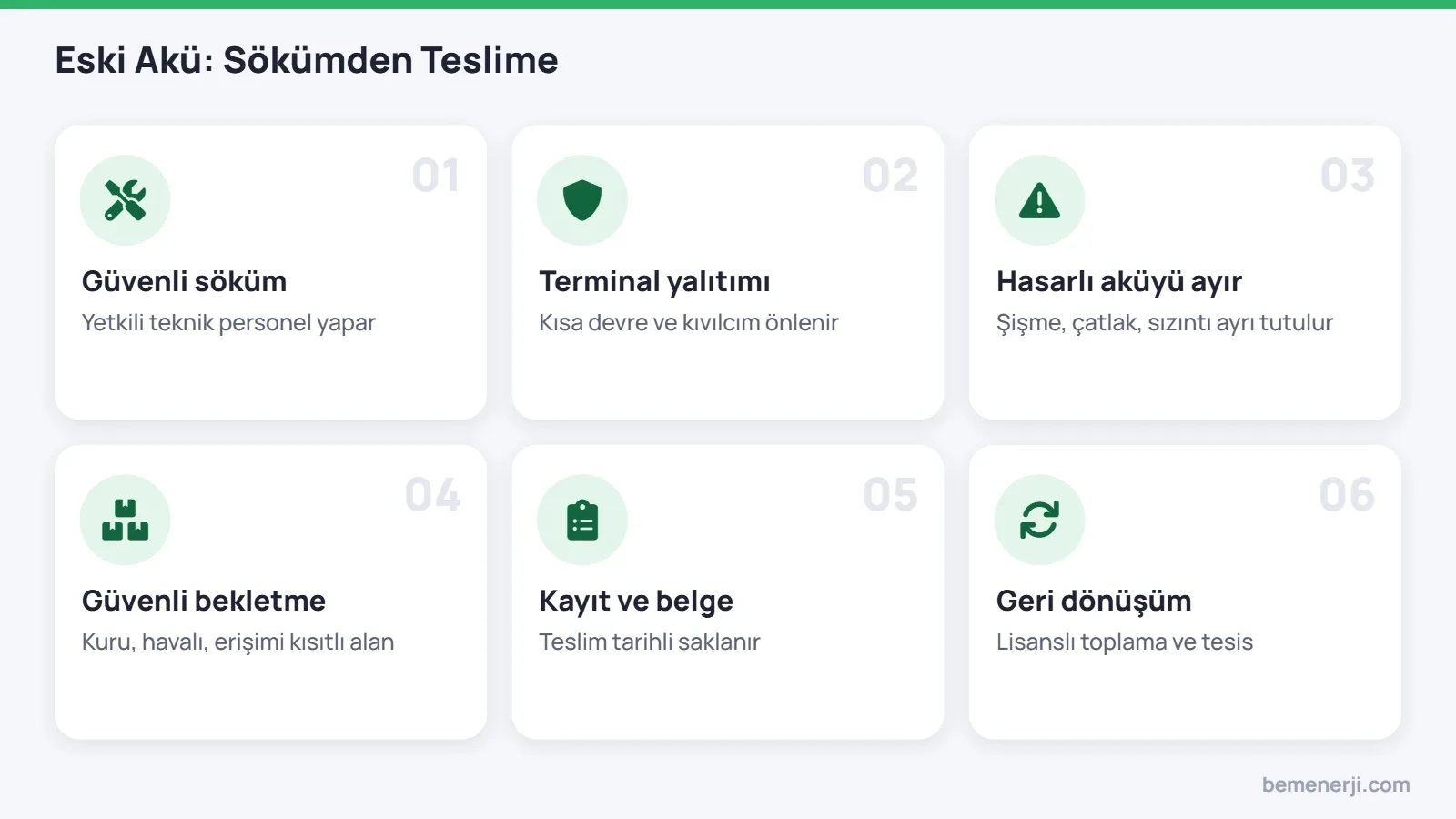
Removed batteries are handled with care because they pose a risk of short circuits and leaks. These tasks qualified technical staff does:
- The terminals are insulated; any exposed terminal ends are covered with a cap or insulating tape to prevent them from coming into contact with a metal object and causing a short circuit.
- Damaged, cracked, or leaking batteries must be kept separate; do not touch leaking fluid with bare hands.
- Batteries are transported on a flat, stable surface without tipping over or being stacked unevenly on top of one another.
- A swollen battery should not be charged or forced; it should be removed separately and safely. Causes: What causes a battery to swell? We explained this in our article.
For electrical hazards during disassembly and personal protection Workplace Safety in UPS and Battery Operations You can check out our article.
Temporary Storage Security
If used batteries cannot be disposed of immediately, they are stored temporarily and under controlled conditions. The following precautions are emphasized during storage:
| Subject | What to Do | Why |
|---|---|---|
| Location | A dry, well-ventilated area that is inaccessible to unauthorized persons | Moisture corrosion and unwanted contact are prevented |
| Floor | A spill-resistant tray or container—preferably leak-proof—if possible | The acid is prevented from mixing with the floor |
| Terminals | Enclosed and insulated | The risk of short circuits and sparks is reduced |
| Stacking | Stable, so it won't tip over | Prevents falls and bodily injury |
| Heat source | Keep away from heaters, open flames, and sparks | The risk of fire decreases |
For ventilation and safety purposes in environments where the battery is still active Battery Room Ventilation and Safety We can also recommend our article.
Licensed Collection and Recycling
Used batteries must be delivered to authorized collection and recycling facilities in accordance with applicable regulations. Individuals or companies handing over batteries to unlicensed recipients can create problems both from an environmental and legal standpoint. Responsibility begins with the business that generates the waste; therefore, you must ensure that the party to whom you are handing over the batteries is authorized.
What Is a Waste Certificate?
Documents showing that the waste was shipped in a properly recorded manner and reached the recipient ensure the traceability of waste management. Which documents must be prepared and how they should be prepared are defined in the applicable regulations based on the type and quantity of waste. Therefore, you should consult environmental regulations or your environmental consultant for details. As a business, you are required to record the date of delivery and retain the received documents.
A Quick Checklist for Businesses
- Record the number of old batteries and their replacement dates.
- Store the batteries in a dry area where unauthorized persons cannot access them, and ensure the terminals are insulated.
- Please dispose of batteries only through authorized collection and recycling channels.
- Keep a record of the delivery date, quantity, and recipient information; file the received documents.
- If a waste management officer has been designated in your internal procedures, coordinate the process with that person.
These steps are not intended to replace the details of the regulations; for organization-specific obligations, you should consult your environmental consultant or the relevant authority.
How Does the Battery Replacement Process Work?
When we replace batteries, we take care to properly dispose of the old batteries we remove: the terminals are insulated, damaged batteries are kept separate from undamaged ones, and we inform our customers to ensure the batteries are disposed of in accordance with waste management regulations. How responsibility for old batteries and record-keeping obligations will be handled is discussed when the scope of the work is determined. The entire service What does the battery replacement service include? In our article, the steps toward change How to Replace a UPS Battery You can find it in our article.
- Regulation on the Control of Waste Batteries and Accumulators (Official Gazette, August 31, 2004, Issue No. 25569; provisions on temporary storage and delivery). Please check mevzuat.gov.tr for the current text in force.
- Delivery documents for a licensed recycling/disposal facility
Sources
Used Batteries Are Not Trash—They Are Waste
Used lead-acid batteries are hazardous waste; they must not be disposed of with household trash or handed over to anyone other than authorized entities.

Terminal insulation, safe storage, and tracked delivery ensure that the battery is recycled without harming the environment or people.
Frequently Asked Questions
01Can I throw away my old UPS battery?
02Why are the terminals of removed batteries insulated?
03How should you handle a swollen or leaking battery?
04What do I need to do to get a waste disposal certificate?
05How are old batteries recycled?
Let's Plan Your Battery Replacement with Confidence
When replacing batteries, safely removing the old batteries is just as much a part of the process as installing the new ones. The steps for replacement and renewal Battery Replacement and Refurbishment as we explained on our website. We provide service for UPS and battery systems of all makes and models throughout Istanbul and the surrounding provinces. Please provide your UPS make and model, the number of batteries, and the age of the batteries Please let us know; let's plan this together.